Our marketing blog.
Observations, commentary, and editorial on everything digital marketing, from the Growth Friday team. From tips and advice, the latest trends, AI, and how this is affecting marketing, we have you and your practice covered!

Employment Law Marketing: A Practical Guide for Growth-Focused Firms in 2026
The employment law marketing landscape has shifted dramatically since 2020, and so has the way clients find and choose their attorneys. Whether your firm represents workers facing wrongful termination or advises employers on compliance, the rules of client acquisition have changed. This guide covers practical marketing strategies for employment law firms in 2026.
I'm Daniel Harman, Founder and CEO of Growth Friday. Our Growth 360 system is built specifically for professional service firms like law firms that need an integrated approach to client acquisition.
Why employment law marketing is different.
Employment law clients are different from other legal clients. They are often in distress, searching urgently for help after a workplace incident. They research extensively before choosing an attorney. They are influenced heavily by reviews, credentials, and case results. And they often have a narrow window in which they need to act.
This means employment law marketing needs to be both highly visible (to capture urgent searches) and highly trustworthy (to convert researchers into clients).
The core channels of employment law marketing.
Local SEO: being found when clients search.
For most employment law firms, local SEO is the highest-ROI marketing channel. When someone searches "employment lawyer near me" or "wrongful termination attorney in [city]," they are ready to hire. The foundation of employment law local SEO is your Google Business Profile. For more local SEO strategies, read our guide on Top 10 Local SEO Strategies for More Local Leads.
Content marketing: building authority and trust.
Employment law clients research extensively before choosing an attorney. Content marketing is how you answer their questions and build trust before they ever contact you. Effective employment law content includes:
- Educational guides explaining employment law concepts in plain language
- FAQ pages addressing common client questions
- Case result summaries (where permitted by bar rules)
- Blog posts explaining recent changes in employment law
For a deeper dive into content strategy, read our guide on cluster content strategy.
Paid media: capturing urgent searches.
Our Google Ads service is built to drive new client inquiries, not just clicks. For employment law firms, Google Ads are particularly effective for capturing urgent searches like "wrongful termination lawyer" or "employment discrimination attorney." For more on Google Ads management, read our guide on Google Ads management services.
Website UX: converting visitors into consultations.
Your website needs to be built to convert visitors into booked consultations. Our Website Design and UX services are built to maximize conversion rates for professional service firms. For more on building trust through your digital presence, read our guide on how to build brand trust.
AI visibility: the new frontier of legal marketing.
As AI assistants become more prevalent in the client research process, appearing in AI-generated responses is becoming a new form of visibility. Our AI SEO service helps law firms build the kind of authority that earns mentions in AI responses.
Building an integrated employment law marketing system.
At Growth Friday, our Growth 360 system integrates local SEO, content marketing, paid media, and user experience into one unified strategy. See how we've helped law firms grow in our client showcase. Ready to build an employment law marketing system that drives consistent new client acquisition? Book your Growth Strategy Call today.
Recent blog posts

Websites for dentist: how to build a high-converting dental website in 2026.
If your dental website still looks and feels like it did a few years ago, you are probably leaving new patient appointments on the table. In 2026, patients expect their online experience with your practice to feel as polished, convenient, and trustworthy as the care they receive in the chair.
A high converting dental website does more than list services. It builds trust in seconds, answers the questions that block patients from booking, and makes it effortless to take the next step. This guide walks through the core elements of a modern dental website and how to use them to attract and convert more of the right patients.
I'm Daniel Harman, Founder and CEO of Growth Friday. Our Website Design service is built specifically for professional service firms like dental practices that need a website that actually drives growth.
Why your dental website is your most important marketing asset.
Almost every patient who finds you through local search, Google Ads, social media, or referral will visit your website before they book. Your website is often the first real impression of your practice, and it needs to do several jobs simultaneously:
- Communicate who you help and what makes you different
- Build enough trust that patients feel comfortable choosing you
- Make it effortless to contact you or book an appointment
- Support your local SEO so you rank for the searches that matter
The core elements of a high-converting dental website.
Clear positioning and messaging.
Above the fold on your home page and key service pages, a visitor should be able to answer three questions in seconds: Is this practice for people like me? Do they offer the treatments I care about? Do they look trustworthy and professional?
Short, specific copy beats vague claims. For example, "Family and cosmetic dentistry for busy professionals in Pasadena" is much more useful than "High quality dental care for everyone."
Service pages that match how patients search.
Patients do not search for generic dentistry. They search for specific needs in specific places. Build dedicated service pages for your priority treatments, such as "Dental implants in Brentwood" or "Invisalign in Santa Monica." Each page should clearly explain who the treatment is for, what the process looks like, and what makes your approach different. These pages also form the foundation of your local SEO strategy.
Trust signals throughout the site.
Trust signals reduce the anxiety patients feel before booking with a new provider. Include:
- Google reviews and star ratings prominently displayed
- Before and after photos (with appropriate consent and compliance)
- Team bios with photos and credentials
- Accreditations and professional memberships
- Patient testimonials that speak to specific concerns or treatments
For more on building trust through your digital presence, read our guide on how to build brand trust.
Clear, prominent calls to action.
Every page on your site should have a clear next step. "Book an Appointment" or "Call Now" buttons should be visible above the fold on mobile and desktop. Online booking integration is increasingly expected by patients, especially for routine appointments.
Mobile-first design and fast load times.
Over 60% of dental searches happen on mobile. Your site must be fast and easy to use on a phone. Slow load times and poor mobile experiences cost you bookings. Our Website Maintenance service keeps your site fast, secure, and up to date.
Content that builds trust and supports SEO.
A modern dental website is not just a brochure. It is a content platform that builds authority and attracts patients through search. Effective dental content includes:
- Educational blog posts that answer specific patient questions
- FAQ pages that address common concerns about procedures, costs, and timelines
- Video content that introduces your team and explains what to expect
Content also supports your organic search strategy by creating topical authority around dental topics. For a deeper dive into content strategy, read our guide on cluster content strategy.
Connecting your website to your broader marketing system.
Your website is the hub of your digital marketing system. Every channel — local SEO, Google Ads, social media, and email marketing — should drive traffic back to your website and convert it into booked appointments.
At Growth Friday, our Growth 360 system integrates your website with every other marketing channel to create a compounding growth engine. Ready to build a dental website that actually drives growth? Book your Growth Strategy Call today.

Social media marketing for dentists: 2026 playbook
In 2026, almost every patient you care about is scrolling somewhere. According to recent data from the Pew Research Center, about eighty four percent of United States adults use YouTube and seventy one percent use Facebook, with platforms like Instagram and TikTok also growing quickly among younger adults and women (Pew Research Center social media use 2025).
A thoughtful social media marketing program helps you do more than post occasional before and after photos. Done well, it becomes a system for attracting new patients, keeping your schedule full, and reinforcing trust with the people who already choose your practice.
Set clear goals for your dental social media strategy.
Before you think about platforms or content, get specific about what social media should do for your practice. Translate each goal into simple metrics, including clicks to your appointment booking page, calls or form fills that originate from social media, and engagement rates from existing patients on educational content.
Choose the right platforms for your dental practice.
Facebook and YouTube.
Facebook and YouTube remain the broad reach workhorses. For most general and family practices, Facebook and YouTube are foundational channels. Facebook works well for community updates, promotions, and patient stories. YouTube is ideal for educational videos that answer common questions and reduce anxiety.
Instagram.
Instagram is especially strong with adults under thirty and women, groups that often make or influence healthcare decisions. Instagram can be a great fit if your practice offers cosmetic, orthodontic, or pediatric services where visuals matter.
TikTok.
If you serve a younger patient base or run a cosmetic focused practice, TikTok can be a powerful discovery channel. Short, entertaining videos that combine education with personality tend to perform best.
LinkedIn.
For practices that rely on professional referrals or target high income professionals, LinkedIn can complement your patient facing channels. Use LinkedIn to share practice milestones, build relationships with local specialists, and highlight your community involvement.
Build a content mix patients actually care about.
Define a content mix that balances education, trust building, and promotion. Educational content helps patients understand their options and remove uncertainty. Trust building content shows that there are real people behind the practice. Promotional content should support your business goals without overwhelming the feed. For a deeper dive into content strategy, read our guide on cluster content strategy.
Run compliant social media ads for dentists.
Organic content builds awareness and trust over time. Paid social campaigns let you reach the right people faster when you want to promote specific services. Our Meta Ads service manages dental social campaigns with a focus on qualified new patient inquiries, not just impressions. Always follow your local regulations and professional guidelines.
Connect social media to the rest of your marketing.
Social media works best when it supports a broader digital marketing strategy. Align your social content calendar with email campaigns and blog posts. Link from social posts to helpful resources on your website. When you mention other services, such as cosmetic dentistry, clear aligners, or dental implants, link back to your main dental marketing services page so patients can easily learn more.
How to get started with social media marketing for dentists.
If your current social presence feels inconsistent or ad hoc, you do not need to redesign everything at once. Start with a simple, ninety day plan. Choose one or two core platforms, define two or three goals, build a basic content mix, and set a posting cadence you can maintain.
If you want a partner that understands both professional service firms and the realities of running a busy dental practice, Growth Friday can help you turn social media into a predictable, measurable driver of growth. Get in touch with our team today and book your practice discovery call.

Orthodontic marketing: a 2026 playbook for predictable new patient growth.
Orthodontic demand has not disappeared, but the way patients choose a provider has changed. Prospective patients now research online, read reviews, compare financing options, and scrutinize your case results before they ever call your front desk.
If your marketing is sporadic, based on word of mouth alone, or focused only on discounts, you will struggle to create predictable new patient growth. This guide walks through a practical orthodontic marketing system for 2026 that connects local SEO, content, paid media, and website UX into a single, compounding engine.
I'm Daniel Harman, Founder and CEO of Growth Friday. Our Growth 360 system was built specifically for professional service firms like orthodontic practices that need a unified approach to growth.
The orthodontic marketing landscape in 2026.
The orthodontic market is increasingly competitive. Corporate groups and DSOs are investing heavily in digital marketing, and direct-to-consumer aligner companies have raised patient expectations around digital experience and pricing transparency.
To compete effectively, independent orthodontic practices need to:
- Be visible when patients search for orthodontic services in their area
- Build trust through social proof, case results, and educational content
- Convert website visitors into consultations efficiently
- Nurture leads who are not ready to start treatment immediately
The four pillars of orthodontic marketing.
Pillar 1: Local SEO — being found when patients search.
For most orthodontic practices, local SEO is the highest-ROI marketing channel. When someone searches "orthodontist near me" or "Invisalign in [city]," they are ready to book a consultation. You just need to be there.
The foundation of orthodontic local SEO is your Google Business Profile. A fully optimized GBP with recent photos, accurate hours, and a steady stream of reviews will get you into the local pack. Beyond GBP, local SEO includes location-specific service pages, citation building, and review generation. For more local SEO strategies, read our guide on Top 10 Local SEO Strategies for More Local Leads.
Pillar 2: Content marketing — building trust before the consultation.
Orthodontic patients research extensively before they book. Content marketing is how you answer their questions and build trust before they ever contact you. Effective orthodontic content includes:
- Treatment comparison guides (Invisalign vs braces, ceramic vs metal)
- Before and after case studies that demonstrate your results
- Educational content about treatment timelines, costs, and what to expect
- FAQ pages that address common concerns about orthodontic treatment
For a deeper dive into content strategy, read our guide on cluster content strategy.
Pillar 3: Paid media — capturing demand and retargeting.
Google Ads for orthodontic practices work best for high-intent searches like "Invisalign near me" or "orthodontist in [city]." Meta Ads are effective for retargeting website visitors and running educational campaigns to build awareness. Our Paid Media service manages orthodontic campaigns with a focus on cost-per-consultation, not just clicks.
Pillar 4: Website UX — converting visitors into consultations.
Traffic without conversion is just noise. Your website needs to be built to convert visitors into booked consultations. Our Website Design and UX services are built to maximize conversion rates for professional service firms.
Measuring what matters.
The right metrics for orthodontic marketing are new patient consultations, treatment starts, and cost per acquisition. Our Growth 360 reporting connects marketing activity to these business outcomes.
Conclusion.
Orthodontic marketing in 2026 is about building an integrated system, not running disconnected tactics. At Growth Friday, we build these integrated systems for orthodontic practices and professional service firms. Ready to build an orthodontic marketing system that actually works? Book your Growth Strategy Call today.

Online marketing for dental practices.
Online marketing for dental practices is not about chasing every new channel. It is about building a simple, reliable system that brings the right patients to your chairs, month after month.
In 2026, that means connecting your website, local search presence, content, paid campaigns, and in practice experience into one growth engine. The goal is not just more enquiries, it is more of the right enquiries at a cost that makes sense for your practice.
Start with business development, not just more clicks.
Before you touch your website or set up a campaign, get specific about three things: new patient goals, ideal patients and case types, and basic marketing math. For many practices, a single high value case can cover an entire month of marketing. Seeing the numbers clearly helps you invest confidently.
Make your website a conversion engine.
Almost every serious patient will touch your website before they book, even if they first see you on Google Maps, social media, or a referral email. A modern dental website in 2026 should make it obvious who you help, what you do, and why patients choose you. Our Website Design and UX services are built to maximize conversion rates.
Build strong service and location pages. Patients do not search for generic dentistry, they search for specific needs in specific places. Create pages that match how they think and search, such as "Dental implants in Pasadena" or "Clear aligners in Brentwood."
Own local search and your Google Business Profile.
For most practices, local search is still the highest intent, lowest friction way to get new patients. Two assets drive almost all of that behaviour: your Google Business Profile and your local SEO footprint. Make sure each location has a fully completed and verified profile. For more local SEO strategies, read our guide on Top 10 Local SEO Strategies for More Local Leads.
Build trust with educational content.
Online marketing for dental practices is not only about being visible. It is about being the practice patients feel comfortable choosing once they find you. Educational content helps you explain treatments in plain language, answer the questions that keep patients from booking, and position your doctors as trusted experts. For more on dental content marketing, read our guide on dentist content marketing. For a deeper dive into content strategy, read our guide on cluster content strategy.
Use paid media to target the right cases.
Organic search and referrals are powerful, but they can take time to ramp up. Paid media lets you dial up volume or focus on particular procedures more quickly.
- Google Ads for high intent searches like "Emergency dentist near me" or "Dental implants in Pasadena"
- Meta Ads on Facebook and Instagram for education, offers, and retargeting
Nurture and retain patients with email and SMS.
New patient leads are important, but so is getting more from the patients you already have. Our Email Marketing service can help you build simple retention systems that keep patients coming back.
Track what matters and know when to bring in a partner.
Online marketing only becomes a real growth engine when you can see what is working and make improvements based on data, not gut feel. At a minimum, track new patients per month, leads per month, cost per lead, and cost per new patient for each major channel.
If you find yourself with clear goals but no time, or you are spending on marketing without understanding what is working, that is usually the point where a specialist partner makes sense. At Growth Friday, our Growth 360 system integrates all of these channels into one unified strategy. Ready to build a dental marketing system that actually works? Book your Growth Strategy Call today.
Business development lead generation for dental practices.
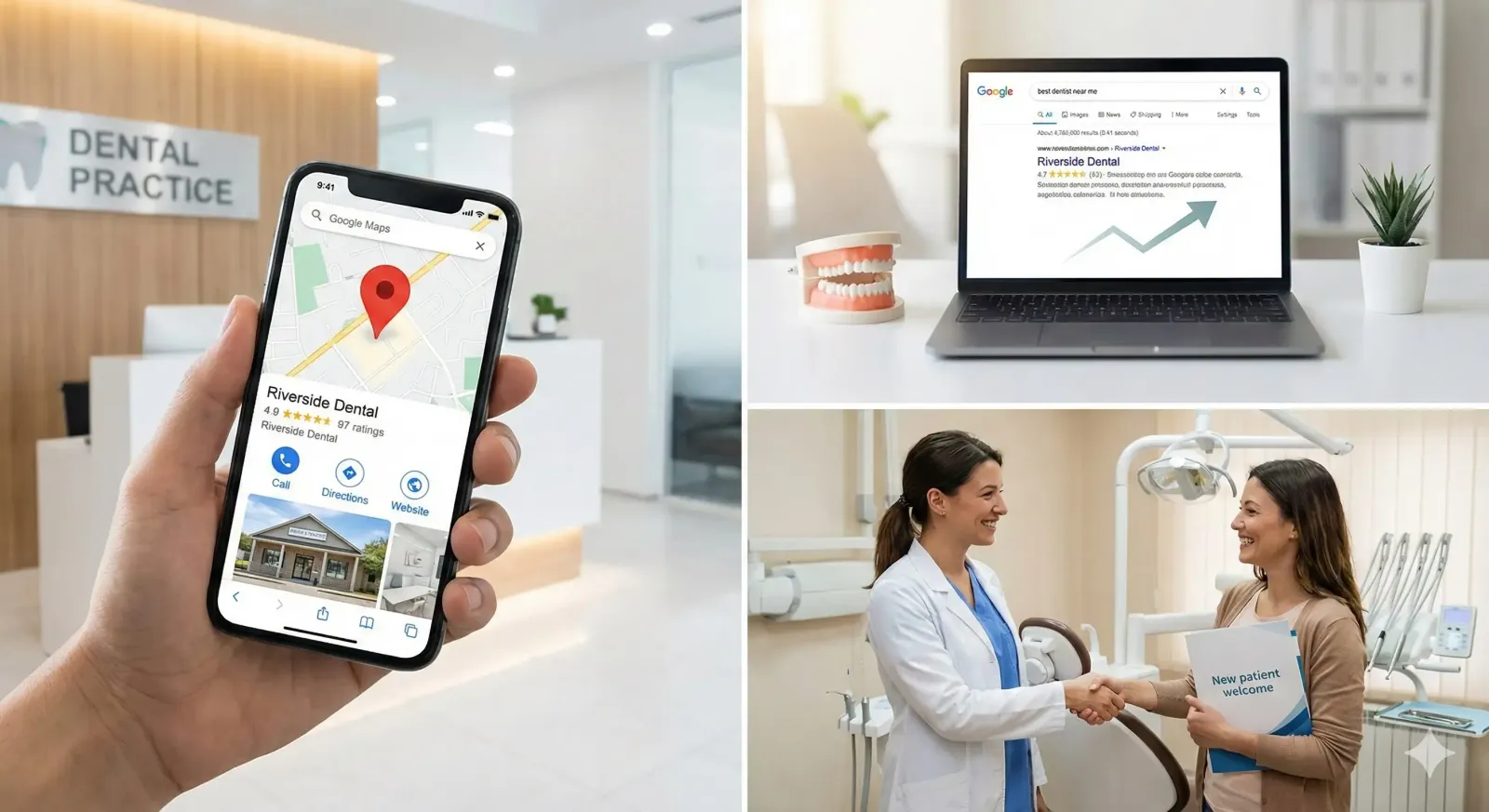
Dental practices have always relied on some mix of referrals, reputation, and location to grow. But in 2026, those informal business development habits are not enough on their own. Competition is up, patients are researching more deeply online, and corporate groups are investing heavily in marketing.
If you want consistent, high quality new patient flow, you need a clear business development and lead generation system—one that connects your website, local search, paid media, referrals, and in practice experience into a single, predictable engine.
Business development vs dental lead generation, how they work together.
For a dental practice in 2026, business development sets who you want to attract, which services matter most, and how the practice will grow. Lead generation provides the systematic pipeline of enquiries from those ideal patients. The goal is to align both.
Digital channels that reliably generate dental leads.
Local SEO and Google Business Profile.
For most practices, local search is still the highest intent, lowest friction source of new patient leads. Focus on two core assets: your Google Business Profile (GBP) and your website's local SEO footprint.
Key actions for 2026:
- Fully complete and verify your Google Business Profile for each location
- Keep hours, services, phone, and categories accurate and specific
- Add high quality, authentic photos of your practice and team
- Encourage a steady flow of reviews and respond to them professionally
- Build dedicated service pages and location pages on your site that match how patients search
Our Local SEO service is built specifically for professional service firms like dental practices.
Your website and conversion experience.
Even when leads start from search, ads, or social, the majority of serious patients visit your website before they book. A lead generation focused dental site in 2026 should make it obvious who you help, what you do, and why patients choose you. Our Website Design and UX services are built to maximize conversion rates.
Content and thought leadership.
Patients are researching more deeply before they book, especially for higher value or elective treatments. Use content marketing to explain procedures in plain language, address fears and objections, and position doctors as trusted experts. For a deeper dive into content strategy, read our guide on cluster content strategy.
Paid media for dentists.
Paid search and paid social give you the ability to turn up volume or target specific case types faster than organic channels alone.
- Google Ads for high intent searches like "emergency dentist near me", "Invisalign dentist in [city]", or "dental implants cost"
- Meta Ads (Facebook and Instagram) for education, offers, and retargeting people who have visited your site
For more on Google Ads management, read our guide on Google Ads management services.
Email, SMS, and retention.
New leads are important, but so is getting more from the relationships you already have. Our Email Marketing service can help you build simple retention systems that keep patients coming back.
When to bring in a marketing partner.
A good partner will help you clarify strategy before proposing tactics, build and maintain a modern, conversion focused website, run integrated local SEO, content, and paid campaigns, and report in plain language so you understand performance and next steps.
At Growth Friday, our Growth 360 system integrates all of these channels into one unified strategy. Ready to build a dental marketing system that actually works? Book your Growth Strategy Call today.

Dental marketing strategy 101: how to turn website visitors into new patients.
Most dental practices don't fail at marketing because they "aren't doing anything." They fail because they're doing a bunch of disconnected tactics:
- A website someone's cousin built five years ago
- A few Google Ads campaigns that "kind of" work
- An agency posting generic social content
- A reviews tool that sends occasional reminders
None of it connects. None of it compounds. And none of it is built around the one thing that actually drives dental growth: getting the right patients to find you, trust you, and book with you.
This guide is about fixing that. We're going to walk through what a real dental marketing system looks like in 2026—one that integrates local SEO, Google Ads, content, and UX into a single engine that compounds over time.
I'm Daniel Harman, Founder and CEO of Growth Friday. Our Growth 360 system was built specifically for professional service firms like dental practices that need a unified approach to growth.
Why most dental marketing fails.
The problem isn't effort. The problem is fragmentation. The fix isn't more tactics. It's a unified system where every channel reinforces the others. That's what we build at Growth Friday through our Growth 360 approach.
The dental marketing system: four integrated pillars.
Pillar 1: Local SEO — getting found by patients who are ready to book.
For most dental practices, local SEO is the highest-ROI marketing channel available. The foundation of dental local SEO is your Google Business Profile. A fully optimized GBP with recent photos, accurate hours, and a steady stream of reviews will get you into the local pack.
Beyond GBP, local SEO for dental practices includes location-specific service pages, citation building, review generation, and local link building. For more local SEO strategies, read our guide on Top 10 Local SEO Strategies for More Local Leads.
Pillar 2: Google Ads — capturing demand while SEO builds.
Google Ads for dental practices works best as a complement to SEO, not a replacement. The key to profitable dental Google Ads is specificity. Focus on high-value, high-intent searches like "Emergency dentist [city]", "Dental implants [city]", and "Invisalign near me." Our Paid Media service manages dental Google Ads campaigns with a focus on cost-per-acquisition, not just clicks.
Pillar 3: Content marketing — building trust before the first appointment.
Patients research before they book. Content marketing is how you answer their questions and build trust before they ever contact you. Content also supports your SEO strategy by creating topical authority around dental topics. For a deeper dive into content strategy, read our guide on cluster content strategy.
Pillar 4: UX and conversion optimization — turning visitors into booked patients.
Traffic without conversion is just noise. Your website needs to be built to convert visitors into booked appointments. Our Website Design and UX services are built to maximize conversion rates for professional service firms.
Measuring what matters.
The right metrics for dental marketing are simple: new patient appointments, cost per acquisition, and patient lifetime value. Our Growth 360 reporting connects marketing activity to these business outcomes, so you always know what's working and what's not.
Conclusion.
Dental marketing in 2026 is about building an integrated system, not running disconnected tactics. When your local SEO, Google Ads, content marketing, and UX all work together, you create a compounding growth engine that consistently attracts and converts high-value patients.
At Growth Friday, we build these integrated systems for dental practices and professional service firms. Ready to build a dental marketing system that actually works? Book your Growth Strategy Call today.

From skeptic to superfan building brand trust that lasts.
Build brand trust and you open up a powerful competitive advantage: customers who choose you first, pay premium prices willingly, and defend your brand when others question it.
To build brand trust effectively, focus on these core elements:
- Deliver consistent quality - Every interaction must meet or exceed expectations
- Be radically transparent - Share your process, pricing, and even your mistakes
- Demonstrate expertise - Create content that proves you know your field deeply
- Show social proof - Testimonials, case studies, and reviews build credibility
- Maintain brand consistency - Same voice, values, and visual identity everywhere
- Engage authentically - Respond to feedback, both positive and negative
I'm Daniel Harman, Founder and CEO of Growth Friday. We help professional service firms build the kind of trust that turns strangers into clients and clients into advocates. Our Growth 360 system integrates every touchpoint to create a consistent, trustworthy brand experience.
Why brand trust is your most valuable asset.
For professional service firms in competitive markets like Los Angeles, Brentwood, and Orange County, brand trust is often the deciding factor when prospects choose between equally qualified providers.
The pillars of building brand trust.
Consistent, high-quality content.
Content is one of the most powerful trust-building tools available. Our Content Marketing service is designed to help professional service firms build authority through strategic content creation. Key content strategies include educational blog posts, case studies (see our client showcase), thought leadership articles, and video content. For a deeper dive into content strategy, read our guide on cluster content strategy.
Social proof and reputation management.
Key social proof elements include client testimonials (see our testimonials page), case studies, reviews, awards, and media mentions. Our PR service can help you earn press coverage that builds credibility.
Transparent communication.
Transparency builds trust faster than almost anything else. When you're open about your process, pricing, and even your limitations, clients feel respected and confident in their decision to work with you.
Consistent brand identity.
Brand consistency signals reliability and professionalism. Our Website Design service ensures your digital presence reflects your brand consistently.
Digital trust signals that matter.
Search engine visibility.
Appearing prominently in search results is itself a trust signal. Our Organic Search service helps you build the kind of visibility that signals trustworthiness. Our Local SEO service ensures you appear prominently when potential clients search for services in your area.
AI visibility and brand mentions.
As AI assistants become more prevalent in the research process, appearing in AI-generated responses is becoming a new form of trust signal. Our AI SEO service helps you build the kind of authority that earns these mentions.
Website user experience.
Your website is often the first impression potential clients have of your firm. Our User Experience service ensures your website builds trust from the first click.
Conclusion.
Building brand trust is not a one-time campaign; it's an ongoing commitment to delivering value, communicating honestly, and consistently demonstrating expertise. For professional service firms in competitive markets like Los Angeles, Pasadena, and Santa Monica, brand trust is the foundation of sustainable growth.
At Growth Friday, we help professional service firms build the kind of trust that drives long-term growth through our integrated Growth 360 system. Ready to build a brand that clients trust and recommend? Book your Growth Strategy Call today.

Unlocking content gold: a comprehensive audit for marketing success.
To audit content marketing is to open up hidden opportunities in your existing assets. It's the systematic process of evaluating all your published content—from blog posts to videos—to determine what's working, what's not, and where to focus your efforts.
A content audit delivers tangible results:
- Better SEO performance: 49% of marketers see traffic and ranking increases post-audit.
- Higher engagement: 53% report improved engagement rates.
- Smarter resource allocation: Stop wasting budget on underperforming content.
- Clear action plan: Know exactly which content to keep, update, consolidate, or delete.
- Improved ROI: Focus efforts on content that drives conversions and revenue.
Audits are more urgent than ever because AI is learning from your content. Every outdated post and duplicate article is being used to train large language models. When potential clients ask AI assistants about your services, your legacy content shapes the answer. This is narrative defense—controlling how AI systems represent your brand.
I'm Daniel Harman, Founder and CEO of Growth Friday. We help professional service firms build AI-improved marketing systems that drive growth.
The strategic importance of a content audit.
A content marketing audit is a strategic necessity for sustained growth. An audit directly improves SEO performance. A 2023 SEMRush survey found that over 49% of respondents saw increases in ranking and traffic after an audit.
A robust audit is key to a strong ROI driven marketing strategy. By identifying top-performing assets, we can allocate resources more effectively, focusing on what moves the needle for our clients in Los Angeles, Brentwood, Orange County, Pasadena, and Santa Monica.
How often should you audit? We recommend a full or partial audit at least annually. For competitive industries, a semi-annual or quarterly schedule is better.
A step-by-step guide to your content marketing audit.
Defining clear goals for your audit.
Before diving into analytics, define clear SMART goals for your content marketing audit. Common audit goals include SEO improvement, increasing conversions, enhancing user experience, and aligning with business objectives.
Creating your content inventory.
Create a comprehensive content inventory by cataloging every piece of content you have. Use a website crawling tool like Screaming Frog SEO Spider to automate the process. Curata offers a free Google spreadsheet template to get you started.
Gathering key metrics for your content marketing audit.
Quantitative data comes from analytics platforms:
- SEO metrics: Track organic traffic (Google Analytics, Google Search Console), keyword rankings (Semrush, Ahrefs), and backlinks.
- Engagement metrics: Measure time on page, bounce rate, and social shares.
- Conversion metrics: Track leads generated, email marketing sign-ups, and sales completions.
If you're new to Google Analytics, the Google Analytics Academy hub offers excellent courses.
Analyzing data and categorizing content.
Sort each piece of content into one of four buckets:
- Keep: High-performing, up-to-date content that requires no immediate action.
- Update/refresh: Content with potential that needs work.
- Consolidate: Multiple pieces covering similar topics that cause keyword cannibalization. Combine them into one authoritative resource, which is central to a strong cluster content strategy.
- Delete/prune: Severely underperforming, irrelevant, or harmful content.
Advanced audit strategies and the impact of AI.
The role of competitor analysis.
A comprehensive content marketing audit should include a deep dive into your competitors. We identify top competitors in markets like Los Angeles and Orange County and use tools like Semrush and Ahrefs to analyze their best-performing content.
AI, generative search, and the new urgency for audits.
The rise of AI and generative search adds a new urgency to content auditing. Generative AI models are trained on your content, meaning every old blog post is teaching AI about your brand. As legal judgments shape AI's use of content, the implications for brand representation are profound. Learn more about our AI SEO approach.
Overcoming challenges and using the right tools.
Leveraging the right tools is non-negotiable for an efficient and effective audit. Essential tools include Google Analytics, Google Search Console, Ahrefs, Semrush, and Screaming Frog SEO Spider.
Your roadmap to a stronger content strategy.
A content audit is not just a cleanup task; it's a strategic process that provides the data-driven insights needed to refine your entire content marketing approach. By regularly assessing your assets, you can improve SEO, boost engagement, and ensure your content consistently supports your business goals.
At Growth Friday, we believe in building marketing systems that deliver holistic growth, and a thorough audit is the foundational first step. Ready to open up the hidden gold in your content library? Book your Growth Strategy Call today.
Mastering GMB for Local SEO: optimize your profile, dominate search [Updated Jan 2026].
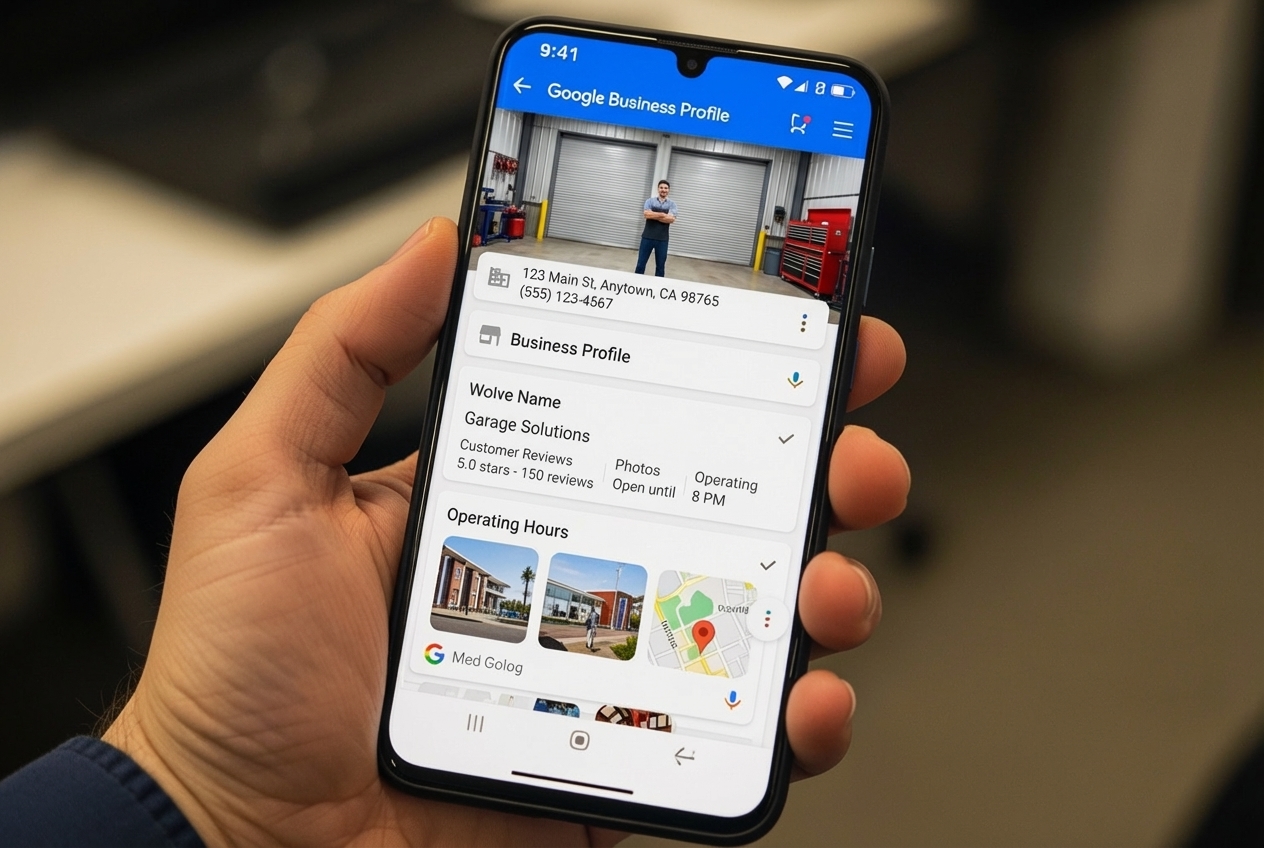
GMB profile optimization is the process of strategically managing and enhancing your Google Business Profile to increase visibility in local search results, Google Maps, and the Local Pack. Here's what you need to know to get started:
Quick answer: Essential steps to optimize your GMB profile
- Claim and verify your business listing on Google Business Profile
- Complete all information - NAP (Name, Address, Phone), hours, categories, description
- Upload high-quality photos and videos of your business, products, and team
- Manage reviews - respond to all reviews promptly and professionally
- Post regular updates - share news, offers, events, and content
- Monitor performance - track insights and refine your strategy based on data
This matters because nearly half of all Google searches are for local information, and a majority of those searchers click on a Map Pack listing before they ever visit a website. Our Local SEO approach at Growth Friday integrates these advanced concepts to help clients in Orange County, Santa Monica, Brentwood, and Pasadena stand out.
Understanding Google's local ranking factors.
Google's goal is to show users the most relevant nearby businesses. It boils down to three primary factors: relevance, distance, and prominence.
Relevance.
Relevance refers to how well your Business Profile matches what someone is searching for. To maximize relevance, provide complete and detailed business information. For a deeper dive into local ranking, Google offers valuable insights: How to improve your local ranking on Google.
Distance.
Distance is straightforward: how far is your business from the customer who's searching? For businesses in areas like Brentwood or Pasadena, this means ensuring the address is accurate.
Prominence.
Prominence signifies how well-known a business is. Google bases this on online mentions and links, review signals, and overall local SEO signals. There's no direct way to pay for a higher local ranking on Google.
A step-by-step guide to GMB profile optimization.
Optimizing your Google Business Profile is one of the highest-ROI marketing tasks you can undertake. Ensure NAP (Name, Address, Phone Number) consistency across your GBP and all other online listings. For more information on how we can help you with this vital aspect of digital marketing, explore our Local SEO services.
Core GMB profile optimization: nailing the basics.
A strong GBP is built on accurate, comprehensive information: business name, address, phone number, website URL, business hours, special hours, and service areas. For businesses in shared offices, like those in Los Angeles or Santa Monica, use unique suite numbers to distinguish your profile.
Choosing the right categories and attributes.
Categories tell Google what your business is, and attributes tell potential customers what your business offers. Select the category that best and most specifically describes your main business function. You can find a full list of GBP categories here.
Crafting a compelling business description.
Your "from the business" description is your chance to tell your story and highlight what makes your firm unique. Google provides a 750-character limit. When writing your description, incorporate keywords naturally. For a law firm, naturally integrate keywords like "estate planning" or "business litigation." You can refer to Google's guidelines for precise instructions.
Engaging customers with advanced GBP features.
The power of photos and videos.
Visual content is incredibly impactful. Businesses with a rich photo gallery of over 100 images see dramatically more calls, direction requests, and website clicks than the average business. Adhere to Google's photo guidelines regarding size, format, and content.
Mastering Google reviews and responses.
Reviews are arguably one of the most influential factors in local SEO and customer decision-making. Create a review shortcut link and share it via email signatures, text messages after service completion, and your website's "Contact Us" page. Responding to reviews improves your local SEO.
Tracking performance and avoiding common pitfalls.
Optimizing your Google Business Profile isn't a one-and-done task; it's an ongoing journey. To get even more granular data, use UTM parameters. You can accurately track clicks to your website using UTMs and Google Analytics. Always refer to Google's GBP guidelines to ensure compliance.
Dominate local search with a fully optimized profile.
In today's hyper-local, mobile-first world, a carefully optimized Google Business Profile is no longer optional for professional service firms; it's a strategic imperative. GMB profile optimization is a cornerstone of any successful Local SEO strategy.
At Growth Friday, we specialize in helping professional service firms navigate this complex landscape. Our holistic, AI-powered strategies ensure that your GBP is not just optimized, but integrated seamlessly into your broader digital presence, driving 360° growth. Ready to transform your local online presence and attract more ideal clients? Contact us to master your local presence today.
Ready to finally grow with confidence?
At Growth Friday, we simplify digital marketing so you can focus on growing your professional service firm. Our team combines a full-channel, expert-led strategy with clear, actionable metrics to drive real results fast. Ready to transform your digital presence? Book your free strategy call today and discover 2–3 actionable wins to accelerate your growth.