Our dental marketing blog.
Observations, commentary, and editorial on everything dental marketing, from the Growth Friday team. From tips and advice, the latest trends, AI, and how this is affecting marketing, we have you and your practice covered!

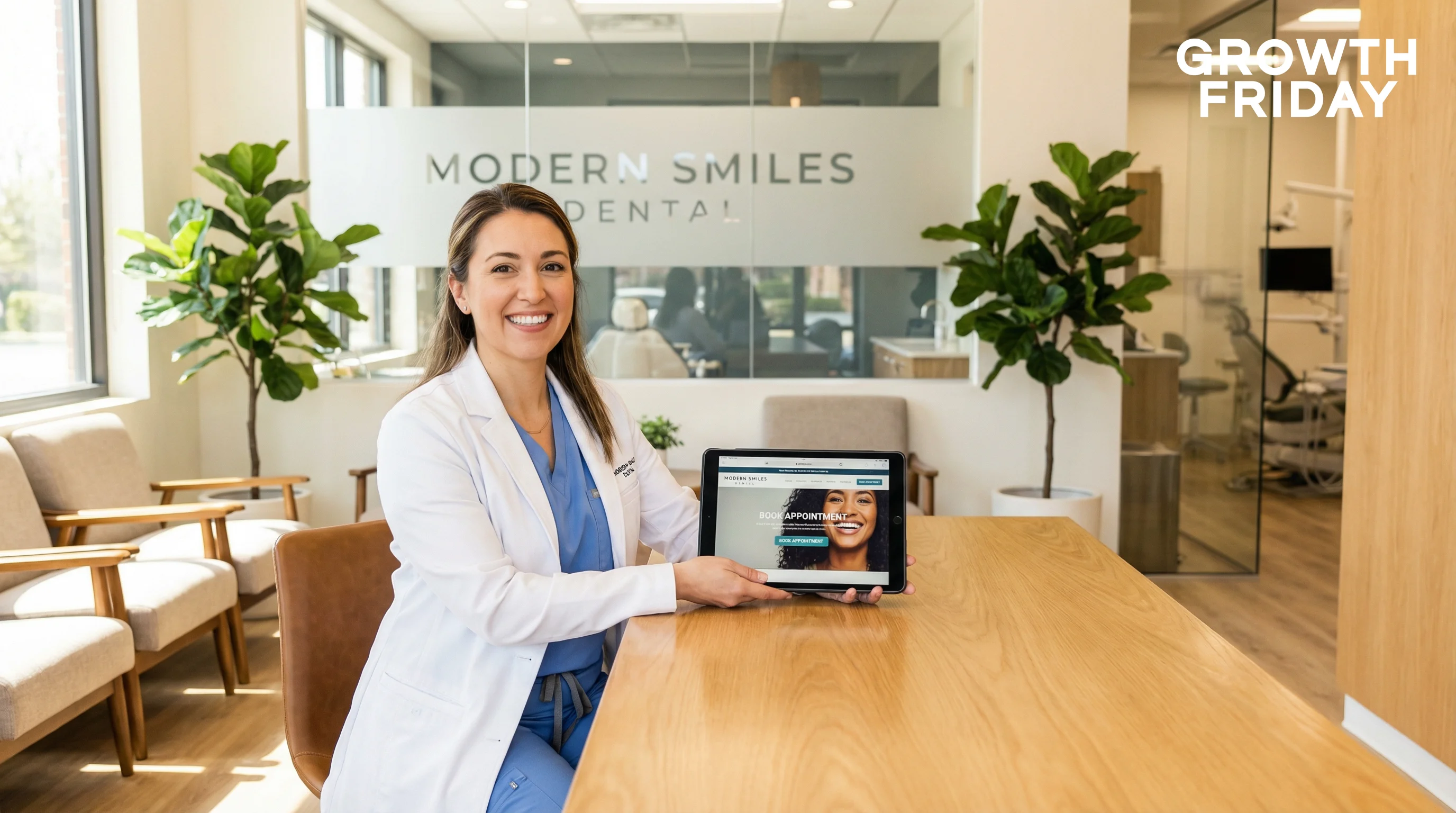
Dentist landing page: how to build a high-converting dental landing page.
This guide explains what a dentist landing page is, why it matters so much for practices running online ads, and how to design one that reliably turns clicks into new patients. It’s written for dentists, practice managers, and dental marketers who want to maximize their ad spend and grow their patient base on autopilot – especially those working with partners like Growth Friday or managing their own campaigns.
A dentist landing page is the workhorse behind every profitable campaign. Instead of sending ad traffic to a generic homepage or contact page, you send it to a single, focused page on your site that highlights one service or offer in depth and drives visitors to one primary action – usually booking an appointment.
What should a dentist landing page include? (summary checklist).
High-performing dentist landing pages are focused, fast, and built to convert. At a minimum, every page should include:
- One specific service or new‑patient offer: Each landing page should align tightly with the ad or search term that brought the visitor there – for example, dental implants, emergency visits, or cosmetic makeovers – not a mix of everything your practice does.
- A clear primary call‑to‑action (CTA): Make it incredibly easy to book – with a prominent button or form that invites visitors to "Request an appointment," "Book a consultation," or "Call now."
- Concise, patient‑friendly service information: Explain what you do and why it helps in plain language. Think outcomes and benefits, not clinical jargon.
Get these basics right, and your landing page is no longer just a brochure – it’s an engine for turning paid clicks into scheduled patients.
What is a dental landing page?
A dental landing page is a dedicated page on your website built around a single goal: converting visitors from your online ads into new patients.
Unlike your homepage – which has to serve many audiences (existing patients, job seekers, referral partners, etc.) – a landing page:
- Focuses on one service, offer, or patient problem in depth.
- Removes distractions like crowded navigation and competing CTAs.
- Guides visitors step‑by‑step toward booking.
Once you’re clear on what a landing page is, the next question is: how do you feed it the right traffic? That’s where campaign strategy comes in.

Why every dentist landing page needs a dedicated, high‑converting ad campaign.
If you’re already investing in Google Ads or Facebook/Instagram Ads, you’ve solved the visibility problem. But visibility alone doesn’t fill your schedule.
To turn ad clicks into high‑value new patients, your landing page has to clearly communicate your unique value proposition – what makes your practice the obvious choice in your market. That might include:
- Advanced technology (CBCT, digital smile design, same‑day crowns)
- Comfort‑first experience (sedation options, spa‑like amenities)
- Specialized expertise (implants, full‑arch cases, cosmetic makeovers)
A strong value proposition, front and center on your landing page, builds trust fast and focuses attention on your most important offers.
What actually moves the needle is not your homepage or a generic contact page. It’s a well‑designed, proven‑to‑convert dentist landing page built specifically for that campaign.
Creating a new, service‑specific landing page that’s tightly integrated into your dentist website does three things at once:
- Improves conversion rates from paid traffic.
- Strengthens your practice’s overall online presence.
- Supports better search performance over time.
Too many practices waste thousands of dollars sending paid traffic to pages that were never meant to convert cold prospects. A dedicated landing page lets you showcase your unique value, address objections, and simplify next steps for new visitors.
A thoughtfully built dental landing page can improve your online visibility, support stronger search engine rankings, and generate a steady stream of new patient leads.
The real job of a landing page for dentists.
A landing page has one job: help a visitor take a specific, valuable action.
That action might be:
- Booking a consultation
- Requesting a new‑patient special
- Calling the office for same‑day availability
Unlike a full website, a conversion‑focused dental landing page strips away everything that doesn’t support that next step.
Core elements of a high‑converting landing page.
Strong dentist landing pages typically:
- Open with a headline and hero section that confirms visitors are in the right place.
- Mirror the exact language and intent of the ad or search.
- Speak directly to one patient need or service (e.g., implants, emergencies, cosmetic work).
- Build trust quickly with social proof, credentials, and clear outcomes.
- Make the next step obvious through a clear, visually dominant CTA.
- Use high‑quality, real‑world imagery that reflects your practice.
- Reinforce trust through testimonials, reviews, and before‑and‑after results.
When these ingredients work together, conversion rates climb and cost per lead drops.
Why sending ads to your homepage usually fails.
Your homepage has a hard job. It needs to serve current patients, prospective patients, referral partners, prospective hires, and more. Paid ad traffic is different: those visitors are task‑driven and impatient.
Someone who clicks an ad for “emergency dentist near me” does not want to:
- Dig through menus
- Read your full practice history
- Guess which link to click next
Even if your homepage is mobile‑friendly and quick to load, it’s still overloaded with choices.
Common homepage problems for paid traffic.
- Too many navigation options competing for attention
- Messaging that doesn’t match the ad that brought the visitor there
- Slow or clunky mobile experience
- Important forms and CTAs buried below unrelated content
A focused care‑specific landing page solves these issues by:
- Presenting one clear offer or service
- Matching the promise of the ad
- Simplifying the path to booking
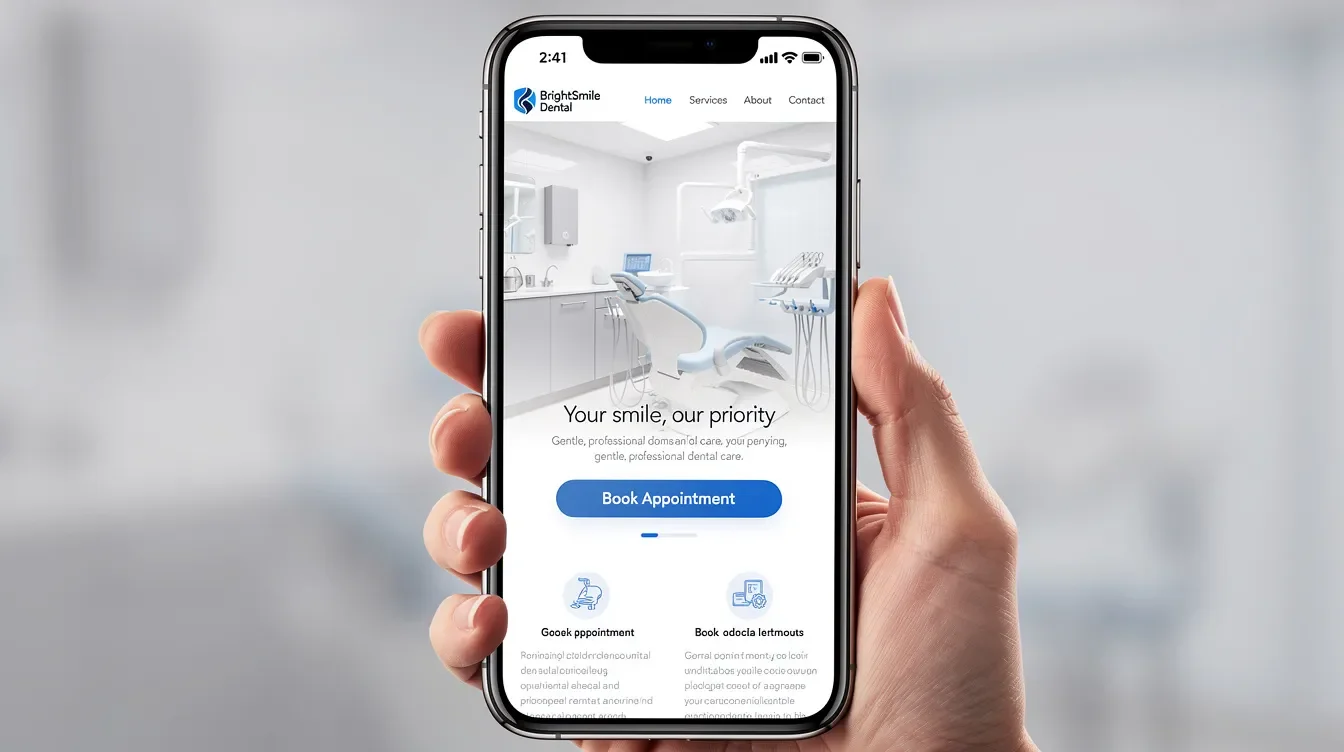
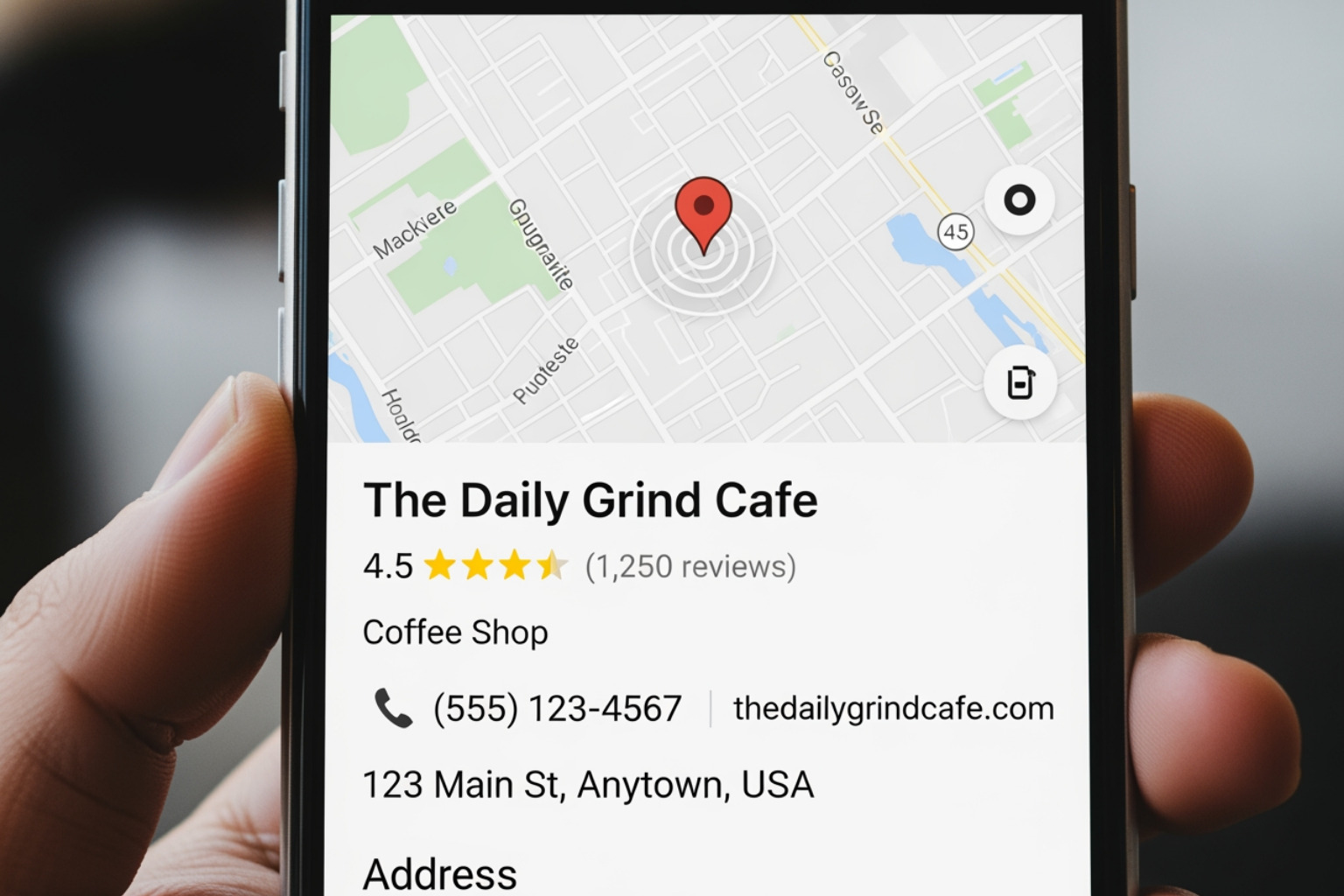
Your landing page should be simple, easy to navigate, and fully optimized for mobile. Adding an embedded map or directions widget also makes it easier for visitors to find your practice without leaving the page.
The difference between a generic page and a custom landing page design for dentists.
Templates are tempting: they’re fast, inexpensive, and widely available. The problem? In competitive dental markets, generic templates rarely win.
A custom landing page design for dentists is built around:
- Real patient behavior and intent
- Real performance data
- Real conversion psychology for high‑trust health decisions
At Growth Friday, we design dental landing pages based on:
- The specific service being advertised, with dedicated landing pages for unique services (e.g., emergency, cosmetic, general, or dental implant marketing for high‑intent patients).
- Local search intent and competitive dynamics in your market.
- Mobile‑first behavior – assuming most ad traffic will come from phones.
- HIPAA‑aware lead capture and data handling.
- Proven conversion patterns from top‑performing dental campaigns.
- Simple, friction‑free forms (name, phone, email as the default baseline).
- Concise, outcome‑focused copy instead of dense clinical language.
The result is a site structure that moves you from "getting clicks" to consistently booking patients.
What high‑converting dentist landing pages include.
Every campaign is unique, but the strongest dental landing pages usually share the same core building blocks.
Key elements of a high‑converting dentist landing page.
- Compelling hero headline: Confirms visitors are in the right place and keeps them reading.
- High‑quality visuals: Authentic photos of your team, practice, and results.
- Clear proof of expertise: Credentials, years of experience, advanced technology, and specialties.
- Service breakdown: Simple, skimmable explanations of what you offer and who it’s for.
- Testimonials and before‑and‑after photos: Real‑world proof that your treatments work.
- Payment and location details: Insurance accepted, financing options, and how to find you.
- Interactive map or directions: Make it effortless to see where you are.
- Streamlined booking experience: One primary CTA and a short, mobile‑friendly form.
- Tracking and analytics: Conversion tracking and event measurement to see what’s working.

Clear, service‑specific headline.
Your hero headline should instantly tell visitors they’ve landed in the right place.
If your ad is promoting dental implants, the landing page should clearly say that – not just "Welcome to [Your Practice Name]." A short supporting line can reinforce the benefit: comfort, cosmetic improvement, function, or confidence.
Video backgrounds and hero videos can work well when they:
- Load quickly
- Show real patients and team members
- Reinforce your key message instead of distracting from it
Regardless of format, clarity beats cleverness every time.
Strong trust signals.
Dental decisions are personal, high‑stakes, and often expensive. Trust has to be built quickly.
Effective landing pages highlight:
- Dentist credentials, training, and years in practice
- Specialized expertise (implants, full‑arch, cosmetic, sedation, etc.)
- Authentic patient testimonials and star ratings
- Before‑and‑after photos (where appropriate and compliant)
- Membership in respected associations and organizations
By surfacing these trust signals above the fold and throughout the page, you reduce hesitation and increase the likelihood of form submissions and calls.
One focused call to action.
A landing page should make one main action feel like the natural next step.
Examples:
- "Book a consultation"
- "Schedule your free implant assessment"
- "Request an appointment"
- "Call now for availability"
Supporting CTAs (like click‑to‑call on mobile) can exist, but there should be a single "primary" action the entire page supports.
The copy around your CTA should:
- Emphasize simplicity and safety
- Set expectations for what happens next
- Avoid high‑pressure language while still creating urgency when appropriate
Optimizing for mobile and speed.
Most dental ad traffic is mobile, so speed and mobile UX are non‑negotiable.
- Recent data shows that mobile devices now drive well over half of global web traffic.
- A widely cited study found that a one‑second delay in page load can reduce conversions by around 7%.
That means:
- Your page should load in under three seconds on a typical mobile connection.
- Forms should be tap‑friendly and short.
- Typography and spacing should be optimized for small screens first.
Speed, readability, and ease of use matter more than design flourishes.
Payment and insurance information: removing barriers to booking.
One of the biggest unspoken questions on any dental landing page is simple: "Can I afford this?"
Practices that embrace this reality and address it head‑on see significantly better conversion rates. That means:
- Clear lists of accepted insurance plans
- Transparent explanations of payment options
- Simple breakdowns of financing for big‑ticket treatments like implants, full‑arch, or cosmetic cases
A "Payment & Insurance" section that actually answers real questions – instead of vague "flexible options available" language – does the heavy lifting of conversion psychology. When visitors feel you’re being transparent and empathetic, they’re far more likely to take the next step.
Visuals and media: making your dental landing page inviting.
First impressions on a landing page work the same way they do in your lobby.
High‑converting pages lean on real, human visuals instead of generic stock photos:
- Authentic photos of your team and office
- Before‑and‑after galleries for cosmetic or implant cases
- Short intro videos from the doctor or treatment coordinator
- Video testimonials from real patients
- Virtual tours or quick walkthroughs of your space
These assets don’t just "look nice" – they:
- Build emotional connection
- Reduce uncertainty about what a visit will feel like
- Reinforce the quality of your work
When prospects can picture themselves in your practice, they’re much closer to booking.
Why landing pages directly improve Google Ads and Facebook Ads performance.
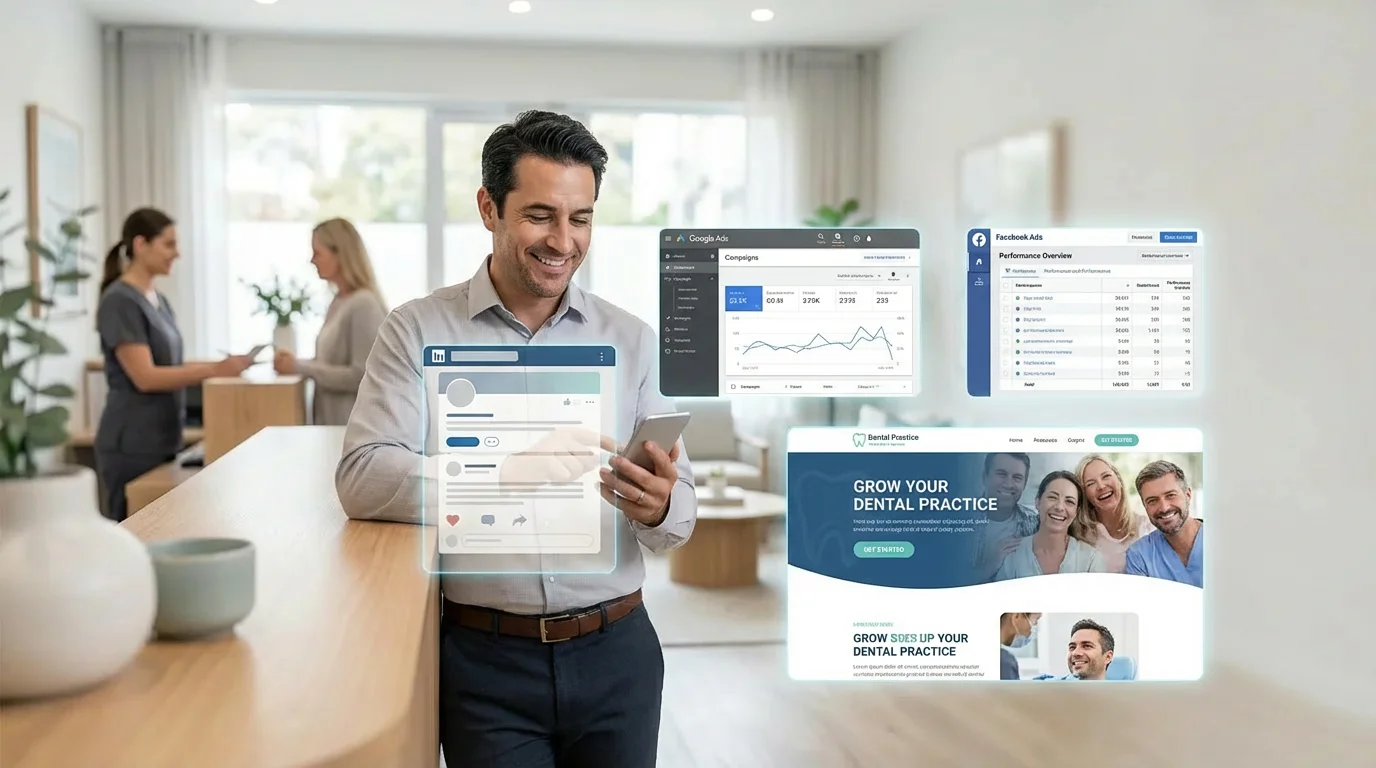
Dedicated landing pages don’t just lift conversion rates. They improve the entire performance loop inside Google Ads and Meta Ads.
For Google Ads, strong dentist landing pages can:
- Increase Quality Score by improving relevance and on‑page experience
- Lower cost per click and cost per conversion
- Improve impression share on high‑value keywords
- Increase lead volume without increasing budget
- Reinforce your overall SEO and local visibility, since fast, relevant pages aligned with intent tend to perform better over time
For Facebook and Instagram Ads, landing pages help:
- Improve conversion tracking accuracy
- Give the algorithm cleaner signals about who is actually booking
- Improve lead quality and downstream case acceptance
In short: when your landing page is doing its job, every advertising dollar works harder.
Conversion rates and analysis: measuring what matters.
A high‑converting dental landing page is never a "set it and forget it" asset.
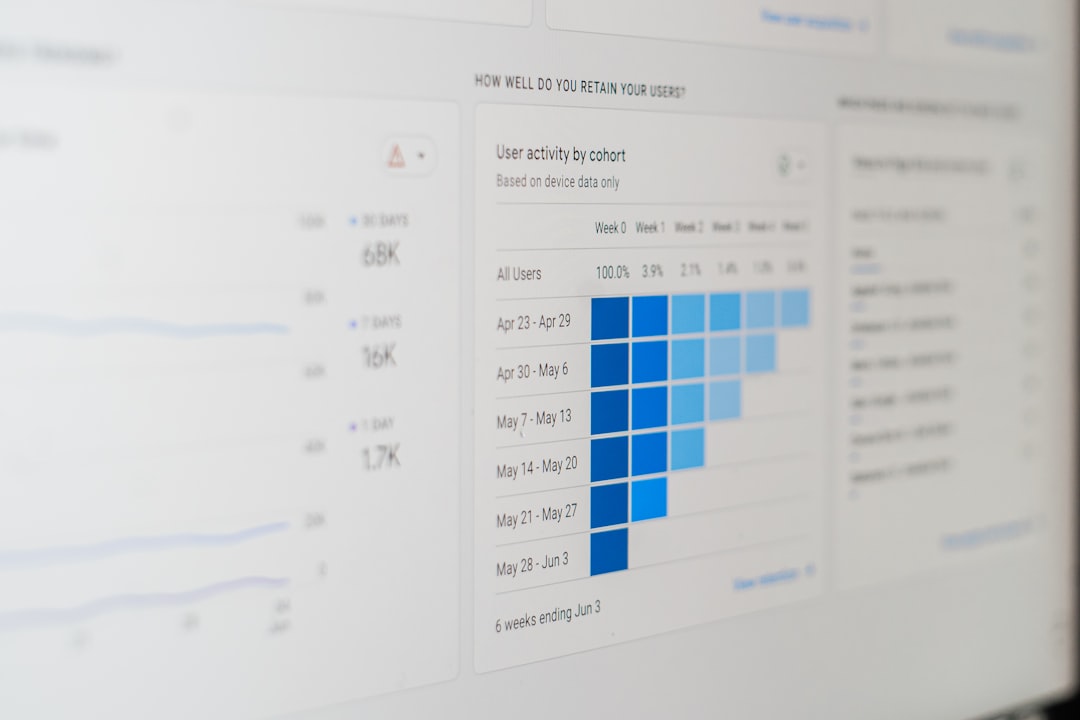
To keep improving performance, you need analytics that show:
- How many visitors land on the page
- How many start and complete your forms
- How many tap to call from mobile
- How often visitors return before booking
Armed with that data, you can:
- Refine headlines and offers
- Test different hero images or trust blocks
- Simplify forms and booking flows
- Adjust copy to address the questions and objections that actually come up
A/B testing – even on simple elements like headlines or button copy – can reveal big wins. Over time, this turns your landing page into a continuously optimized conversion asset, not just a static brochure.
Dental landing page examples: what works in the real world.
When you study real high‑performing dental landing pages, you see the same patterns over and over:
- Clear, specific service focus (e.g., "All‑on‑4® in [City]" instead of "comprehensive dentistry")
- Strong proof in the form of testimonials, review snippets, and before‑and‑after photos
- Frictionless contact flows – short forms, click‑to‑call buttons, and clear next steps
For example:
- A cosmetic dentistry page that showcases real smile transformations, names the doctor, lists credentials, and ends with a "Book your cosmetic consult" CTA.
- An implant page that highlights candidacy criteria, shows full‑arch results, explains financing, and invites visitors to schedule a no‑pressure consult.
The details differ by specialty, but the principles are the same: clarity, specificity, proof, and a smooth path to booking.
Common mistakes to avoid with dentist landing pages.
Even strong, growth‑minded practices fall into patterns that quietly undermine their landing pages. Here are some of the biggest pitfalls to avoid:
- Ignoring mobile optimization: Most potential patients are browsing on their phones. A page that breaks, lags, or forces endless zooming is a conversion killer.
- Weak or buried CTAs: If visitors have to hunt for the next step, many will simply leave.
- Thin or missing social proof: Without visible testimonials, reviews, or results, your practice feels unproven.
- Cluttered layouts: Too many competing elements overwhelm visitors and depress conversion rates.
- Generic, one‑size‑fits‑all messaging: Trying to speak to "everyone" ends up resonating with no one.
- Vague payment and insurance details: When cost questions go unanswered, motivated prospects hesitate.
- Overuse of generic stock photos: Stock imagery erodes trust instead of building it.
- Neglecting SEO fundamentals: Pages without relevant keywords, descriptive metadata, or optimized images are harder to find.
- Lack of tracking: Without analytics and conversion tracking, optimization becomes guesswork.
- Letting pages stagnate: Offers, visuals, and messaging should evolve with your practice and market – fresh, updated pages almost always perform better.
Mastering the fundamentals – and avoiding these common traps – turns your landing page into a true patient‑attraction asset instead of just another web page.
Landing pages are not optional for modern dental marketing.
Running paid media without a conversion‑focused landing page is like pouring water into a leaky bucket. You see traffic and clicks, but the actual results never match your spend.
For practices serious about growth, a dedicated dentist landing page is a core asset, not a nice‑to‑have. A well‑designed, service‑specific page, integrated into a professional dental website, gives new visitors:
- A clear understanding of what you offer
- Confidence in your expertise and results
- Simple next steps to book
At Growth Friday, landing pages are a core part of our broader Growth 360 approach. Campaigns, creative, and user experience are designed together so that every click has a clear, conversion‑ready destination.
The bottom line
If your practice is investing in Google Ads or Facebook/Instagram Ads and still sending that traffic to a generic homepage, you’re almost certainly leaving results – and revenue – on the table.
A custom landing page design for dentists, built specifically to convert and clearly communicate your value proposition, is one of the fastest ways to:
- Attract more of the right patients
- Improve ROI without raising ad budgets
- Turn anonymous clicks into scheduled appointments
If you want to see what your campaigns could be doing with the right landing pages in place, schedule a complimentary discovery consult and we’ll walk you through it step‑by‑step.
Marketing doesn’t need to be complicated. It just needs to be built to convert.
Recent blog posts

Cosmetic dentist marketing: A 2026 playbook that actually books smile makeovers.
Cosmetic dentist marketing refers to the strategies and tactics used to attract and retain patients seeking elective cosmetic dental procedures, such as veneers, smile makeovers, Invisalign, and teeth whitening. Understanding the target audience is essential for effective marketing in cosmetic dentistry, as it allows practices to tailor their messaging and outreach to those most likely to seek these services.
The landscape of cosmetic dentistry has changed dramatically since 2020. What once relied on steady referrals and Yellow Pages listings has evolved into a highly competitive digital arena where practices not only compete with each other but also face challenges from mail-order aligners, at-home whitening kits, and med spas offering aesthetic services.
Between 2021 and 2025, demand for cosmetic dentistry surged as patients increasingly prioritized appearance-focused investments after the pandemic. This growth attracted new competitors at every level. Today, a prospective patient researching veneers may encounter direct-to-consumer aligner brands, influencer endorsements for whitening products, and numerous local practices all competing for attention, often before they even make a phone call.
This article focuses on actionable marketing tactics that cosmetic dentists can implement within the next 90 days to boost bookings for smile makeovers, veneers, Invisalign cases, and full-mouth rehabilitations. We are not discussing theory or vague best practices but proven strategies that convert interest into scheduled consultations and completed treatments.
At Growth Friday, we specialize in integrated, AI-powered marketing systems tailored for professional service firms, including cosmetic dentists seeking predictable, measurable growth. Our approach connects every marketing channel to the one metric that truly matters: booked appointments that lead to completed cases. For a more detailed look at our methodology, check out our guide on cosmetic dentist marketing that books smile makeovers.
Who actually buys cosmetic dentistry in 2026.
Many practices still rely on a generic “anyone who wants a nicer smile” persona, which weakens their marketing efforts. Generic messaging attracts generic leads or sometimes no leads at all.
The cosmetic dentists who consistently book high-value patients have identified specific buyer segments and tailor their marketing accordingly.
Primary cosmetic dentistry buyer segments.
- Urban professionals (age 28–40): Motivated by career advancement, dating, and events. They typically seek same-day whitening, Invisalign, and bonding, with a decision timeline of 2 to 4 weeks.
- Executive investors (age 45–65): Driven by professional image and perceived authority. Their common procedures include veneers and full smile makeovers, deciding within 4 to 12 weeks.
- Social-media-driven patients (age 20–35): Focused on Instagram/TikTok aesthetics and selfie confidence. They often opt for veneers, whitening, and clear aligners, deciding in 2 to 8 weeks.
- Life event patients (age 25–45): Preparing for weddings, reunions, or milestone photos. Their typical treatments are whitening, veneers, and smile makeovers, with a decision timeline of 4 to 8 weeks.
Each segment responds to different messaging strategies. For example, wedding countdown campaigns resonate with life event patients, “LinkedIn-ready smile” messaging appeals to executives, and social-proof-heavy ads featuring real transformations attract the Instagram-focused demographic.
Common decision drivers across all segments include:
- Trust and credentials, such as training, certifications, and case volume.
- Visible proof through before-and-after galleries and patient success stories.
- Transparent treatment costs and financing options.
- Convenience factors like online booking, location, and office hours.
- Addressing fear and pain management upfront.
Prioritize segments based on case value and lifetime value. For example, a veneers patient spending $15,000 to $30,000 who refers family members is far more valuable than a one-time whitening patient who never returns. Your cosmetic dentistry marketing strategy should allocate resources accordingly.
How to market your cosmetic dentistry practice across channels.
Simply boosting some social media posts is not a strategy; it is a gamble. The cosmetic dental practices that consistently book smile makeovers treat marketing as an integrated system rather than a set of disconnected tactics.
Organic search, paid ads, social media, email marketing, and offline efforts work together to guide prospective clients from initial awareness to booked consultation to completed treatment and referral.
The patient journey in cosmetic dentist marketing can be broken down into distinct stages, each with its own patient mindset and primary marketing channels:
- Awareness: At this stage, patients are thinking, “I want to improve my smile.” The best channels to reach them here include social media, display ads, and content marketing.
- Consideration: Patients begin asking, “What are my options? Who’s best?” Effective channels for this stage are SEO, Google search, review sites, and the practice’s website.
- Consultation: When patients decide, “I’m ready to meet this dentist,” targeted landing pages, paid search, and retargeting campaigns are key.
- Treatment and Referral: After receiving care, patients often feel, “I love my results.” Channels to engage them include email, SMS, referral programs, and word of mouth.
The following sections provide detailed recommendations on website and user experience, SEO, paid media, local SEO, content marketing, reputation management, and patient retention, all tailored specifically for cosmetic dentistry.
Growth Friday’s approach emphasizes measurable results at every stage. Every marketing channel is directly tied to booked appointments and production, focusing on outcomes rather than just clicks or impressions that look good in reports but do not drive growth.
Turn your website into a smile makeover conversion engine.
In 2026, your website often serves as the very first “chairside experience” for cosmetic dentistry patients. Visitors form an impression in under 0.1 seconds, which determines whether they explore further or bounce to competitors.
Your online presence must do more than exist; it must convert. This requires combining visual appeal, technical performance, and persuasive elements that encourage potential patients to book.

Essential website UX features.
- Mobile load times under 2 seconds (47% of users abandon slower sites)
- Clear navigation with cosmetic services prominently displayed
- Click-to-call buttons on every page
- Online booking or appointment request forms above the fold
- Mobile-first design with thumb-friendly tap targets and sticky booking buttons
Dedicated service pages that drive conversions.
Your website should include dedicated landing pages for:
- Veneers (both porcelain and composite)
- Smile makeovers and full-mouth reconstruction
- Invisalign and clear aligners
- Teeth whitening (in-office and take-home)
- Dental bonding and contouring
- Dental implants (if offered)
Each page should provide pricing guidance or ranges where permitted, high-quality before-and-after photos with patient consent, and persuasive copy focusing on benefits rather than just clinical details. Address common pain points such as cost, fear of discomfort, and time commitment.
Highlight financing options clearly. For example, presenting a $20,000 smile makeover as “$350/month with approved credit” makes it more approachable.
Technical SEO foundations.
Ensure your site includes:
- Schema markup for LocalBusiness and Dentist
- Optimized title tags and meta descriptions using keywords like “cosmetic dentist in [city]” and “smile makeover [city]”
- Fast, secure hosting with SSL certificate
- Alt text on all images, especially before-and-after galleries
Consider adding AI-powered chatbots or intelligent forms to answer common cosmetic questions and capture qualified leads 24/7. Growth Friday can integrate these digital tools with CRM systems to ensure no lead is missed.
Key website elements that sell cosmetic treatments.
Your homepage should emphasize cosmetic value with a hero section featuring a compelling headline (“Book Your 2026 Smile Makeover in [City]”), an immediate call to action, and patient imagery reflecting your target demographic.
Important pages include:
- Homepage with cosmetic focus
- Individual treatment landing pages
- Before-and-after gallery with case details
- Reviews and testimonials page
- Financing and payment options page
- Comprehensive FAQ section
- “Meet the doctor” page showcasing credentials and case numbers
Trust elements are critical for elective cosmetic procedures. Highlight affiliations (AACD, AGD), years of experience, and concrete numbers like “Over 3,000 cosmetic cases completed since 2015.”
Set up robust analytics from day one. Use Google Analytics 4, call tracking, and form tracking to monitor which pages drive booked consultations and production, not just traffic.
AI-powered SEO strategy for cosmetic dentists.
Ranking for “cosmetic dentist near me” in 2026 requires blending traditional search engine optimization with AI-informed keyword and content planning. With 70% of searches now voice or AI-assisted, your content must be concise, natural, and optimized for how patients actually speak.
Patient language vs clinical terms.
Patients do not search for “composite resin direct bonding.” Instead, they use phrases like “make my teeth look straight without braces” or “fix chipped front tooth fast.”
Pages should reflect patient language in headings, body text, and FAQs while demonstrating clinical expertise. This approach satisfies both search engines and human readers who book consultations.
On-page SEO essentials.
- Unique title tags under 60 characters
- Clear H1/H2 hierarchy with keyword-relevant headings
- Descriptive URLs (e.g., /veneers-cost-chicago instead of /page-123)
- Internal links between related cosmetic service pages
- Alt text on all before-and-after images
Build content hubs around core themes such as smile makeovers, veneers, whitening, clear aligners, and anti-aging dentistry. Link related blog posts and FAQs to establish topical authority rewarded by search engines.
Content production for organic traffic.
AI tools can help identify related search clusters such as “veneers vs bonding,” “whitening sensitivity,” and “Invisalign timeline,” and outline content efficiently. However, content must be human-edited for medical accuracy to build trust and comply with regulations.
Publish 2 to 4 optimized articles monthly, each answering specific patient questions with clear calls to action for consultations or virtual smile assessments.
Authority signals matter more than ever with Google’s E-E-A-T standards. Include detailed doctor bios, real case studies with dates, and citations for statistics and claims.
Local SEO: dominate Google Maps for “cosmetic dentist in [city].”
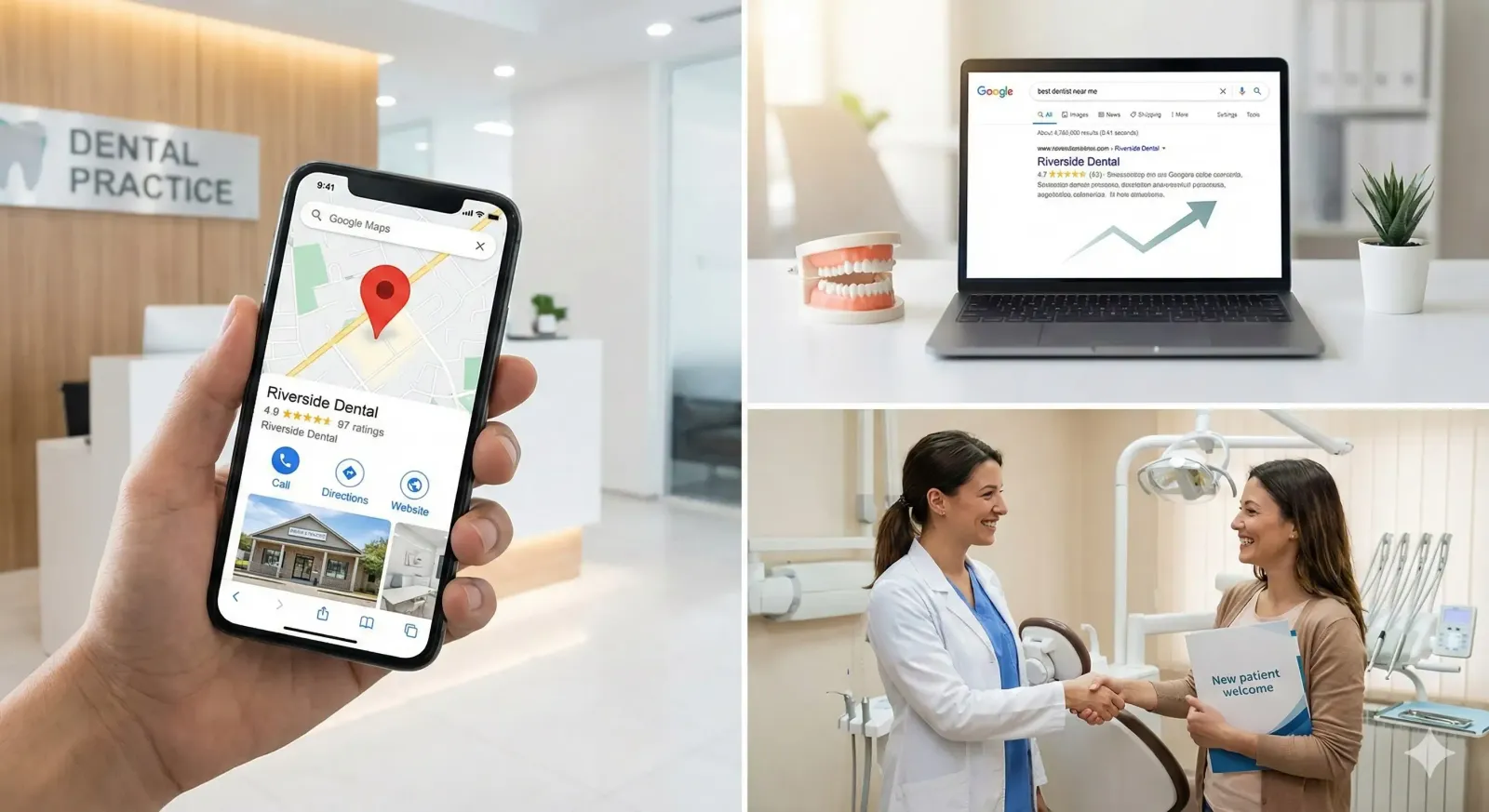
Most smile makeover patients search Google Maps using phrases like “best cosmetic dentist in [city]” or “veneers near me.” Appearing in the local 3-pack often matters more than ranking first organically.
Google Business Profile optimization:
- Choose correct categories (Cosmetic Dentist primary, Dentist secondary)
- Write detailed service descriptions for each cosmetic procedure
- Upload high-quality photos of office, team, and results (with consent)
- Post weekly updates highlighting case stories and promotions
Maintain consistent NAP (Name, Address, Phone) across healthcare directories, dental associations, and review sites like Healthgrades and Zocdoc.
Develop a review acquisition strategy (covered later) and track local rankings for key procedures across relevant ZIP codes.
Paid media that fills your calendar with high-value cosmetic cases.
Paid search and social advertising provide the fastest way to fill consultation slots, especially for high-value cosmetic procedures. When someone searches “porcelain veneers cost Chicago,” they show purchase intent worth capturing immediately.

Market size and budget expectations vary by location, with major metro areas like NYC, LA, and Chicago typically requiring monthly marketing budgets between $2,500 and $5,000. Mid-sized markets generally allocate $1,500 to $3,000 per month, while smaller cities may spend between $1,000 and $2,000. The cost per booked consultation can range widely—from $150 to $400 in major metros, $100 to $250 in mid-sized markets, and $75 to $175 in smaller cities. It is important to track the cost per booked consultation and the cost per started case, rather than focusing solely on cost per click, as a $200 lead that converts to a $25,000 smile makeover represents outstanding marketing ROI.
Google Ads for veneers, smile makeovers, and Invisalign.
Structure keyword themes around:
- Procedures: “porcelain veneers,” “smile makeover,” “Invisalign”
- Intent modifiers: “cost,” “near me,” “best,” “before and after”
- Urgency triggers: “before my wedding,” “fast teeth whitening”
Use location targeting and income demographics where allowed to focus spend on neighborhoods with higher cosmetic treatment adoption.
Craft ad copy with benefit-focused headlines, mention financing and free consultations (where compliant), and include call extensions plus structured snippets for cosmetic services.
Build comprehensive negative keyword lists to exclude low-value searches like “free dental clinic,” “DIY whitening,” “dental school,” and “insurance covered.”
Use call tracking numbers and form tracking to attribute booked consultations to specific campaigns and keywords.
Meta and Instagram Ads for visual storytelling.
Instagram and Facebook excel for cosmetic dentistry advertising because the results are inherently visual. Before-and-after transformations capture attention.
Effective creative formats include:
- Carousel sequences showing transformation progressions
- 15 to 30 second Reels featuring patient reactions at reveal appointments
- Short educational clips from the dentist explaining options
- Patient testimonial videos (with consent)
Retarget visitors who viewed veneers or smile makeover pages within the last 30 to 60 days. These warm audiences convert at much higher rates than cold traffic.
Build lookalike audiences based on your best cosmetic patients where platform policies permit. Measure success by booked consultations, not vanity metrics like likes or follows.
Growth Friday creates integrated dashboards showing which keywords, audiences, and creatives generate actual production, linking marketing efforts directly to revenue.
Content marketing that builds trust and educates future patients.
Cosmetic dentistry buyers conduct extensive research, often 2 to 8 weeks before committing to expensive treatments. They read reviews, compare options, and seek reassurance.
Your content should support them throughout this journey.
Content calendar planning.
Develop diverse content types:
- Blog posts answering specific questions
- Downloadable guides (e.g., “2026 guide to veneers vs bonding”)
- Short videos explaining procedures
- Patient journey case studies
- FAQ content optimized for voice search
High-performing content topics:
- “How much do veneers cost in [city]? 2026 pricing guide”
- “Veneers vs bonding: which is right for your smile?”
- “What to expect during your smile makeover: a complete timeline”
- “How long does Invisalign take? Realistic timelines for adults”
- “Day in the life: what getting veneers actually feels like”
- “Whitening sensitivity: causes, prevention, and solutions”
- “Financing your smile makeover: options beyond insurance”
- “Questions to ask before choosing a cosmetic dentist”
Each piece should answer a specific patient question and end with a clear call to action to schedule a consultation or virtual smile assessment.
Repurpose content efficiently: blog posts can become email sequences, social media posts, and video scripts, maximizing reach without extra production effort.
Growth Friday uses performance tracking and AI to identify topics generating the most high-intent organic traffic, adjusting the content plan based on real results rather than assumptions.
Video, before-and-after galleries, and case stories.
Video content humanizes your practice in ways static content cannot. Prioritize:
- Doctor introduction videos showcasing expertise and personality
- “What to expect” walkthroughs easing procedure anxiety
- Patient testimonial clips with real transformations
- Quick procedure explanations for social media
For before-and-after galleries, use standardized angles and lighting, include annotations about treatment type and duration, and clearly indicate patient consent.

Narrative case studies work especially well for high-value procedures. Detail the patient’s goals, treatment plan, timeline, and final outcome. Anchor with real dates (e.g., “Sarah’s 2024 full-mouth reconstruction”) to maintain currency and credibility.
Embed these assets across cosmetic service pages, blog articles, and paid landing pages to reinforce social proof at every touchpoint.
Reputation, reviews, and social proof for cosmetic dentists.
In elective cosmetic care, online reviews often outweigh proximity when patients choose a provider. Practices with strong positive reviews attract more inquiries, 20 to 30 percent more on average.
Research shows 87 percent of patients check online reviews before booking.
Review acquisition workflow.
- Identify patients who completed cosmetic treatments successfully
- Send SMS or email within 24 to 48 hours with a direct review link
- Follow up within 3 days if no response
- Thank patients personally who leave reviews
Encourage detailed reviews mentioning specific procedures like “my veneers turned out perfect” or “Invisalign was easier than expected” as these carry more weight.
Review quality factors:
- Quantity: consistent flow beats sporadic bursts
- Recency: reviews from the last 90 days carry more influence
- Rating: maintain an average of 4.5 stars or higher
- Specificity: mention actual cosmetic procedures
- Response: reply professionally to all reviews, positive or negative
For negative reviews, respond promptly and professionally. Acknowledge concerns, offer offline discussion, and demonstrate commitment to patient satisfaction. How you respond matters as much as the review itself.
Feature selected reviews and testimonials on your website, landing pages, and ads with permission. This social proof compounds over time.
Growth Friday integrates review platforms into broader reporting so you can correlate review volume and rating trends with new patient bookings.
Leveraging social media without becoming a full-time influencer.
You do not need viral TikTok dances; you need a consistent, professional presence aligned with your cosmetic dentistry brand.
Simple weekly social media plan:
- 2 to 3 educational posts (tips, myth-busting, procedure explanations)
- 1 to 2 before-and-after features (with consent)
- 1 behind-the-scenes or team culture post
Use Stories and Reels for quick Q&A sessions, myth-busting, and short case teasers. Authenticity often outperforms polish.
Celebrate staff milestones and patient achievements (with consent) to make your practice feel approachable. Visitors should feel like they already know your team before their first appointment.
Track which posts drive profile visits, website clicks, and direct messages about cosmetic services. Focus on what works rather than chasing trends.
Patient loyalty, retention, and referrals for cosmetic cases.
A single smile makeover often leads to referrals from friends, family, and coworkers if the experience is memorable and shareable. Word of mouth marketing remains powerful but can be systematized.
Post-treatment nurture sequences.
- Follow-up call within 24 to 48 hours post-treatment
- Check-in at 1 week addressing any concerns
- Email at 1 month with care instructions and whitening maintenance tips
- Anniversary outreach celebrating the smile transformation
Referral programs that work.
Design compliant, tasteful referral incentives such as:
- Gift cards for both referrer and new client
- Whitening touch-up refills for referrals
- Discounts on future treatments when referred friends complete cosmetic cases
Seasonal campaigns targeting existing clients generate repeat elective treatments: “Spring 2026 Smile Refresh,” “Holiday Photo-Ready Whitening Specials.”
Cross-selling from general dentistry to cosmetic procedures happens naturally during hygiene visits and recall reminders when you build credibility through excellent care.
Email and SMS marketing that patients actually welcome.
Segment your patient list by:
- Cosmetic vs general dentistry patients
- Active vs dormant patients
- High-value (veneers, full-mouth) vs lower-ticket (whitening) cases
Effective message types include:
- Post-op care instructions and tips
- Anniversary check-ins (“It’s been one year since your smile makeover!”)
- Birthday whitening offers
- Limited-time promotions for aligners or veneers
Keep emails concise, visually appealing, and mobile-optimized. Use clear calls to action directing to booking pages.
For SMS, focus on compliant reminders for consultations and follow-ups, plus occasional cosmetic campaigns with explicit opt-ins.
Growth Friday sets up automated flows triggered by events like consultation requests, no-shows, and treatment completions, keeping your marketing campaigns running without constant manual effort.
How Growth Friday builds cosmetic dentist marketing systems that scale.
By this point, you understand that effective dental marketing is not about isolated tactics but building an integrated system where every channel works together to grow your cosmetic dentistry practice.
Growth Friday partners with cosmetic dentists who want a data-driven growth engine, not disconnected vendors handling pieces without coordination.
Our core capabilities for cosmetic dentistry.
- AI-informed cosmetic dentistry SEO driving organic traffic
- High-conversion website design and UX optimization
- Google Ads and Meta campaigns focused on qualified leads
- Local SEO domination for “cosmetic dentist near me” searches
- Content marketing that educates and converts
- Digital marketing services tied to actual results
- Performance tracking and marketing analytics you can easily understand
Our Growth 360 model ties every channel to one source of truth: booked cosmetic consultations and completed cases. You receive monthly or quarterly reports showing traffic, leads, cost per consultation, cost per started case, and ROI for major procedures.
We help you stay focused on what matters, treating patients and growing production, while we handle marketing execution and optimization.
Ready to build a cosmetic dentist marketing system that consistently books smile makeovers? Visit our complete guide to cosmetic dentist marketing to explore detailed services, case studies, and next steps for attracting more patients to your cosmetic dentistry practice.
The practices winning in 2026 treat marketing as a measurable system. Let us build yours.

Dental Facebook ads: strategies for success.
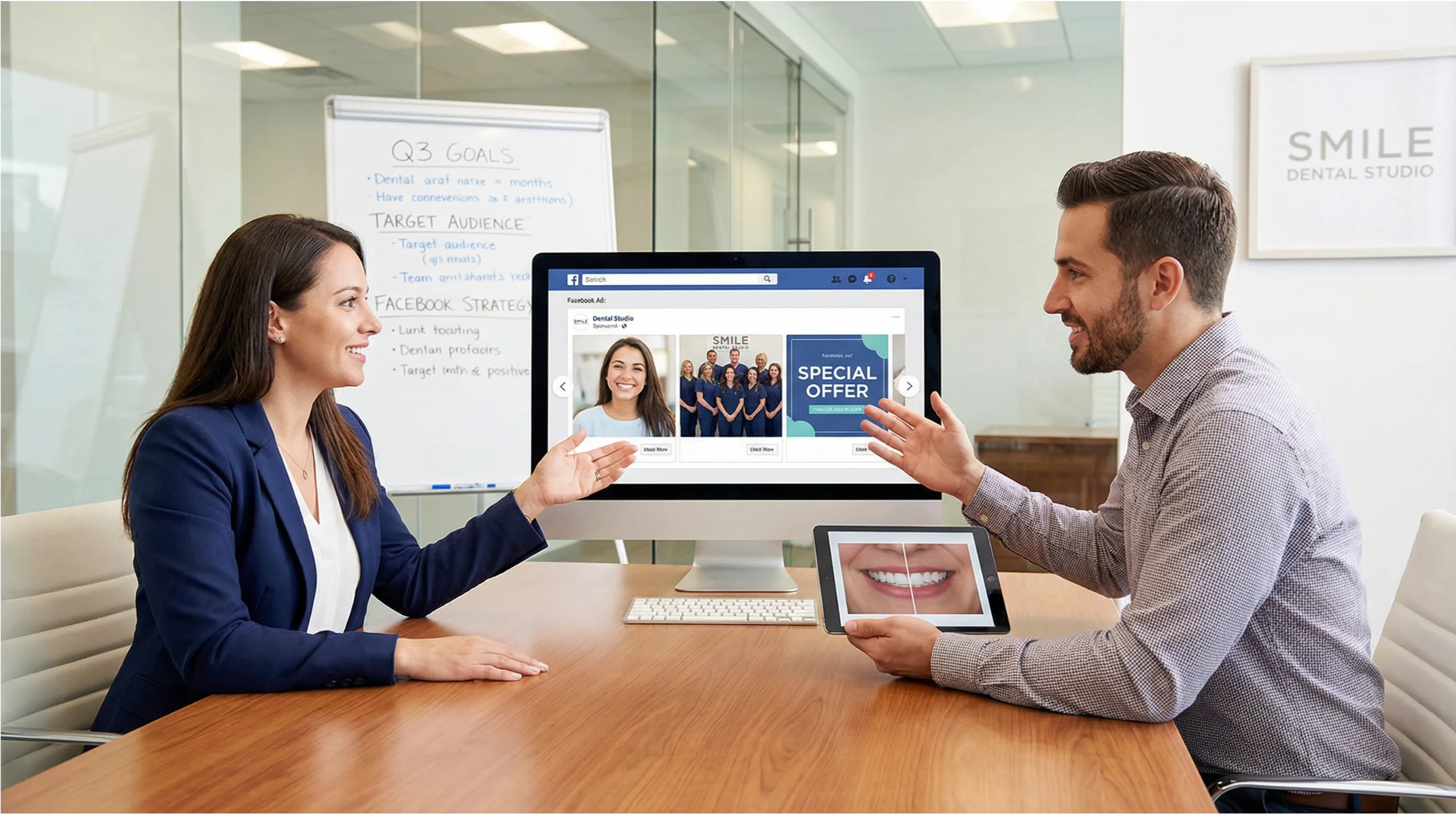
This latest blog post is designed as a guide for dental practice owners and marketers seeking to harness the power of dental Facebook ads to grow their patient base and build a strong online presence. Most dentists face challenges in tracking and optimizing their marketing efforts, and often question the effectiveness of social media advertising. We’ll cover why dental Facebook ads matter in today’s competitive landscape; Facebook has over 2.9 billion monthly active users, offering dental practices access to a vast audience; how to craft high-performing campaigns, and actionable strategies for maximizing your return on investment. Whether you’re new to Facebook advertising or looking to improve your results, this guide will help you understand the key elements that drive success and how to avoid common pitfalls.
Setting up a dental practice Facebook ad campaign.
Launching a breakthrough Facebook ad campaign for your dental practice isn't about guesswork, it's about strategic precision that actually drives results. You need to zero in on your ideal patient profile with laser focus: age demographics, geographic radius, lifestyle interests, and specific dental pain points that keep them searching at 2 AM. Your ad objectives aren't just marketing goals - they're growth engines designed to scale your practice. Whether you're building patient acquisition systems, introducing game-changing services, or establishing market dominance in your community, every objective must map back to measurable ROI that transforms your bottom line.
Facebook Ads Manager becomes your command center for orchestrating multi-format campaigns that actually convert browsers into booked appointments. Image ads showcase your team's expertise and build instant credibility. Video content captures authentic patient transformations and behind-the-scenes authenticity that competitors can't replicate. Carousel formats let you display your full service portfolio with strategic sequencing. Lead generation ads cut through the noise to capture high-intent prospects directly into your funnel. Each format isn't just advertising - it's a strategic touchpoint in your patient acquisition system, designed to work in seamless harmony across the entire patient journey.
Your ad copy becomes the difference between scroll-past content and conversion gold - benefit-driven messaging with CTAs that demand immediate action, not polite consideration. Strategic keyword integration like "free consultation" and "new patient special" doesn't just boost metrics - it triggers the psychological triggers that turn prospects into patients. Facebook ads aren't just another marketing channel for your dental practice - they're your gateway to unprecedented audience reach, brand authority that competitors envy, and a steady stream of qualified patients walking through your doors. With the right strategic framework, facebook advertising transforms from expense into your most reliable patient acquisition engine.
Understanding ad objectives for dental practices.
Setting the right ad objectives isn't just important - it's the game-changing foundation that separates winning dental Facebook campaigns from budget-draining disappointments. Here's the truth: ad objectives are your direct line to Facebook's algorithm, telling it exactly what success looks like for your practice. Whether you're hunting for new patient bookings, building rock-solid awareness in your community, or pushing a time-sensitive offer that converts - the right objective ensures your ads find the people ready to take action. This isn't guesswork. This is maximizing every marketing dollar with surgical precision.
The smart money focuses on three powerhouse objectives that actually move the needle for dental practices. Lead generation - because collecting appointment requests is pure gold. Traffic campaigns - driving the right visitors to your website or landing pages where conversions happen. Brand awareness - building that essential recognition in your local market that turns strangers into patients. Each objective shapes everything - how your ads get delivered, who sees them, and which metrics actually matter for tracking your success.
Facebook's analytics aren't just numbers on a screen - they're your real-time growth intelligence system. This data-driven approach gives you the power to fine-tune ad copy that converts, laser-focus your targeting, and shift budget to what's actually working. When you align your dental marketing strategies with crystal-clear ad objectives, you're not just running ads - you're building a focused, efficient advertising machine that consistently delivers measurable value to your practice and transforms prospects into patients.
Dental Facebook ads only work when creative and copy do the heavy lifting.
Dental Facebook ads can be one of the most powerful growth channels for dental practices, but they are also one of the easiest ways to burn budget when done poorly.
Dental advertising has become a vital component of modern dental marketing strategies, especially given the competitive nature of the dental industry. Many practices are shifting from traditional methods like radio spots to digital channels to reach more patients and ensure compliance with advertising laws. A well-managed Facebook page is essential as the foundation for effective Facebook ad campaigns, supporting both organic content and patient engagement.
Social media marketing, particularly on Facebook, offers dental practices access to a vast audience of over 2.9 billion users and can be more cost-effective than traditional advertising methods. This makes Facebook a key platform for connecting with current and prospective patients.
Unlike Google Ads, where intent already exists, Facebook ads interrupt attention. That means your success depends almost entirely on two things:
- The creative that stops the scroll
- The copy that earns the click
When either one misses the mark, even perfect targeting cannot save the campaign.
This is why most underperforming dental Facebook ads fail long before the landing page is ever seen.
New patient specials, especially those targeting first time patients, are among the most effective types of Facebook ads for dental practices. These offers reduce the barrier to booking an appointment and encourage new bookings. Offering a discount for first-time patients is a proven strategy to drive more appointments and attract new clients.
Facebook ads allow dental practices to target specific audiences based on location, age, interests, and behaviors, enhancing the effectiveness of campaigns.

Why Facebook ads are different for dental practices.
Dental marketing Facebook ads are not about catching someone actively searching for a dentist. They are about planting the idea, creating relevance, and building trust quickly. Facebook ads allow dental practices to reach potential patients who may not be actively searching for dental services.
You are showing up in a feed full of family photos, videos, and entertainment. Your ad needs to feel native, human, and immediately relevant to a real dental concern. Incorporating organic content—such as educational posts or team highlights, can help humanize your practice and build trust.
Successful dental Facebook ads understand this difference and are built accordingly. Facebook's targeting options allow dentists to reach people who have recently moved to the area, as well as existing patients for loyalty offers. Facebook also allows dentists to target specific audiences based on location, age, interests, and behaviors.
Messaging that focuses on patient care and positive experiences can help build credibility and trust.
With this understanding, let's explore how creative elements drive ad performance.
Facebook offers several different ad types for dental practices, including new patient specials, cosmetic dentistry campaigns, and emergency services ads. Ad types refer to the various formats and campaign objectives available on Facebook, such as single image ads, video ads, carousel ads, and lead generation forms, each tailored to specific marketing goals and patient needs.
The role of creative in dental Facebook ads.
Creative is the single biggest driver of performance on Facebook. It determines whether your ad is ignored or engaged with.
For dentists, the goal is not to be flashy. It is to be relatable, reassuring, and clear. Using real photos of your dentists and staff, rather than stock images, helps build authenticity and trust. Incorporating social proof, such as patient testimonials and positive reviews, further reassures potential patients and encourages engagement.
High-performing dental ad creative typically falls into a few proven categories. Video ads are especially effective for increasing engagement and can be used to showcase your practice, highlight patient stories, or explain procedures in a relatable way.
Before and after photos are powerful for demonstrating the results of cosmetic treatments like whitening or veneers, helping potential patients visualize outcomes. Pairing these visuals with a compelling offer, such as a limited-time discount or free consultation, can capture attention and drive action.
To optimize your Facebook ad performance, it's important to provide Facebook with enough data, such as allocating a budget of $1,000 or more per campaign, to allow the platform to learn and improve results. A/B testing different creative formats, including video ads and real photos, is recommended to identify what resonates best with your audience and maximize your return on investment.
With creative as the foundation, let's break down the key elements that make dental Facebook ad visuals effective.
Real people over stock photos.
Key elements of effective creative include:
- Real photos or short videos of the dentist or team members and staff
- Real office environments
- Friendly, approachable facial expressions
- Natural lighting and simple compositions
- Social proof, such as patient testimonials and positive reviews
Patients trust people, not polished stock imagery. Using real visuals instead of stock photos can reduce patient anxiety and enhance trust. Authentic photography in ads enhances trust and engagement with potential patients.
Overly staged stock images often trigger skepticism and ad fatigue.
Short, native-style video.
Video ads do not need to be expensive to be effective. In fact, the opposite is often true.
Simple video ads filmed on a phone often outperform professionally produced content because they feel authentic.
Examples of effective video content include:
- A dentist speaking directly to the camera
- A quick explanation of a common dental concern
- A short introduction to a new-patient offer
Utilizing video content in ads can significantly increase engagement and trust.
The goal is connection, not production value.
A/B testing video ads against photo-based ads is recommended to determine which format performs best for your dental Facebook ad campaigns.
Clear visual focus.
Dental Facebook ads should communicate one idea at a time.
A clear call-to-action (CTA) in the visual creative is essential, as it directs potential patients to take immediate and specific steps, such as booking a consultation or claiming an offer.
Busy graphics, excessive text overlays, or multiple messages in one creative reduce clarity and engagement.
Pairing a compelling offer with a clear call-to-action can significantly increase engagement, as attractive promotions or discounts motivate potential patients to act.
If a viewer cannot understand what the ad is about in two seconds, it will not convert.
Urgency can also be created by including time-limited offers or constraints in the ad creative, encouraging faster responses.
With creative elements in place, the next step is to ensure your copy supports and enhances your message.
Utilizing various types of Facebook ads for dental marketing.
Facebook isn't just another advertising platform - it's your practice's growth engine waiting to be unleashed. Smart dental practices know that cookie-cutter campaigns don't cut it anymore. You need a diverse arsenal of ad formats that actually connect with patients, not just flood their feeds. Each format serves as a strategic weapon in your marketing battlefield, letting you showcase expertise, spotlight transformations, and drive real appointments - not just empty clicks.
Image ads aren't just pretty pictures - they're trust-builders that introduce your team and spotlight irresistible patient specials. Video ads? They're your secret weapon for bringing authenticity to life through compelling office tours, genuine patient testimonials, and educational content that positions you as the expert. Carousel ads transform browsing into believing, letting prospects swipe through multiple services or jaw-dropping before-and-after transformations in one seamless experience. Lead generation ads eliminate friction entirely - turning Facebook browsers into booked appointments with zero runaround.
Here's what separates winning practices from struggling ones: they don't just run ads, they orchestrate campaigns. By strategically mixing these formats, your practice stays fresh, engaging, and impossible to ignore. This isn't about throwing content at the wall - it's about discovering which formats resonate with your community and doubling down on what drives results. The outcome? More qualified patients walking through your doors and marketing dollars that actually multiply instead of disappear.
Targeting the right audience for dental practices.
Precision targeting isn't just smart - it's the difference between dental practices that thrive and those that waste their marketing budget. Facebook's advanced targeting capabilities don't just reach people - they zero in on your ideal patients with laser-focused accuracy that other platforms simply can't match. You can pinpoint local prospects within your exact service radius, then layer on demographic intelligence like age brackets, household income, and interest profiles to create audience segments so refined - you'll wonder how you ever marketed without this level of precision.
But here's where most dental practices stop short - and where we go further. Beyond just attracting new patients, you can orchestrate comprehensive retargeting campaigns that re-engage website visitors who've already shown interest in your services. Plus, you'll keep existing patients connected with loyalty-driven offers and exclusive updates on your latest treatments - turning one-time visits into lifelong relationships. This isn't just advertising - it's strategic audience orchestration that ensures every impression counts and every dollar drives results that matter.
The practices that dominate their markets understand this truth: smart targeting isn't just a feature - it's the foundation of unstoppable growth. By continuously optimizing your audience parameters based on real campaign intelligence, your dental practice will experience higher ad effectiveness, stronger patient retention, and a steady pipeline of premium leads. This is how you transform Facebook from just another marketing channel into your most powerful patient acquisition engine - ensuring every investment accelerates your path to market leadership.

What great copy does in dental marketing Facebook ads.
If creative earns attention, copy earns trust.
Strong copy for dental Facebook ads does three things well:
- It’s concise, clear, and focused on benefits. Copy should also encourage immediate action, especially for urgent needs like emergency dental care, motivating patients to contact your practice without delay.
- It’s written in the language of your audience, not marketing jargon. Messaging should address both existing patients—using incentives to encourage loyalty and repeat visits—and potential patients, by highlighting what makes your practice unique and welcoming to new bookings.
- It’s specific, using numbers, offers, or unique selling points. Highlighting patient care and including patient testimonials in your ads can build trust, enhance emotional appeal, and help establish your practice as a trusted expert.
It speaks to one specific problem.
Defining clear ad objectives helps ensure your copy speaks directly to the right potential patients, addressing their unique needs and concerns.
Generic messaging like “We offer comprehensive dental care” rarely works in paid social.
High-performing copy speaks directly to a specific patient need, such as:
- Fear of the dentist
- Missing or damaged teeth
- Cosmetic concerns
- Emergency pain
Facebook allows dentists to target specific audiences based on location, age, interests, and behaviors.
Specificity signals relevance.
It uses plain, reassuring language.
Dental anxiety is real. The tone of your copy matters.
Effective dental ad copy is:
- Clear and conversational
- Reassuring rather than salesy
- Focused on outcomes, not procedures
Highlighting patient care and including patient testimonials in your ads can enhance emotional appeal and establish trust with potential patients.
Patients want to know how you will help them feel better, not how advanced your equipment is.
It makes the next step feel easy.
A clear call to action is crucial in dental Facebook ads, as it guides potential patients to take immediate and specific steps.
Examples include:
- Book a consultation
- See if you are a good fit
- Check availability
Pairing these CTAs with a compelling offer, such as a '$99 New Patient Special', can effectively capture attention and motivate users to take action.
Hard sells and urgency tactics often backfire in healthcare marketing.
A strong call to action (CTA), like 'Book Now', is essential for directing users to a mobile-optimized landing page, which can significantly improve engagement and conversion rates.
With copy and creative working together, let’s look at the essential components of high-performing dental Facebook ads.
Using before and after transformations in dental Facebook ads.
Before and after transformations aren't just pretty pictures for your dental Facebook ads - they're trust-building powerhouses that turn skeptical scrollers into eager patients. Real photos and videos of cosmetic treatments - teeth whitening, veneers, dental implants - don't just showcase your work, they tell compelling visual stories that prospective patients can't ignore. These aren't just case studies - they're proof that your practice delivers life-changing results, helping potential patients envision their own smile transformation journey.
Here's where strategy meets execution - integrate these transformation showcases into image ads, video ads, or carousel formats to maximize their impact. A carousel ad doesn't just display multiple cases - it guides viewers through complete patient journeys, while video ads can weave patient testimonials directly into their transformation story. Always use real patient images with proper permission - not just for authenticity, but to stay compliant with Facebook's advertising policies and build that unshakeable trust foundation.
This isn't just marketing tactics - it's relationship-building at scale. When you leverage before and after transformations in your dental marketing strategy, you're not just promoting services - you're demonstrating the confidence-boosting, life-changing results your practice delivers every day. This approach doesn't just build trust - it encourages immediate action and sets your dental office apart in a crowded marketplace, turning casual browsers into booked appointments and loyal patients who become your biggest advocates.
What to include in high-performing dental Facebook ads.
Across hundreds of campaigns, we see consistent patterns in what works.
Strong dental Facebook ads usually include:
- Clearly defined ad objectives for each campaign to guide targeting, messaging, and success metrics
- One clear message or compelling offer that stands out
- Human-centered creative, including video ads and before and after photos to showcase real results and build trust
- Copy that mirrors how patients actually think and speak
- Social proof such as testimonials and reviews to build credibility
- A clear, simple call to action that directs patients to take the next step
- A direct path to a dedicated website or custom landing page, with tracking tools like Facebook Pixel to measure and optimize performance
Using a variety of ad types and A/B testing different formats (such as video vs. photo ads) can improve reach and performance. Custom landing pages that match specific offers can further improve conversion rates.
Each element supports the others. No single piece works in isolation.
Now that you know what to include, it’s equally important to understand what to avoid.
What to avoid in dental Facebook ads.
Just as important as what to include is what to leave out.
Common mistakes that hurt dental ad performance include:
- Overly promotional language
- Before and after imagery that risks policy issues
- Dense blocks of text
- Medical jargon or clinical language
- Sending traffic to a generic homepage
Facebook rewards relevance and user experience. Anything that feels pushy or confusing is quietly deprioritized.
Avoiding these pitfalls sets the stage for a seamless post-click experience, which is critical for conversions.
Why creative and copy must align with the landing page.
Even the best dental Facebook ads will fail if the post-click experience does not match the promise of the ad.
Your ad creative, copy, and landing page must tell the same story. It's important to direct Facebook ad traffic to a dedicated, optimized website or landing page that is focused on the specific offer or message in your ad.
When messaging aligns:
- Conversion rates increase
- Cost per lead drops
- Lead quality improves
Using a Facebook Pixel on your website allows you to track website visitors and gather valuable data for better ad targeting and campaign optimization.
This alignment is a core part of how we approach dental marketing Facebook ads at Growth Friday. Ads, landing pages, and follow-up systems are built together, not separately. Custom landing pages that match specific offers can further improve conversion rates for your ads.
With your ads and landing pages in sync, the next step is to measure and optimize performance.
Measuring ad performance for dental Facebook campaigns.
For dental practices diving into Facebook advertising, here's the truth: measuring ad performance isn't just smart—it is what separates practices that thrive from those that burn through budgets with nothing to show for it.
Without crystal-clear data, even your most brilliant dental Facebook ads become silent budget drains, quietly stealing your marketing dollars while delivering zero new patients or brand recognition.
Key metrics to track.
The secret to making Facebook ads actually work for your dental practice is that you track the metrics that matter. Key metrics include:
- Click-through rate (CTR)
- Conversion rate
- Return on ad spend (ROAS)
- Impressions
- Clicks
- Cost per click (CPC)
- Cost per conversion
These numbers do not lie about how well your ad copy and creative connect with your target audience.

Using data to optimize campaigns.
When you monitor these metrics religiously, you will instantly spot which dental ads are pulling in local patients, which offers (like that free consultation or free Invisalign consultation) are actually converting, and where you are throwing money away instead of investing it wisely.
Facebook Ads Manager becomes your mission control center for dental Facebook marketing analytics. Here is where you access the goldmine of insights—impressions, clicks, conversions, cost per click (CPC), and cost per conversion. Running a video ad campaign promoting dental implants or cosmetic treatments? You can pit different ad formats against each other—carousel ads versus single-image ads—to discover which one drives more qualified web visitors to your landing page and converts them into booked appointments.
Picture this: your dental office targets prospective patients within a tight radius with an irresistible patient special for first-time visitors. By tracking conversions (those scheduled appointments that matter) and analyzing click-through rates, you gain the power to refine your ad text, sharpen your call to action, or fine-tune your audience targeting for explosive results. When you spot that one ad type generating more new dental patients at a fraction of the cost per conversion, you shift your ad spend like a strategic chess master—no more wasted dollars, maximum ROI every time.
Regular KPI reviews empower smart dentists to make data-driven decisions that transform their dental Facebook ads from mere campaign runners into patient-generating powerhouses. This approach builds real awareness among local audiences, promotes new services with precision, and grows your patient base with results you can actually measure. Whether you are amplifying brand recognition, launching that game-changing patient special, or showcasing jaw-dropping before and after transformations, ongoing measurement becomes your competitive edge for optimizing dental marketing strategies that win.
At Growth Friday, we partner with dental practices to master Facebook marketing and paid ads that attract quality patients, skyrocket conversion rates, and deliver sustainable growth. We focus on the metrics that move the needle, ensuring your Facebook ad campaigns deliver authentic value—transforming potential customers into loyal patients while making every marketing dollar count toward your practice's success.
With measurement in place, remember that Facebook ads are a system, not a shortcut.
Facebook ads are a system, not a shortcut.
Facebook ads can absolutely work for dentists, but they are not a set-it-and-forget-it tactic.
They require:
- Ongoing creative testing
- Message refinement
- Data-driven iteration
- A conversion-focused user experience
Providing Facebook with enough data—such as a budget of $1,000 or more per campaign—is necessary for effective optimization. Defining clear ad objectives and running continuous A/B testing on images, headlines, and calls-to-action are key to ongoing improvement. Regularly evaluating ad metrics allows practices to cut underperforming campaigns and continue funding successful ones.
When done correctly, they become a predictable, scalable patient acquisition channel.
As you refine your approach, keep the following takeaway in mind.
The takeaway.
Dental Facebook ads succeed when creative and copy do the heavy lifting. If your ads are not performing, the issue is rarely the platform. It is usually the message, the creative, or the experience after the click. Success with dental Facebook ads depends on setting clear ad objectives, presenting a compelling offer, and including a clear call to action that guides potential patients to take the next step.
At Growth Friday, we build dental marketing Facebook ads that respect the patient, align with how people actually use social media, and turn attention into booked appointments.
Because in dental marketing, trust always converts better than tactics.

Dentist landing page: how to build a high-converting dental landing page.
This guide explains what a dentist landing page is, why it matters so much for practices running online ads, and how to design one that reliably turns clicks into new patients. It’s written for dentists, practice managers, and dental marketers who want to maximize their ad spend and grow their patient base on autopilot – especially those working with partners like Growth Friday or managing their own campaigns.
A dentist landing page is the workhorse behind every profitable campaign. Instead of sending ad traffic to a generic homepage or contact page, you send it to a single, focused page on your site that highlights one service or offer in depth and drives visitors to one primary action – usually booking an appointment.
What should a dentist landing page include? (summary checklist).
High-performing dentist landing pages are focused, fast, and built to convert. At a minimum, every page should include:
- One specific service or new‑patient offer: Each landing page should align tightly with the ad or search term that brought the visitor there – for example, dental implants, emergency visits, or cosmetic makeovers – not a mix of everything your practice does.
- A clear primary call‑to‑action (CTA): Make it incredibly easy to book – with a prominent button or form that invites visitors to "Request an appointment," "Book a consultation," or "Call now."
- Concise, patient‑friendly service information: Explain what you do and why it helps in plain language. Think outcomes and benefits, not clinical jargon.
Get these basics right, and your landing page is no longer just a brochure – it’s an engine for turning paid clicks into scheduled patients.
What is a dental landing page?
A dental landing page is a dedicated page on your website built around a single goal: converting visitors from your online ads into new patients.
Unlike your homepage – which has to serve many audiences (existing patients, job seekers, referral partners, etc.) – a landing page:
- Focuses on one service, offer, or patient problem in depth.
- Removes distractions like crowded navigation and competing CTAs.
- Guides visitors step‑by‑step toward booking.
Once you’re clear on what a landing page is, the next question is: how do you feed it the right traffic? That’s where campaign strategy comes in.

Why every dentist landing page needs a dedicated, high‑converting ad campaign.
If you’re already investing in Google Ads or Facebook/Instagram Ads, you’ve solved the visibility problem. But visibility alone doesn’t fill your schedule.
To turn ad clicks into high‑value new patients, your landing page has to clearly communicate your unique value proposition – what makes your practice the obvious choice in your market. That might include:
- Advanced technology (CBCT, digital smile design, same‑day crowns)
- Comfort‑first experience (sedation options, spa‑like amenities)
- Specialized expertise (implants, full‑arch cases, cosmetic makeovers)
A strong value proposition, front and center on your landing page, builds trust fast and focuses attention on your most important offers.
What actually moves the needle is not your homepage or a generic contact page. It’s a well‑designed, proven‑to‑convert dentist landing page built specifically for that campaign.
Creating a new, service‑specific landing page that’s tightly integrated into your dentist website does three things at once:
- Improves conversion rates from paid traffic.
- Strengthens your practice’s overall online presence.
- Supports better search performance over time.
Too many practices waste thousands of dollars sending paid traffic to pages that were never meant to convert cold prospects. A dedicated landing page lets you showcase your unique value, address objections, and simplify next steps for new visitors.
A thoughtfully built dental landing page can improve your online visibility, support stronger search engine rankings, and generate a steady stream of new patient leads.
The real job of a landing page for dentists.
A landing page has one job: help a visitor take a specific, valuable action.
That action might be:
- Booking a consultation
- Requesting a new‑patient special
- Calling the office for same‑day availability
Unlike a full website, a conversion‑focused dental landing page strips away everything that doesn’t support that next step.
Core elements of a high‑converting landing page.
Strong dentist landing pages typically:
- Open with a headline and hero section that confirms visitors are in the right place.
- Mirror the exact language and intent of the ad or search.
- Speak directly to one patient need or service (e.g., implants, emergencies, cosmetic work).
- Build trust quickly with social proof, credentials, and clear outcomes.
- Make the next step obvious through a clear, visually dominant CTA.
- Use high‑quality, real‑world imagery that reflects your practice.
- Reinforce trust through testimonials, reviews, and before‑and‑after results.
When these ingredients work together, conversion rates climb and cost per lead drops.
Why sending ads to your homepage usually fails.
Your homepage has a hard job. It needs to serve current patients, prospective patients, referral partners, prospective hires, and more. Paid ad traffic is different: those visitors are task‑driven and impatient.
Someone who clicks an ad for “emergency dentist near me” does not want to:
- Dig through menus
- Read your full practice history
- Guess which link to click next
Even if your homepage is mobile‑friendly and quick to load, it’s still overloaded with choices.
Common homepage problems for paid traffic.
- Too many navigation options competing for attention
- Messaging that doesn’t match the ad that brought the visitor there
- Slow or clunky mobile experience
- Important forms and CTAs buried below unrelated content
A focused care‑specific landing page solves these issues by:
- Presenting one clear offer or service
- Matching the promise of the ad
- Simplifying the path to booking
Your landing page should be simple, easy to navigate, and fully optimized for mobile. Adding an embedded map or directions widget also makes it easier for visitors to find your practice without leaving the page.
The difference between a generic page and a custom landing page design for dentists.
Templates are tempting: they’re fast, inexpensive, and widely available. The problem? In competitive dental markets, generic templates rarely win.
A custom landing page design for dentists is built around:
- Real patient behavior and intent
- Real performance data
- Real conversion psychology for high‑trust health decisions
At Growth Friday, we design dental landing pages based on:
- The specific service being advertised, with dedicated landing pages for unique services (e.g., emergency, cosmetic, general, or dental implant marketing for high‑intent patients).
- Local search intent and competitive dynamics in your market.
- Mobile‑first behavior – assuming most ad traffic will come from phones.
- HIPAA‑aware lead capture and data handling.
- Proven conversion patterns from top‑performing dental campaigns.
- Simple, friction‑free forms (name, phone, email as the default baseline).
- Concise, outcome‑focused copy instead of dense clinical language.
The result is a site structure that moves you from "getting clicks" to consistently booking patients.
What high‑converting dentist landing pages include.
Every campaign is unique, but the strongest dental landing pages usually share the same core building blocks.
Key elements of a high‑converting dentist landing page.
- Compelling hero headline: Confirms visitors are in the right place and keeps them reading.
- High‑quality visuals: Authentic photos of your team, practice, and results.
- Clear proof of expertise: Credentials, years of experience, advanced technology, and specialties.
- Service breakdown: Simple, skimmable explanations of what you offer and who it’s for.
- Testimonials and before‑and‑after photos: Real‑world proof that your treatments work.
- Payment and location details: Insurance accepted, financing options, and how to find you.
- Interactive map or directions: Make it effortless to see where you are.
- Streamlined booking experience: One primary CTA and a short, mobile‑friendly form.
- Tracking and analytics: Conversion tracking and event measurement to see what’s working.

Clear, service‑specific headline.
Your hero headline should instantly tell visitors they’ve landed in the right place.
If your ad is promoting dental implants, the landing page should clearly say that – not just "Welcome to [Your Practice Name]." A short supporting line can reinforce the benefit: comfort, cosmetic improvement, function, or confidence.
Video backgrounds and hero videos can work well when they:
- Load quickly
- Show real patients and team members
- Reinforce your key message instead of distracting from it
Regardless of format, clarity beats cleverness every time.
Strong trust signals.
Dental decisions are personal, high‑stakes, and often expensive. Trust has to be built quickly.
Effective landing pages highlight:
- Dentist credentials, training, and years in practice
- Specialized expertise (implants, full‑arch, cosmetic, sedation, etc.)
- Authentic patient testimonials and star ratings
- Before‑and‑after photos (where appropriate and compliant)
- Membership in respected associations and organizations
By surfacing these trust signals above the fold and throughout the page, you reduce hesitation and increase the likelihood of form submissions and calls.
One focused call to action.
A landing page should make one main action feel like the natural next step.
Examples:
- "Book a consultation"
- "Schedule your free implant assessment"
- "Request an appointment"
- "Call now for availability"
Supporting CTAs (like click‑to‑call on mobile) can exist, but there should be a single "primary" action the entire page supports.
The copy around your CTA should:
- Emphasize simplicity and safety
- Set expectations for what happens next
- Avoid high‑pressure language while still creating urgency when appropriate
Optimizing for mobile and speed.
Most dental ad traffic is mobile, so speed and mobile UX are non‑negotiable.
- Recent data shows that mobile devices now drive well over half of global web traffic.
- A widely cited study found that a one‑second delay in page load can reduce conversions by around 7%.
That means:
- Your page should load in under three seconds on a typical mobile connection.
- Forms should be tap‑friendly and short.
- Typography and spacing should be optimized for small screens first.
Speed, readability, and ease of use matter more than design flourishes.
Payment and insurance information: removing barriers to booking.
One of the biggest unspoken questions on any dental landing page is simple: "Can I afford this?"
Practices that embrace this reality and address it head‑on see significantly better conversion rates. That means:
- Clear lists of accepted insurance plans
- Transparent explanations of payment options
- Simple breakdowns of financing for big‑ticket treatments like implants, full‑arch, or cosmetic cases
A "Payment & Insurance" section that actually answers real questions – instead of vague "flexible options available" language – does the heavy lifting of conversion psychology. When visitors feel you’re being transparent and empathetic, they’re far more likely to take the next step.
Visuals and media: making your dental landing page inviting.
First impressions on a landing page work the same way they do in your lobby.
High‑converting pages lean on real, human visuals instead of generic stock photos:
- Authentic photos of your team and office
- Before‑and‑after galleries for cosmetic or implant cases
- Short intro videos from the doctor or treatment coordinator
- Video testimonials from real patients
- Virtual tours or quick walkthroughs of your space
These assets don’t just "look nice" – they:
- Build emotional connection
- Reduce uncertainty about what a visit will feel like
- Reinforce the quality of your work
When prospects can picture themselves in your practice, they’re much closer to booking.
Why landing pages directly improve Google Ads and Facebook Ads performance.
Dedicated landing pages don’t just lift conversion rates. They improve the entire performance loop inside Google Ads and Meta Ads.
For Google Ads, strong dentist landing pages can:
- Increase Quality Score by improving relevance and on‑page experience
- Lower cost per click and cost per conversion
- Improve impression share on high‑value keywords
- Increase lead volume without increasing budget
- Reinforce your overall SEO and local visibility, since fast, relevant pages aligned with intent tend to perform better over time
For Facebook and Instagram Ads, landing pages help:
- Improve conversion tracking accuracy
- Give the algorithm cleaner signals about who is actually booking
- Improve lead quality and downstream case acceptance
In short: when your landing page is doing its job, every advertising dollar works harder.
Conversion rates and analysis: measuring what matters.
A high‑converting dental landing page is never a "set it and forget it" asset.
To keep improving performance, you need analytics that show:
- How many visitors land on the page
- How many start and complete your forms
- How many tap to call from mobile
- How often visitors return before booking
Armed with that data, you can:
- Refine headlines and offers
- Test different hero images or trust blocks
- Simplify forms and booking flows
- Adjust copy to address the questions and objections that actually come up
A/B testing – even on simple elements like headlines or button copy – can reveal big wins. Over time, this turns your landing page into a continuously optimized conversion asset, not just a static brochure.
Dental landing page examples: what works in the real world.
When you study real high‑performing dental landing pages, you see the same patterns over and over:
- Clear, specific service focus (e.g., "All‑on‑4® in [City]" instead of "comprehensive dentistry")
- Strong proof in the form of testimonials, review snippets, and before‑and‑after photos
- Frictionless contact flows – short forms, click‑to‑call buttons, and clear next steps
For example:
- A cosmetic dentistry page that showcases real smile transformations, names the doctor, lists credentials, and ends with a "Book your cosmetic consult" CTA.
- An implant page that highlights candidacy criteria, shows full‑arch results, explains financing, and invites visitors to schedule a no‑pressure consult.
The details differ by specialty, but the principles are the same: clarity, specificity, proof, and a smooth path to booking.
Common mistakes to avoid with dentist landing pages.
Even strong, growth‑minded practices fall into patterns that quietly undermine their landing pages. Here are some of the biggest pitfalls to avoid:
- Ignoring mobile optimization: Most potential patients are browsing on their phones. A page that breaks, lags, or forces endless zooming is a conversion killer.
- Weak or buried CTAs: If visitors have to hunt for the next step, many will simply leave.
- Thin or missing social proof: Without visible testimonials, reviews, or results, your practice feels unproven.
- Cluttered layouts: Too many competing elements overwhelm visitors and depress conversion rates.
- Generic, one‑size‑fits‑all messaging: Trying to speak to "everyone" ends up resonating with no one.
- Vague payment and insurance details: When cost questions go unanswered, motivated prospects hesitate.
- Overuse of generic stock photos: Stock imagery erodes trust instead of building it.
- Neglecting SEO fundamentals: Pages without relevant keywords, descriptive metadata, or optimized images are harder to find.
- Lack of tracking: Without analytics and conversion tracking, optimization becomes guesswork.
- Letting pages stagnate: Offers, visuals, and messaging should evolve with your practice and market – fresh, updated pages almost always perform better.
Mastering the fundamentals – and avoiding these common traps – turns your landing page into a true patient‑attraction asset instead of just another web page.
Landing pages are not optional for modern dental marketing.
Running paid media without a conversion‑focused landing page is like pouring water into a leaky bucket. You see traffic and clicks, but the actual results never match your spend.
For practices serious about growth, a dedicated dentist landing page is a core asset, not a nice‑to‑have. A well‑designed, service‑specific page, integrated into a professional dental website, gives new visitors:
- A clear understanding of what you offer
- Confidence in your expertise and results
- Simple next steps to book
At Growth Friday, landing pages are a core part of our broader Growth 360 approach. Campaigns, creative, and user experience are designed together so that every click has a clear, conversion‑ready destination.
The bottom line
If your practice is investing in Google Ads or Facebook/Instagram Ads and still sending that traffic to a generic homepage, you’re almost certainly leaving results – and revenue – on the table.
A custom landing page design for dentists, built specifically to convert and clearly communicate your value proposition, is one of the fastest ways to:
- Attract more of the right patients
- Improve ROI without raising ad budgets
- Turn anonymous clicks into scheduled appointments
If you want to see what your campaigns could be doing with the right landing pages in place, schedule a complimentary discovery consult and we’ll walk you through it step‑by‑step.
Marketing doesn’t need to be complicated. It just needs to be built to convert.

Online dental marketing: a complete growth playbook for 2026.
Online dental marketing has become the cornerstone of practice growth and patient acquisition in today’s digital-first world. With most patients turning to search engines and social media to find dental services, dental professionals can no longer rely solely on traditional word-of-mouth or offline advertising. Digital channels like websites, social media, and online reviews are critical for dental practices to stand out, and local search has become the backbone for being found by patients online. A strong online presence is essential for any dental practice aiming to attract new patients, build a loyal patient base, and stand out in competitive markets.
This playbook is designed for dental practice owners, marketing managers, and dental professionals seeking to grow their patient base through digital channels. We cover foundational strategies, advanced tactics, and actionable steps for building a scalable online dental marketing system in 2026.
Effective dental marketing strategies such as dental SEO, reputation management, and social media marketing help practices reach potential patients at the exact moment they’re searching for oral health solutions. By leveraging digital marketing channels, dental practices can increase their online visibility, showcase their dental services, and establish themselves as trusted providers in their communities. The result is not just more patients, but significant growth and a sustainable advantage in the ever-evolving dental industry.
Summary:
This playbook addresses all major aspects of online dental marketing, including website optimization, local SEO, paid media, social media, reputation management, and analytics. Effective online dental marketing involves building a user-friendly, mobile-responsive website, optimizing for local SEO, and maintaining an active social media presence. Key strategies in dental marketing include gathering positive reviews, using video content, implementing targeted paid ads, and posting educational content. Patients start with an online search to compare clinics, read reviews, and book appointments through digital channels. Website content must be optimized with structured data and clear FAQ sections to be favored by AI search tools. Local SEO ensures that dentists appear in map results and community searches, which is a critical channel for acquiring nearby patients. Local search has become the backbone for being found by patients online. SEO is the process of making your website rank higher in Google search results. Online reputation management is essential for dental practices to attract new patients.
Key Definitions:
- Online dental marketing: The use of digital channels such as websites, search engines, social media, and online reviews to attract and retain dental patients.
- Dental SEO: The process of making your dental website rank higher in Google search results, especially for local and service-specific queries.
- Reputation management: Strategies to gather positive reviews, respond to feedback, and build trust online, which is essential for attracting new patients.
- Social media marketing: Using platforms like Facebook, Instagram, and others to engage with patients, share educational content, and promote dental services.
Turn website visitors into booked patients
Mobile-First Patient Behavior
Most U.S. patients now choose their dentist online before ever picking up the phone. In 2026, mobile-first behavior dominates; patients scroll Google Maps, scan reviews, and compare websites during lunch breaks or late-night searches. They discover practices through Google, Instagram, and increasingly through AI-powered search tools like ChatGPT and Gemini.
Conversion-Focused Website Features
At Growth Friday, we focus on converting anonymous website visitors into booked new patient appointments rather than chasing vanity metrics like clicks or impressions. The goal is not more traffic but more patients in your chair. To succeed in online dental marketing, your website must be designed to convert visitors into patients by using engaging, optimized features that encourage actions like online scheduling. Including online booking and other conversion elements is essential. Enabling online self-scheduling allows patients to book appointments after-hours, increasing the likelihood of converting visitors into booked patients.
High-Intent Patient Scenarios
Consider how online dental marketing drives high-intent conversions. A patient searching “full mouth dental implants near me” at 10 PM is not browsing; they are ready to schedule a consultation. The same applies to someone comparing “Invisalign vs braces cost” or desperately searching “emergency dentist open now” after a weekend accident. Cosmetic cases like veneers and whitening often start with Instagram discovery, where before-and-after photos trigger the first click.
Over 77% of patients research dentists online before calling or booking. The practice that appears first, loads fastest, and earns trust through reviews wins the case.
Growth Friday serves as a specialist online dental marketing agency for U.S.-based general dentists, orthodontists, periodontists, oral surgeons, and implant centers. We are based in Los Angeles with offices in Santa Barbara and Miami, and we work with practices nationwide who want a partner, not another vendor.

With a strong website foundation in place, the next step is to ensure your practice is easily found online through effective local SEO.
More patients, more revenue, less guesswork
The Importance of Tracking and Attribution
Word-of-mouth still matters, but dental practices in 2026 cannot rely on it alone, especially in competitive markets like Los Angeles, Miami, Dallas, and Chicago. Patients start their search online, and if your practice is not visible when they are looking, you are invisible entirely.
Growth Friday tracks every call, every form submission, and every booked appointment back to specific digital channels. Whether a new patient appointment came from Google Ads, organic search engine optimization, a Meta retargeting campaign, or an email marketing sequence, we know exactly which marketing efforts drove the result.
Key Metrics for Dental Marketing Success
The key metrics we monitor include:
- Cost per new patient (what you spend to acquire each case)
- Cost per start (critical for ortho and implant practices)
- Case value by service line (so you know which treatments deliver the highest return per dollar spent)
This level of attribution eliminates guesswork and lets you invest confidently in channels that perform.
We use HIPAA-conscious call tracking, form tracking, and CRM integrations that measure performance without exposing protected health information. Your patient data stays secure while your marketing gets smarter.
Key outcome: Predictable new-patient revenue, measured monthly, tied directly to your marketing investment.
With clear tracking and attribution in place, your next focus should be on building a high-converting dental website that turns online interest into booked appointments.
Build a high-converting dental website in weeks, not months
Website Speed and Mobile Optimization
In 2026, an outdated or slow practice website does not just look bad; it actively loses potential patients to faster, mobile-optimized competitors. Google’s Core Web Vitals now directly impact rankings, and patients bounce within seconds if your site does not load instantly on their phone.
Growth Friday typically launches a new dental web design for single-location practices in four to six weeks. Multi-location groups and DSOs may require slightly longer timelines to ensure brand consistency and proper lead routing, but we prioritize speed without sacrificing quality.
Conversion Elements That Matter
The conversion elements that matter most include:
- Clear insurance information displayed prominently
- Online booking integrated with your practice management system
- Click-to-call buttons optimized for mobile
- Dedicated treatment pages for every service you offer
- Doctor bio videos that help patients feel comfortable before their first visit
These are not design preferences but requirements for converting website visitors into patient appointments.

Case Study: Cosmetic Dentist in Santa Barbara
Consider a cosmetic dentist in Santa Barbara who came to us with a five-year-old website that loaded slowly and lacked online scheduling. Within six weeks of launching a redesigned site with clear service pages, embedded booking, and mobile optimization, consultation requests for veneers and whitening increased by 40%. The site did not just look better; it converted better.
Must-have website features for 2026 include:
- Mobile-first responsive design
- Sub-three-second load times
- HIPAA-compliant forms
- Schema markup for services and reviews
- Prominent calls-to-action on every page
- Integration with your online scheduling system
If your current site lacks these elements, you are likely leaving patient growth on the table.
With a high-converting website established, the next step is to build a strong online foundation that supports ongoing growth and visibility.
Building a strong online foundation
A strong online foundation is the bedrock of successful dental marketing and practice growth. For dental practices looking to attract new patients, it starts with a professional, user-friendly website that acts as a virtual front door, offering potential patients clear information about dental services, the team, and what sets the practice apart.
Optimizing for local SEO ensures your practice appears in search results when patients in your area are looking for dental care, making it easier for them to find and choose you over competitors. Local SEO ensures your practice is visible in map listings and local searches, driving more patient acquisition from your immediate community.
Social media marketing further amplifies your reach, allowing you to engage with patients, share educational content, and build trust through authentic interactions. By investing in these foundational elements -website, local SEO, and social media - dental practices can boost their online visibility, attract new patients, and lay the groundwork for ongoing practice growth and patient trust.
With your online foundation in place, the next step is to dominate local search and ensure your practice is found by high-intent patients in your area.
Dominate local search with dental SEO
When someone searches “dentist near me” or “emergency dentist in Austin,” they are not browsing; they are booking. Local dental SEO ensures your practice appears in the Google Map Pack and organic results when these high-intent searches happen in your area. Dental SEO improves your website’s ranking on Google, making it easier for potential patients to discover your practice.
Local SEO focuses on Google Business Profile optimization, review acquisition, and NAP (name, address, phone) consistency across directories. National SEO targets broader informational queries like “dental implants cost” or “Invisalign vs braces” where patients research before choosing a provider. Both matter, but local SEO delivers the fastest path to more patients for most practices. Higher rankings mean more people find your practice before competitors.
Growth Friday’s dental SEO approach covers technical SEO (site speed, mobile performance, crawlability), on-page content for every service you offer, location-specific pages for multi-location practices, schema markup that helps search engines understand your services, and ongoing link acquisition to build domain authority.
For practices in competitive markets, we target specific local keywords: “dental implants in Austin,” “pediatric dentist in Seattle,” “cosmetic dentist in Miami Beach,” or “emergency dentist in downtown Chicago.” These location-specific terms drive patients who are ready to book, not just browse.
Realistic timelines matter. SEO is not instant; expect three to six months before significant movement in rankings, with compounding results over twelve months. Early indicators like increased impressions, click-through rates, and call volume appear sooner, giving you confidence that the strategy is working before the rankings fully materialize.
Google Business Profile optimization
Your Google Business Profile is often the first thing potential patients see, and optimizing it properly can mean the difference between appearing in the Map Pack or being invisible. We focus on complete profile setup including all service categories, detailed business descriptions with local keywords, and high-quality photos of your office, team, and equipment.
Weekly posts keep your profile active and signal relevance to Google. These posts can highlight seasonal promotions, new services, team introductions, or oral health tips. We also manage the Q&A section proactively, adding common patient questions and answers before competitors or random users do.
UTM-tagged links in your profile let us track exactly how many website visitors and calls come from your Google Business Profile. This data feeds into your overall attribution model, showing the true ROI of local SEO efforts.
Local content strategy
Content marketing for local dental SEO means creating pages and posts that answer the specific questions patients in your area are asking. A page optimized for “Invisalign in Salt Lake City” performs differently than a generic “Invisalign” page because it signals local relevance to both search engines and patients.
We develop content calendars that align with seasonal patient behavior, such as back-to-school ortho promotions, end-of-year “use your benefits” campaigns, and summer whitening pushes. Educational blog posts addressing queries like “Does teeth whitening hurt?” or “What’s the difference between a crown and a veneer?” position your practice as an authority while capturing long-tail search traffic.
For multi-location practices, unique location pages prevent cannibalization and ensure each office ranks for its specific geographic area. A DSO with ten locations needs ten distinct local content strategies, not one duplicated page with different addresses.
Review and reputation signals
Online reviews directly impact both local rankings and patient trust. Google weighs review quantity, quality, and recency when determining Map Pack placement. A practice with 200 positive reviews consistently outranks a competitor with 30, assuming other factors are equal.
Reputation management goes beyond collecting reviews; it includes responding to every review (positive and negative), monitoring review sites beyond Google (Yelp, Healthgrades, Facebook), and addressing negative reviews professionally to demonstrate responsiveness. How you handle criticism often matters more to potential patients than the criticism itself.
We implement systems that make review acquisition part of your daily workflow: automated follow-up texts after appointments, QR codes at the front desk, and staff scripts that feel natural rather than pushy. The result is consistent growth in review volume that compounds your local SEO efforts over time.
With your local SEO strategy in place, the next step is to leverage social media marketing to further amplify your reach and engage with both new and existing patients.
Social media marketing and dental specialists
For dental specialists, social media marketing is a powerful way to connect with potential patients and showcase specialized dental services. Platforms like Facebook, Instagram, and Twitter offer unique opportunities to highlight expertise, share patient success stories, and engage directly with your audience. By posting engaging content, responding promptly to inquiries, and running targeted social media advertising, dental specialists can increase their online visibility and attract new patients seeking specific treatments.
Social media marketing also plays a key role in patient retention, as ongoing engagement helps build lasting relationships and patient trust. Sharing before-and-after photos, educational videos, and patient testimonials not only demonstrates your skills but also reassures potential patients about the quality of care they can expect. By making social media an integral part of your marketing strategy, dental specialists can drive significant growth, retain more patients, and establish their practice as a leader in their field.
After establishing a strong presence on social media, the next step is to engage patients directly through targeted email and SMS campaigns.
Engage patients with targeted email and SMS
Email marketing and SMS fill hygiene schedules, reactivate overdue existing patients, and nurture high-value treatment plans that require multiple touchpoints before patients commit. These digital channels deliver exceptional ROI because you are reaching people who already know your practice.
Typical campaigns include:
- Six-month recall reminders (the backbone of patient retention)
- Whitening promotions timed around weddings and graduations
- Implant education sequences for patients considering major treatment
- Broken or missed appointment follow-ups that recover otherwise lost revenue
Each campaign serves a specific purpose in keeping your schedule full and your current patients engaged.
A practical example: new patients receive a three-email onboarding series within their first thirty days. The first email welcomes them and confirms their appointment details. The second introduces your team and what to expect during their visit. The third, sent after their appointment, thanks them and invites a Google review. This simple sequence improves show rates and accelerates review acquisition.
Compliant list management is non-negotiable. We avoid PHI in subject lines and preview text, use encrypted transmission, and ensure proper consent documentation. The goal is effective communication that respects both patient privacy and HIPAA requirements.
SMS campaigns excel at filling last-minute openings. When a patient cancels a Tuesday afternoon hygiene appointment, an automated text to patients overdue for cleaning sent within minutes often fills that slot before end of day. This kind of responsive automation keeps your schedule optimized without burdening your front desk.
With your patient engagement channels running smoothly, the next step is to fill your schedule with high-intent patients through paid media campaigns.
Fill your schedule with high-intent paid media
Paid advertising through Google Ads, Performance Max, and Meta Ads is essential for competitive search terms where organic rankings take months to achieve. When someone searches “emergency dentist near me” or “same-day dental crowns,” you need to appear immediately, and dental PPC makes that possible. Dental advertising refers to these paid promotional activities within a broader online dental marketing strategy, distinguishing them from other efforts like SEO, branding, and reputation management.
Growth Friday builds granular service campaigns for high-value treatments: implants, veneers, clear aligners, full-mouth restorations. Each campaign uses geo-targeting to focus spend on your service area, negative keywords to eliminate wasted clicks, and call-only ad formats that let mobile users connect with your office in one tap.

Performance benchmarks vary by service and market, but we consistently achieve cost per new patient targets that make paid media profitable. For implant campaigns, we often see cost per consultation under $150 in mid-sized markets. Ortho campaigns targeting Invisalign can acquire new patient appointments at even lower costs when combined with strong landing pages. Paid ads are especially useful in competitive markets and can highlight promotions, new services, or limited time offers.
Retargeting ads follow website visitors who checked implant or cosmetic pages but did not book. These ads featuring before-and-after images, patient testimonials, and limited-time offers bring hesitant patients back when they are ready to commit. Retargeting typically converts at higher rates than cold traffic because the patient already knows your practice.
Paid media works best when integrated with SEO and a high-converting website. Ads drive immediate visibility while SEO builds sustainable traffic. Together, they create a cost effective patient acquisition system where paid media can scale back as organic rankings strengthen, lowering your overall cost per new patient over time.
Once your paid media campaigns are optimized, focus on turning happy patients into powerful advocates through review generation and reputation management.
Turn happy patients into 5-star review engines
Google reviews, Yelp ratings, and Healthgrades profiles now impact patient decisions more than traditional word-of-mouth. In 2026, satisfied patients who do not leave reviews are a missed opportunity, both for your online presence and your local search rankings.
The process for generating patient reviews starts at checkout. Front desk staff ask happy patients directly if they would be willing to share their experience online. Automated follow-up texts sent within hours of the appointment include direct links to your Google Business Profile, making it effortless to leave a review. QR codes at the front desk offer an immediate option for patients who prefer to review before leaving.
Growth Friday combines software automation with staff scripting to increase both review volume and quality. Generic reviews (“Great dentist!”) help volume, but detailed reviews mentioning specific treatments, staff members, or experiences carry more weight with both Google’s algorithm and prospective patients reading them.
Concrete goals keep the strategy focused. A new practice might target 200+ Google reviews with a 4.8+ average rating within twelve months. An established practice with 100 reviews might focus on adding 15-20 new reviews monthly while improving response rates to existing reviews. Both scenarios require systematic effort, not sporadic requests.
Strong review profiles directly improve local rankings and increase case acceptance. When potential patients see hundreds of positive reviews describing excellent patient experience, they arrive at consultations with trust already established. That trust translates to higher treatment acceptance rates and more productive appointments.
With a robust review engine in place, the next step is to leverage AI-powered systems to further optimize your marketing efforts.
AI-powered online dental marketing systems
Growth Friday uses AI to enhance, not replace, human strategy and creative for dental practices. Our marketing experts guide the strategy while AI tools accelerate execution, surface insights faster, and optimize campaigns in real time.
Specific AI use cases include predictive lead scoring that identifies high-value cases (implant inquiries, full-mouth rehabilitation candidates) for priority follow-up, content ideation that generates topic ideas and outlines based on local search trends, bid optimization that adjusts Google Ads spending hourly based on conversion patterns, and multi-location reporting for DSOs that aggregates data across dozens of offices into actionable dashboards.
We leverage AI-assisted copy tools for ad variations and email subject lines, call-analysis tools that detect missed opportunities in recorded calls (like staff failing to offer appointments to inquiring callers), and LLM-based search optimization that helps content appear in AI-generated search results from ChatGPT, Gemini, and Google’s AI Overviews.
All AI systems are configured with compliance and data privacy as priorities. We do not feed PHI into third-party AI tools, and we maintain clear data governance policies that meet healthcare marketing standards. The technology serves the strategy, not the other way around.
The outcomes matter more than the technology itself. AI-powered systems help practices book more implant consults, improve show rates through smarter reminder sequencing, and identify which marketing efforts actually drive revenue versus which just generate noise.
With AI-powered systems supporting your marketing, the next step is to scale your efforts for multi-location groups and DSOs.
Strategic online dental marketing for DSOs and multi-location groups
Large dental groups and DSOs face unique challenges that single-location practices do not encounter. Brand consistency across locations, territory conflicts in ad targeting, lead routing to the right office, and multi-location SEO that does not cannibalize neighboring practices all require specialized expertise. Scalable marketing services are essential for multi-location dental practices to address these complexities and support ongoing growth.
Growth Friday structures campaigns by region, brand, and location while centralizing reporting for leadership teams. A DSO marketing director can see performance across all locations in one dashboard while individual practice managers access only their own data. This balance of visibility and focus keeps everyone aligned without overwhelming anyone with irrelevant information.
Location-specific strategies prevent internal competition. Each location gets dedicated landing pages optimized for its geographic area, location-level review acquisition campaigns, and local map pack optimization. A practice in north Dallas and another in south Dallas can both rank in their respective areas without stealing traffic from each other.
Consider a five-to-ten location group expanding into a new state. Growth Friday coordinates the launch with location-specific SEO foundations, geo-targeted PPC campaigns that ramp up as each office opens, web templates that maintain brand consistency while allowing local customization, and review acquisition systems that build credibility quickly in new markets. This coordinated approach accelerates practice growth in unfamiliar territory. The top agencies offer strategies that can scale with practice growth, whether expanding services or adding new locations.
Whether you are a solo practice owner or a DSO marketing director overseeing fifty locations, the principles remain consistent: systematic execution, clear attribution, and continuous optimization based on what the data reveals.
With scalable systems in place, the next step is to measure what matters and ensure your marketing investment delivers real ROI.
Measuring what matters: Analytics, attribution, and ROI
Dental practices must move beyond vanity metrics like clicks, impressions, and follower counts to true revenue metrics that reflect patient acquisition and practice profitability. A campaign that generates 10,000 clicks but zero new patient appointments is not successful; it is expensive.
Growth Friday sets up unified dashboards that connect ad platforms, Google Analytics 4, call tracking, form submissions, and practice management data into one view. This integration shows the complete patient journey from first click to booked appointment to completed treatment. When you know exactly which channels drive which patients, you can invest confidently.
Monthly or quarterly review rhythms keep campaigns on track. We set specific goals, such as “20 new implant consultations per month” or “50 hygiene reactivations per quarter,” and measure actual results against those targets. When performance lags, we diagnose the problem and adjust. When performance exceeds goals, we identify what is working and scale it.
Key metrics we track include:
- Cost per new patient (broken down by service line and channel)
- Estimated lifetime value by treatment type
- Show-up rate for scheduled appointments
- Treatment acceptance rate
These metrics connect marketing spend directly to practice revenue, making ROI crystal clear.
Better data leads to smarter marketing decisions. When you see that Google Ads drives implant consultations at $120 each while Meta Ads drives the same consultations at $200, the investment decision becomes obvious. When you notice that patients from SEO have higher lifetime value than patients from ads, you can justify longer-term organic strategies. Data eliminates opinion and replaces it with evidence.
With a clear understanding of your ROI, the next step is to choose the right online dental marketing partner to help you achieve your growth goals.
How to choose the right online dental marketing partner
The dental marketing space is crowded, and many dental professionals have been burned by agencies that promised results and delivered excuses. Long contracts, opaque reporting, generic tactics copied between practices, and account managers who disappear after the sale are common and valid frustrations.
When evaluating a dental marketing company, prioritize dental-specific experience (not a general agency that “also does dental”), transparent reporting you can actually understand, flexible contract terms without long-term lock-in, real case studies with verifiable results, and clear communication with a dedicated point of contact.
Growth Friday differentiates from competitors through our strategy-first approach. We do not start with tactics; we start with understanding your practice, your market, and your growth goals. Our AI-enhanced execution accelerates results while our marketing expertise guides decisions. Clear pricing means no surprises, and dedicated account teams mean you always know who to call.
The difference between a “vendor” relationship and a “growth partner” relationship is significant. Vendors execute tasks and send monthly reports. Growth partners challenge assumptions, proactively identify opportunities, and treat your patient growth as their own success metric. After agency two or three disappoints you, the difference becomes obvious.
Questions to ask in discovery calls include: What dental practices have you worked with in my specialty? How do you track and attribute new patient appointments? What does your reporting look like, and how often will we meet? What happens if results do not materialize in the first six months? A strong agency welcomes these questions. A weak one deflects them.
With the right partner in place, you can confidently move forward and address common questions about online dental marketing.
Frequently asked questions about online dental marketing
Dentists often ask similar questions when they first consider investing in online dental marketing. Establishing your practice online is crucial to attract and retain patients, as your online presence is a lot like an elevator pitch for your dental practice. In fact, 97% of U.S. households use the internet when searching for service providers. Here are straightforward answers to the questions we hear most often.
How long does online dental marketing take to show results?
Paid media through Google Ads or Meta can generate new patient inquiries within days of launch. The learning period for ad optimization typically takes two to four weeks, after which performance stabilizes and improves. This makes paid advertising the fastest path to new patients.
SEO operates on a different timeline. Expect three to six months before meaningful ranking improvements appear, with significant growth typically visible by months six through twelve. The investment compounds; a page that ranks on page one continues generating traffic without additional spend, unlike ads that stop the moment you pause budget.
A new dentist who opened in mid-2025 and launched SEO immediately would typically see steady organic patient growth by early 2026. Growth Friday provides early leading indicators like click-through rates, call volume, and form fills so you see progress before rankings fully mature.
How much should my dental practice invest in online marketing?
Small solo practices typically invest between $2,000 and $5,000 monthly across website maintenance, SEO, and a modest Google Ads budget. Multi-location groups and specialty practices pursuing significant growth often invest $8,000 to $20,000 or more monthly, especially when targeting high-value services like implants or full-mouth reconstruction.
A common benchmark is five to ten percent of monthly collections allocated to marketing, though this varies based on growth goals and competitive markets. Spend distribution typically weights heaviest toward SEO and Google Ads, with smaller allocations for website updates, Meta Ads, and email/SMS campaigns.
Budgets can flex seasonally. Orthodontic practices often increase spend before school starts when parents are booking consultations. General practices push “use your benefits” campaigns in Q4 when insurance deductibles reset. Growth Friday builds plans that respect profitability and target specific cost per new patient metrics rather than arbitrary spending.
Which online channels work best for dentists in 2026?
Ranked by typical impact for most practices: Local SEO and Google Business Profile optimization deliver the highest long-term value. Google Ads provide immediate visibility for high-intent searches. Website and conversion optimization ensure traffic actually converts. Review acquisition builds trust and improves rankings. Meta and Instagram ads work well for cosmetic and elective services. Email and SMS maintain relationships with existing patients.
Channel emphasis differs by practice type. Emergency-focused dental offices lean heavily on Google Ads for “emergency dentist near me” searches. Cosmetic practices invest more in Instagram and before-and-after content. Implant centers need extensive educational content to nurture longer decision cycles. Family practices prioritize local SEO and reviews.
AI search visibility through ChatGPT, Gemini, and Google’s AI Overviews is emerging as a new consideration. Practices with strong educational content and clear schema markup appear more frequently in AI-generated answers. If you had to start with two channels, prioritize Google Business Profile optimization and a modest Google Ads budget, then expand from there.
Do I really need a new website, or can I just run ads?
Sending paid traffic to a slow or outdated website usually wastes budget. Patients click your ad, arrive at a confusing or unresponsive site, and leave within seconds to visit a competitor. Your ad spend disappears without generating patient appointments.
In some cases, a quick conversion landing page refresh can serve as a temporary solution while a full site is rebuilt. We might optimize a single implant landing page with clear calls-to-action and fast load times, then direct all implant-related ad traffic there while the broader site gets updated.
A dental office that improved conversion rate from two percent to five percent after a redesign effectively cut their cost per new patient from ads in half without changing ad spend at all. Growth Friday audits sites before recommending a full rebuild because sometimes targeted improvements deliver faster ROI than a complete overhaul.
Is online dental marketing different for specialists?
Yes, and the differences matter. Orthodontists compete heavily for Invisalign and braces searches, requiring strong local SEO, competitive PPC, and social campaigns featuring smile transformations. Treatment timelines are longer, so lead nurturing through email becomes more important.
Periodontists and oral surgeons often rely partially on referral relationships with general dentists, making referral marketing and professional reputation as important as consumer-facing campaigns. Content depth matters more; patients researching gum grafts or wisdom tooth extraction want detailed educational information.
Implant centers selling five-figure treatments need extensive content that addresses cost, process, recovery, and alternatives. Video content performs exceptionally well because patients want to see results and hear from others who have completed treatment. Pediatric dentists focus heavily on parent-oriented messaging, with local SEO and reviews being primary drivers.
Growth Friday works with both general dentists and dental specialists, adapting strategy to match the unique challenges and patient decision journeys each specialty faces.
How do I protect patient privacy in online marketing?
High-level HIPAA-conscious practices include never uploading patient data to ad platforms, using encrypted form submissions, obtaining Business Associate Agreements with key marketing vendors, and following secure call recording policies that limit access to recordings.
Testimonial content and before-and-after photos require proper written consent from patients, following both HIPAA and state dental board guidelines. Consent forms should specifically authorize use in digital marketing, including social media, websites, and paid ads.
Growth Friday structures campaigns to prioritize compliance while still tracking performance. We use aggregate data and privacy-safe attribution methods that measure marketing effectiveness without exposing individual patient information. We encourage practices to coordinate with their compliance advisors for final approvals on any patient-facing content.
Next steps: Build a scalable online dental marketing system
An integrated system combining your practice website, local SEO, paid media, content marketing, email/SMS, and reputation management compounds results over six to twelve months. Each piece reinforces the others; reviews improve SEO, SEO lowers ad costs, content builds trust that increases conversion rates. New patient growth and the ability to retain patients are key outcomes of a scalable online dental marketing system.
Start with three steps. First, audit your current online presence: Is your website fast and mobile-friendly? Is your Google Business Profile complete? How do your reviews compare to competitors? Second, prioritize two to three high-impact channels based on your practice type and goals; most practices should start with Google Business Profile optimization and either SEO or Google Ads. Third, build measurement dashboards that track real patient acquisition, not just clicks.
Social media and content are more important than ever. In 2026, social media is essential; over 75% of patients research a practice online before booking. Short-form content involves posting 30-60 second clips on social media to answer common questions or introduce staff.
Growth Friday partners with dental practices nationwide to build AI-powered, strategy-first marketing systems that deliver consistent growth and sustainable growth. Whether you are a solo general dentist in a competitive metro or a DSO expanding into new markets, we build systems that scale with your ambitions.
Ready to stop guessing and start growing? Schedule a strategy call or request a free online visibility audit to see exactly where your practice stands and where it could go.
The goal is not just more leads but better-quality cases, a stronger loyal patient base, and practice growth you can count on for years to come.
Conclusion
In conclusion, online dental marketing is an essential driver of new patient acquisition and sustainable practice growth in the modern dental industry. By building a strong online foundation, embracing social media marketing, and implementing proven strategies, dental practices can increase their online visibility, earn patient trust, and achieve significant growth.
As the dental industry continues to evolve, staying current with digital marketing trends and best practices is crucial for dental professionals who want to remain competitive and deliver exceptional oral health care. Investing in digital marketing channels not only attracts more patients but also helps retain existing patients, ensuring your dental practice is recognized as a trusted provider in your community. With the right marketing approach, your practice can thrive, delivering more patient appointments, stronger patient relationships, and long-term success.

Dental marketing with LinkedIn: how to turn posts into high-value patients.
This guide is for dental practice owners, marketing managers, and dental professionals who want to use LinkedIn to attract high-value patients and build professional credibility. You'll learn why LinkedIn is uniquely effective for dental marketing, what strategies work best, and how to turn engagement into booked consultations. This guide focuses specifically on using LinkedIn posts (not just profiles) to drive consultations for high-value services.
Most dental practices treat LinkedIn like a digital résumé, something to set up once and forget. That is a missed opportunity worth hundreds of thousands of dollars annually. LinkedIn is widely recognized as the best channel designed for professional networking.
LinkedIn has evolved from a simple job search site into a comprehensive professional social network, enabling industry-specific connections, sharing insights, and brand building for professionals, including dentists. In addition to its networking and branding capabilities, LinkedIn continues to serve as a leading platform for listing jobs and employment opportunities across all professions, making it valuable for recruiting and showcasing current job openings in dental practices and beyond.
LinkedIn now hosts over 1 billion professionals worldwide, with roughly 40% being decision-makers in healthcare-related fields. More importantly for dentists, the platform skews heavily toward professionals earning $100,000 plus in household income. These are exactly the prospective patients who can afford and actively seek premium treatments like implants, Invisalign, full-arch restorations, and cosmetic makeovers.
Over the years, LinkedIn has expanded its user base and features to better serve professionals and businesses, making it a powerful platform for networking, branding, and marketing.
How LinkedIn powers dental marketing success.
LinkedIn enables dental practices to build authority, attract high-value patients, and generate leads through several key strategies:
- Profile optimization: Create strong personal and company profiles to make a great first impression and showcase expertise.
- Content marketing: Share educational posts, patient stories, and thought leadership to build trust and credibility.
- Company pages: Use your practice’s company page to highlight services, team culture, and patient results.
- Targeted advertising: Reach specific professionals in your area with cost-efficient, targeted ads for lead generation.
- Video content: Use short-form videos to answer FAQs, showcase technology, and reduce patient anxiety.
- Group participation: Join and engage in LinkedIn groups to connect with peers, stay updated on trends, and share insights.
By leveraging these features, dental practices can increase visibility, build professional credibility, and consistently attract high-value patients.
What you’ll learn in this guide.
This guide will teach you how to optimize your LinkedIn presence for trust, authority, and premium positioning. You will discover a complete posting strategy with real example posts for each content pillar, learn timing, formatting, and visual tactics that maximize reach to decision-makers, and follow a clear workflow for converting engagement into booked consultations. Additionally, you will understand how to build a referral network of dentists, specialists, and medical professionals, and explore measurement frameworks to track ROI and scale what works.
Step 1 – build a LinkedIn presence designed for high-value dental leads.
Your posts only perform as well as your foundation. Before you write a single update, both your personal profile and your practice’s Company Page must look credible, complete, and aligned with the premium services you want to promote.
Your LinkedIn profile and company page serve as your digital 'site' to showcase expertise, connect with professionals, and build credibility for your dental practice.
Think of it this way. When a CFO sees your post about full-arch implants and clicks through to your profile, they’re making a snap judgment. Does this person look like someone I’d trust with a $40,000 treatment? The 'weight' or influence of a well-optimized LinkedIn profile carries significant authority in establishing trust and credibility with both patients and professionals. Your profile answers that question in seconds.
This foundation work isn’t glamorous, but it directly impacts every post you’ll publish afterward. To maximize your professional presence, focus your branding and strategic effort on LinkedIn, ensuring your profile and company page reflect your expertise and value.
A polished profile can increase connection acceptance rates by 40% or more, and those connections become your organic distribution network.
Creating a strong LinkedIn profile is essential for dental practices to make a good first impression with patients and professionals, and leveraging comprehensive digital marketing solutions can further enhance their online presence.
Personal profile optimization.
1.1 Optimize the dentist’s personal profile for trust and referrals.
Many high-value cases start from personal trust. A business owner doesn’t search “implant dentist near me” on LinkedIn. They see a post, click through to the dentist’s profile, and decide whether this person seems competent and approachable.
Your profile should function like a mini landing page for your premium services.
Photo requirements:
- Use a recent, professional headshot taken in your clinic or against a neutral background.
- Skip the glamour shots with awkward lighting or the cropped wedding photo.
- LinkedIn’s own data shows profiles with photos receive 14 times more views than those without.
- Your cover photo should reinforce your practice identity. Consider a clean image of your office exterior, your team, or modern dental technology.
Headline formula:
Go beyond the default “Dentist at XYZ Dental.” A compelling headline tells visitors what you do and who you help:
Examples include:
- “Implant Dentist in Chicago | Full-Arch & All-on-X | Helping Anxious Patients Smile Again”
- “Cosmetic & Sedation Dentist in Seattle | Smile Makeovers for Busy Professionals | Queen Anne”
Notice how these headlines include location keywords naturally. When someone searches “dental implants Chicago” on LinkedIn, you want to appear.
About section structure:
Write 2 to 4 short paragraphs telling your professional story. The summary section is a prominent place to introduce yourself, communicate your story, and showcase your brand identity to visitors:
“For the past 18 years, I’ve focused on one thing: helping professionals in the Denver metro area restore their smiles with predictable, long-lasting implant solutions.
At Pine Creek Dental, we specialize in full-arch reconstruction, All-on-4 and All-on-6 protocols, and same-day teeth for patients who’ve been told they’re ‘too far gone’ for implants. Our in-house CBCT scanner and digital smile design workflow mean fewer appointments and faster results.
Most of my patients are busy executives, business owners, and professionals who’ve delayed treatment for years. They come to us because they want the work done right, with sedation options that make even complex cases comfortable.
If you’re in the Colorado Front Range and considering implants, feel free to connect. I share regular updates on treatment options, real patient outcomes, and what to expect from modern implant dentistry.”
Featured section:
Add 3 to 5 resources that demonstrate expertise, such as a patient education blog post on implant timelines, a downloadable guide titled “Dental Implants in Denver: Your 2025 Cost & Options Guide,” a full-arch case study (anonymized), a 60-second video introduction, and more.
Regular content creation is key. Update your profile with new achievements, articles, or patient stories to keep your audience engaged.
Share articles on LinkedIn to establish credibility, engage with the dental community, and boost your practice’s SEO.
Experience section:
List your current practice with a clear description of services, technology (CBCT, digital scanners, Invisalign certification, implant systems), and the types of cases you handle. This is where you establish credibility with specifics.
Effective LinkedIn marketing for dental practices involves optimizing professional profiles with relevant keywords, establishing thought leadership through educational content, and leveraging company pages to showcase team culture and patient results.
Profile visuals.

Company page optimization.
1.2 Optimize the practice company page for conversion.
Every post promoting the practice should ideally come from two sources: the dentist’s personal account (for relationship-building) and the official Company Page (for brand visibility).
Essential company page elements:
- Profile image: Practice logo, clean and recognizable
- Banner image: Team photo, office exterior, or treatment room
- Tagline: Benefit-focused positioning, e.g., “Boston Implant & Cosmetic Dentistry | Full-Arch, Sedation & Digital Smile Design”
- About section: Who you help, what you specialize in, service area, financing options, years established
- Contact info: Website link, phone number, Google Business Profile
- Specialties: “Dental Implants,” “Full-Mouth Rehabilitation,” “Invisalign,” “Sedation Dentistry”
Write the About section like a sales page, not a corporate bio:
“Since 2011, Phoenix Implant & Cosmetic Dentistry has helped over 3,000 professionals across the Valley restore their smiles with advanced implant and cosmetic solutions. We specialize in full-arch reconstruction, All-on-4 same-day teeth, Invisalign for adults, and sedation dentistry for anxious patients.
Our downtown Phoenix location serves Scottsdale, Tempe, and the greater metro area. We accept most PPO insurance and offer flexible financing through CareCredit and Proceed Finance.”
Calls to action (CTAs) for page visitors:
Include clear CTAs such as “Book a consultation,” “Download our implant cost guide,” and “Schedule a virtual smile assessment.”
Step 2 – define your ideal LinkedIn audience and goals.
Identifying high-value audiences.
Generic posts get generic results. Before you create content, you need clarity on exactly who you’re trying to reach and what action you want them to take.
LinkedIn gives dental practices access to three distinct high-value audiences, each requiring a different approach:
- Local professionals who can afford premium treatments: These are executives, business owners, attorneys, physicians, and other high-income professionals in your geographic area. They’re not price-shopping; they’re looking for the best outcome and a practice that respects their time. LinkedIn helps dental practices connect with the right customers and grow their client base by targeting these local professionals.
Example post angle: “Why more CEOs in Dallas are choosing same-day implants over traditional protocols and getting back to work within 48 hours.”
- Other dental and medical professionals for referrals: General dentists who don’t place implants, periodontists, oral surgeons, ENTs, sleep physicians, and primary care doctors. These relationships can generate a steady stream of referred patients.
Example post angle: “A case study: How we collaborated with Dr. [tagged GP] on a complex full-arch restoration for a patient with severe bone loss.”
- Employers, HR leaders, and benefits brokers: Companies looking to add or improve dental benefits or HR managers who influence group dental plan decisions. This is a longer sales cycle but can result in significant recurring revenue.
Example post angle: “What we learned after conducting dental wellness screenings for 200 plus employees at a Houston tech company.”
Setting clear goals.
Define goals with a framework such as:
- Lead goal: “5 implant consultation requests per month via LinkedIn by October 2025”
- Relationship goal: “10 new referral-source relationships with local GPs and specialists in 6 months”
- Brand goal: “Be recognized as the go-to full-arch provider in Miami’s Brickell area”
These goals shape everything, from the topics you cover to the tone you use. A post targeting HR leaders about corporate dental plans reads very differently from one targeting a 55-year-old executive considering implants.
To start building your network, dental practices should aim to connect with at least 50 professionals on LinkedIn.
Step 3 – create a high-impact LinkedIn posting strategy for dentists.
Success on LinkedIn comes from consistent, valuable content, not occasional promotions. For most dental practices, 2 to 3 quality posts per week is the sweet spot. More than that risks burnout; less than that limits your reach. Sharing industry news and updates as part of your LinkedIn content strategy also helps keep your audience informed and engaged.
Content calendar and pillars.
A sample 4-week content calendar might include:
- Week 1: Educational post comparing implant vs. bridge; case story of an executive smile makeover; behind-the-scenes look at a new CBCT scanner.
- Week 2: Educational post about sleep apnea and oral appliances; lead generation post for a free implant assessment event; team spotlight celebrating a hygienist’s anniversary.
- Week 3: Case story of a full-arch transformation; educational post on why professionals delay treatment; behind-the-scenes post about continuing education training completed.
- Week 4: Lead generation post for a corporate Lunch & Learn offer; educational post explaining digital smile design; case story featuring Invisalign for an attorney.
The four content pillars to balance your posts are:
- Authority & education – Position yourself as the expert.
- Social proof & case stories – Show real transformations.
- Behind-the-scenes & culture – Build human connection.
- Offers, events, and lead generation – Drive action.
Lead generation refers to attracting and converting LinkedIn users into potential patients or referral sources by encouraging them to take a specific action, such as booking a consultation or downloading a guide.
Authority posts showcase your expertise, knowledge, and leadership to build trust and credibility.
Every post should hook attention in the first two lines (before the “see more” cutoff), use simple, patient-friendly language, and include a soft or strong call to action.
Authority & educational posts that attract premium patients.
Educational content builds trust with both potential patients and referring professionals. When an executive searches for information about implant options, your thoughtful post positions you as the authority, not the dentist running discount ads.
Topic ideas that perform well include:
- “Implant vs. Bridge in 2025: What I Recommend for Most 50 plus Patients in Atlanta”
- “How Our CBCT Scanner Changed the Way We Plan Full-Arch Cases”
- “The 7 Most Common Reasons Corporate Professionals Delay Dental Treatment and How to Fix Them”
- “What ‘Bone Loss’ Actually Means for Your Implant Options”
Example post #1:
“Afraid of losing more bone while you ‘wait and see’?
Here’s what I tell professionals in our Seattle practice who’ve been putting off implant treatment:
Every year you wait, you’re working against biology.
After tooth extraction, you lose about 25% of bone width in the first year. By year three, you may have lost 40 to 60 percent.
This doesn’t mean implants become impossible. But it often means: more complex surgery, bone grafting procedures, longer treatment timelines, and higher overall costs.
The patients who have the smoothest implant experiences? They act within 6 to 12 months of losing a tooth.
If you’re in the Seattle metro and you’ve been sitting on a treatment recommendation, I’m happy to answer questions. Just send me a message.”
Example post #2:
“I don’t have time for 6 months of dental appointments.”
I hear this constantly from executives and business owners in Chicago. And honestly? I get it.
That’s why we’ve structured our full-arch protocol around minimal disruption:
- CBCT scan and digital treatment planning: 1 visit
- Surgery and immediate temporary teeth: 1 visit
- Healing period: 3 to 4 months (no additional appointments needed)
- Final restoration delivery: 1 to 2 visits
Total in-office time over 4 months? Usually under 10 hours.
Compare that to the years many patients spend avoiding the dentist because they assume treatment will consume their calendar.
For professionals considering All-on-X in the Chicago area, comment “timeline” and I’ll send you our 2025 treatment planning guide.”
Include location and service keywords naturally. “In our Denver practice” or “For patients in Toronto considering All-on-4” helps with discoverability.
Social proof and case story posts that trigger inquiries.
Case stories resonate on LinkedIn because professionals relate to transformation narratives. They see themselves in the “before” and aspire to the “after.” Sharing these case stories and patient outcomes on LinkedIn not only boosts patient engagement but also increases case acceptance rates, as prospective patients are more likely to trust and agree to recommended treatments when they see real-life success stories.
Structure effective case posts by including the patient profile (anonymized), the problem they faced, the treatment you provided, and the outcome framed as a life upgrade, not just clinical success.
Example case story #1 (cosmetic veneers):
She hadn’t smiled with her teeth showing in a professional photo for 8 years.
Last spring, a 44-year-old management consultant from Houston came to us with a specific request: she wanted to stop hiding her smile during keynote presentations and client meetings.
Her concerns: stained teeth from years of coffee, slight crowding, and a chipped front tooth she’d been “living with” since college.
The solution: 8 porcelain veneers designed with our digital smile design workflow. Two appointments. Zero time away from client work.
Her text message three weeks later:
“I just gave the biggest presentation of my career, and for the first time, I wasn’t thinking about my teeth. I was thinking about my message.”
That’s what we work for.
If you’re a professional in the Houston area and you see yourself in this story, message me the word “SMILE” and we’ll arrange a consultation.
Example case story #2 (full-arch implants):
He almost canceled his daughter’s wedding.
A 58-year-old CFO from Dallas had been wearing an upper denture for 3 years. It affected everything: how he ate at business dinners, how he spoke in board meetings, how he smiled in family photos.
When his daughter announced her engagement, his first thought wasn’t joy, it was dread about photos.
That’s when he found us and got in touch.
In June 2024, we placed an upper All-on-X restoration with immediate loading. He walked out the same day with a fixed, natural-looking smile.
Last month, he sent us a wedding photo. He’s standing next to his daughter, grinning.
“For the first time in years,” he wrote, “I didn’t think about my teeth once.”
For executives in the Dallas-Fort Worth area considering full-arch solutions, I share treatment options and timelines in our 2025 guide. Comment “guide” and I’ll send it over.
Including visuals when possible, such as side-by-side smile photos (with consent), short video testimonials, or a photo of the patient with your team post-treatment, further strengthens trust and supports higher case acceptance.

Behind-the-scenes and team posts that build human connection.
Decision-makers want to see who they’re trusting with their care. LinkedIn is the ideal platform to showcase your culture and professionalism without the casualness of Instagram or the noise of Facebook.
Content ideas that work include:
- “Day in the life” of a treatment coordinator walking through a full-arch consultation.
- Introducing new technology such as milling machines, scanners, or sedation equipment.
- Celebrating team milestones like work anniversaries or certifications.
- Highlighting continuing education such as courses completed or conferences attended.
Example team post #1:
Last week, our treatment coordinator Sarah completed her 500th full-arch consultation.
That’s 500 conversations with patients who were nervous, skeptical, or overwhelmed by their options.
500 times walking someone through CBCT images, treatment timelines, and financing options.
500 opportunities to turn confusion into clarity.
When patients tell us they felt “actually heard” during their consultation, that’s Sarah.
Behind every great dental practice is a team that makes complex treatment feel manageable. Grateful for this one.
Example team post #2:
Just returned from the Full-Arch Boot Camp in Las Vegas, three days of advanced implant training with some of the best practitioners in the country.
Key takeaways I’m bringing back to our Phoenix practice:
- Updated protocols for immediate loading in compromised bone
- New digital workflow integrations for faster provisional delivery
- Refined case selection criteria for predictable outcomes
Continuing education isn’t optional in this field. The techniques that were cutting-edge 5 years ago are baseline today.
For my colleagues who attended, great connecting with you all. Looking forward to collaborating on complex cases.
Avoid generic “Happy Friday!” posts. Every behind-the-scenes update should reinforce expertise, care, or practice standards.
Offers, events, and lead-generation posts that convert.
LinkedIn’s professional audience responds well to direct offers when they’re positioned correctly. The key is framing offers as exclusive opportunities, not desperate discounts.
Offer types suited to LinkedIn include:
- Limited assessment days for specific treatments.
- Lunch & Learn sessions for local employers.
- Educational webinars targeting executives.
- Complimentary second opinions for complex cases.
Example offer post #1:
February 22 to 24, 2025: Implant assessment days at our downtown Dallas location.
We’re opening 10 spots for complimentary implant assessments, specifically for professionals who’ve been considering treatment but haven’t taken the first step.
What’s included:
- Full CBCT scan and bone evaluation
- Digital smile preview
- Treatment options discussion
- Transparent cost breakdown with financing options
This is for residents within 30 minutes of downtown Dallas who are ready for a real conversation about solutions.
In January, these sessions booked out in 4 days. If you’d like one of the February spots, message me “ASSESS” and we’ll get you scheduled.
Example offer post #2:
Attention HR leaders and benefits managers in the Tampa Bay area:
We’re hosting a Lunch & Learn on March 5: “Dental benefits ROI: what your employees actually want and what actually reduces absenteeism.”
We’ll cover:
- The hidden productivity costs of untreated dental issues
- Which preventive services have the highest utilization rates
- Sleep apnea screening and why it belongs in your benefits conversation
Lunch is on us. Session runs 45 minutes plus Q&A.
Comment “LUNCH” or message me directly to reserve a seat. Limited to 15 attendees.
Include urgency and social proof lightly. Specify dates, locations, and simple response mechanisms.
Step 4 – use posting mechanics and timing to maximize reach.
Posting cadence and timing.
Recommended posting cadence for dental practices is 2 to 3 posts per week from the dentist’s personal profile and 1 to 2 mirrored or adapted posts weekly from the practice Company Page. Additionally, spend 10 to 15 minutes daily engaging by commenting on others’ posts, replying to comments, and messaging.
Research consistently shows Tuesday through Thursday performs best for B2B content, with peak engagement between 8 to 10 AM and 4 to 6 PM local time. However, your specific audience may vary. Test different times over 60 days and track results.
Formatting and visuals.
Formatting that performs well includes 3 to 8 lines of text visible before the “see more” cutoff, with each line containing 1 to 2 sentences maximum. Use a strong first 2 lines to hook scrollers and line breaks between thoughts. Occasional bullet-style formatting helps readability.
Examples of weak versus strong opening lines:
- Weak: “Dental implants are a great solution for missing teeth.”
- Strong: “He almost canceled his daughter’s wedding because of his teeth.”
- Weak: “Here are some tips for maintaining oral health.”
- Strong: “80% of executives admit dental pain has distracted them in high-stakes meetings.”
- Weak: “Our practice offers Invisalign treatment.”
- Strong: “Her last orthodontist said she was ‘too old’ for braces. She was 34.”
Link placement strategy:
Put the link in the first comment rather than the post body, and alternate between posts with and without links. Use LinkedIn’s native document feature for guides and resources.
Visual assets to create.
Recommended visual assets include vertical videos (1080x1920, 30 to 60 seconds) featuring the dentist explaining one concept, square images (1080x1080) such as before/after collages and team photos, carousel/PDF documents for educational content and step-by-step guides, and event graphics (1200x627) for webinar announcements and assessment days.
Video best practices:
Keep videos under 60 seconds with one clear message, add subtitles since many professionals watch muted at work, include a call to action in the final 5 seconds, show your face to build trust through eye contact, and include city name and clinic logo subtly for brand recall.
LinkedIn’s algorithm boosts native video content for healthcare creators, with some posts seeing 4 times higher reach compared to static images. The investment in basic video production (a good smartphone, ring light, and lapel microphone) pays dividends.

Step 5 – turn LinkedIn engagement into actual consultations.
Engagement-to-booking workflow.
Likes and comments don’t pay the bills. You need a systematic process for moving LinkedIn engagement into booked appointments.
The workflow involves:
- Someone likes or comments on your implant-related post.
- Within 24 hours, send a friendly, non-pushy direct message.
- Offer a resource (guide, checklist, video) before pushing for a consultation.
- If they engage, invite them to schedule.
DM scripts for different audiences:
- For potential patients:
“Hi [Name], thanks for engaging with my post on implant timelines. Noticed you’re in the [City] area. Are you currently exploring treatment options, or just gathering information at this point? Either way, happy to answer any questions or send over our 2025 Implant Guide if that would help.”
- For referral sources (GP or specialist):
“Hi Dr. [Name], I’ve seen several of your posts on restorative cases. Really appreciate your approach to patient communication. I’m an implant-focused dentist in [City] and always looking to connect with GPs who need a reliable referral partner for complex cases. Would you be open to a 15-minute call to discuss how we might collaborate?”
- For HR/benefits managers:
“Hi [Name], thanks for the comment on my corporate dental wellness post. I work with several employers in [City] on dental education and screening programs. If your company is exploring ways to improve dental benefits utilization or reduce absenteeism, I’d be happy to share what’s worked for other organizations. Worth a quick conversation?”
Landing page requirements for LinkedIn traffic:
Your landing page should include social proof (testimonials, credentials), clear treatment explanations, financing options, online booking capability, and UTM tracking to measure LinkedIn-origin leads.
Add links to your booking page and lead magnets in your profile’s “Featured” section and Contact info.
Build a referral network: dentists, specialists, and medical professionals.
LinkedIn is uniquely effective for building B2B referral streams. Unlike social media platforms focused on consumers, LinkedIn lets you connect directly with other professionals in the dental community. Joining LinkedIn groups is especially valuable. These groups allow dental professionals to connect with peers, stay updated on industry trends, and share information in a collaborative environment.
Referral relationship opportunities include:
- General dentists referring to specialists (periodontics, prosthodontics, oral surgery, endodontics).
- Medical doctors, ENTs, and sleep physicians for sleep apnea appliances.
- Plastic surgeons and dermatologists for aesthetic co-marketing.
How to build referral relationships:
- Join LinkedIn and groups: Create a professional LinkedIn profile or page for your dental practice to enhance your presence and networking opportunities. Actively join LinkedIn groups relevant to dentistry to connect with industry professionals, share insights, and stay on top of the latest trends.
- Connect intentionally: Use LinkedIn search filters by city, profession, and specialty. Look for “see who you already know” suggestions based on mutual connections.
- Nurture with content: Share educational posts and tag relevant professionals when appropriate. A post about “collaborative care for complex implant cases” that tags a periodontist you’ve worked with strengthens both relationships and reach.
- Move offline: Invite promising connections to short virtual meetings or in-person coffee to discuss mutual referral opportunities.
Outreach template for GPs:
“Hi Dr. [Name], I’m a prosthodontist practicing in [City], specializing in full-arch implant restorations. I’m building relationships with general dentists who occasionally need a specialist partner for complex cases, particularly patients requiring immediate-load protocols or significant bone grafting.
I’d value 15 minutes to learn about your practice and discuss how we might collaborate. Would you be open to connecting this month?”
Consider sharing de-identified joint case stories (with consent and privacy compliance) to reinforce the value of collaboration. A post featuring “How Dr. [GP Name] and our team restored function for a patient who’d been told he was untreatable” benefits both parties.
When it comes to managing your marketing efforts, consider partnering with a marketing team that can handle these tasks for you, allowing you to focus on patient care.
Step 6 – measure, improve, and scale your LinkedIn dental marketing.
LinkedIn is a great place for professional networking, posting industry content, and growing a dental practice. In 2026, LinkedIn serves as a critical professional engine for dental practices to build credibility, secure high-value referrals, and engage affluent local professionals. LinkedIn should be managed like any marketing channel. Track data, refine messaging, and consider paid amplification once organic strategies prove effective.
Key metrics to monitor.
Core monthly metrics to monitor include profile views (indicating visibility and interest), post impressions (content reach), engagement rate (content resonance), connection requests (network growth), inbound direct messages (lead interest), consultations booked (lead conversion), and revenue from LinkedIn cases (ROI). Target benchmarks might be a 20% increase month-over-month for profile views, 500 to 2,000 impressions per post minimum, 10 to 15% engagement rate, 10 to 20 quality connection requests monthly, 5 to 10 treatment-related inbound messages monthly, and 3 to 5 consultations booked from LinkedIn monthly.
90-day improvement loop.
- Month 1: Experiment with 4 to 5 topics across content pillars. Test educational posts, case stories, and team spotlights. Track which formats generate the most saves and direct messages.
- Month 2: Double down on what works. If case stories consistently outperform educational posts, shift your ratio. If video generates 3 times more engagement, invest in better production.
- Month 3: Test direct offers and event posts. Refine calls to action and visuals based on response rates. A/B test different opening hooks on similar topics.
When to consider LinkedIn ads.
Once organic content proves effective and you’re consistently generating consultations, paid amplification can scale results. LinkedIn advertising services allow you to target by affluent ZIP codes around your practice, job titles (VP, Director, C-suite), company size, and industry.
Ad ideas for dental practices include promoted implant webinars targeting professionals aged 45 to 65 in your metro area, sponsored guide downloads such as “Full-Arch Implant Options for Executives,” and lead generation forms for complimentary consultations with geographic targeting.
LinkedIn’s cost-per-click ($6 to $9) is higher than Facebook’s ($1 to $2), but LinkedIn leads show 2.5 times higher lifetime value, making the investment worthwhile for premium treatments.
How Growth Friday can support your LinkedIn dental strategy.
At Growth Friday, we partner with exclusively with dental practices, to build integrated marketing systems that grow your dental practice sustainably.
For dentists focused on premium services, we offer:
- Strategy and positioning for high-value treatments.
- Content planning and ghostwriting for authority posts and case stories.
- Visual and video production optimized for LinkedIn’s professional audience.
- Integration with Local SEO, AI Visibility, Google Ads, and website development funnels.
- Monthly performance tracking with clear ROI reporting.
Ready to turn LinkedIn into a lead source for your practice?
Schedule a 20-minute LinkedIn audit with our team. We’ll review your current profiles, recent posts, and website alignment, then outline a 90-day LinkedIn lead plan tailored to your services and market.
LinkedIn remains underutilized by dentists, especially for premium services. The practices that establish authority now, in 2026, will be the industry leaders when competitors finally catch up. The pressure to differentiate is only increasing as more dental practices discover this platform.
The window to become the dominant local authority in your specialty is open. The question is whether you’ll create content that claims that position or watch competitors do it first.

Websites for dentist: how to build a high-converting dental website in 2026.
If your dental website still looks and feels like it did a few years ago, you are probably leaving new patient appointments on the table. In 2026, patients expect their online experience with your practice to feel as polished, convenient, and trustworthy as the care they receive in the chair.
A high converting dental website does more than list services. It builds trust in seconds, answers key questions before someone calls, and makes it incredibly simple to book an appointment.
In this guide, you will learn how to design and structure websites for dentist practices that actually convert, so your site becomes one of your best performing marketing assets.

Start with clear goals for your dental website.
Before you tweak colors or swap hero images, get specific about what you want your website to do.
For most practices, primary goals look like this:
- Generate more new patient appointment requests
- Increase calls from high value patients and cases
- Strengthen trust and reputation in your local market
- Make it easier for existing patients to get what they need online
Once you know your goals, you can design every section of the site to support them. For example, if new patient bookings are priority number one, your navigation, hero section, and calls to action should all make it obvious how to schedule.
Build a home page that earns trust quickly.
Your home page is often the first impression patients get of your practice. The best dental websites make visitors feel three things within a few seconds: this practice is professional, this practice is safe, and this practice is right for me.
A high converting dental home page typically includes:
- Clear value statement above the fold that speaks to patients, not just services
- Prominent call to action such as "Book appointment" or "Call our office"
- Friendly, professional imagery of real people and real spaces where possible
- Quick proof points, such as years in practice, locations, or specialties
- Social proof, such as reviews, ratings, or logos from reputable organizations
Focus your copy on outcomes patients care about. Instead of leading with "Comprehensive dental services," speak to benefits such as "Comfort focused dentistry that fits your schedule" or "Modern dental care that keeps your family smiling with confidence."
Make booking and contact options effortless.
Complicated contact flows kill conversions on websites for dentistry. If someone has to click through multiple pages or hunt for your phone number, many will simply move on to another practice.
Make it easy to take action by:
- Placing a clear primary call to action in the top navigation
- Repeating that same call to action in the hero section and throughout the page
- Displaying your phone number and office hours in an obvious, readable format
- Offering an online booking or request form that is short and mobile friendly
- Adding a simple contact form for general inquiries
If you offer online scheduling, keep the number of required fields to a minimum. Ask only for what your team truly needs to follow up and confirm.
Use design choices that support patient comfort.
The best dental websites feel calm, clean, and easy to navigate. Your design should reduce anxiety, not add to it.
Helpful design principles for dental practices include:
- Clean, uncluttered layouts with plenty of white space
- A limited, calming color palette rather than harsh or overly bright tones
- Readable typography with accessible font sizes
- Consistent button styles and link treatments across the site
- Visual hierarchy that draws the eye to the most important actions first
Whenever possible, use real photography of your team and office instead of generic stock images. Authentic visuals do more to build trust, especially in dentistry where comfort and safety matter.
Highlight social proof and expertise.
Patients want evidence that they are making a smart, safe choice. High performing websites for dentist practices weave trust signals throughout the experience.
Consider adding:
- Patient reviews and star ratings from Google or other platforms
- Short testimonial quotes near calls to action
- Trust badges, such as professional associations or local awards
- Before and after galleries for relevant procedures, where compliant
- A short "Why patients choose us" section that summarizes your differentiators
Make sure any claims are honest and verifiable. When you mention clinical expertise, back it up with qualifications, years of experience, or advanced training in specific procedures.

Structure service pages for humans and search engines.
Strong service pages help patients understand their options and help search engines understand what your practice offers. If you want to show up for terms like "best dental websites" or specific treatment searches, your content needs to be structured and comprehensive.
For each major service area, create a dedicated page that covers:
- A plain language explanation of the service
- Who the service is for and common concerns it addresses
- What patients can expect before, during, and after treatment
- Benefits, risks, and recovery timelines, written in accessible language
- Answers to frequently asked questions
Use clear headings, short paragraphs, and scannable bullet points so readers can find key information quickly.
Where it makes sense, you can also link to educational blog posts for patients who want to go deeper. For example, you might link from a services page to a more detailed guide in your blog that explains treatment options.
Optimize for local search in 2026.
Most dental practices rely heavily on patients within a specific geographic radius. That means local search visibility matters as much as, or more than, broad national rankings.
To support local SEO:
- Make sure your name, address, and phone number are consistent across your website and major directories
- Create dedicated location pages if you serve multiple cities or neighborhoods
- Embed a Google Map on your contact or location page
- Include localized keywords naturally in your headings and copy where they make sense
- Link to your Google Business Profile from your site so patients can easily see reviews and directions
You can also publish educational content tailored to your community. For example, write articles that answer common questions your front desk hears from local patients about insurance, payment options, or seasonal dental concerns.
For a deeper look at how digital marketing supports dental practices, you can review resources like the Growth Friday dentists page at Growth Friday dental marketing and related content on the Growth Friday blog.
Make performance, security, and accessibility non negotiable.
Even the best designed websites for dentistry will underperform if they load slowly or feel unreliable. Search engines take performance and user experience seriously, and so do prospective patients.
Focus on these technical fundamentals:
- Fast page load times on mobile and desktop
- Secure browsing with an up to date SSL certificate
- Simple, intuitive navigation that works well on phones and tablets
- Alt text for images so screen readers can describe what is on the page
- High contrast between text and background for readability
You can use free tools like Google PageSpeed Insights to spot performance issues, and reference organizations such as the American Dental Association or official accessibility resources for broader patient experience best practices.
Keep your website content accurate and up to date.
A neglected website sends the wrong signal about your practice. Outdated photos, old offers, or broken links can cause prospective patients to lose confidence.
Build a simple content maintenance routine where you:
- Review key pages at least once per quarter for accuracy
- Update provider bios when roles, qualifications, or photos change
- Remove expired promotions and ensure pricing references match your current policy
- Add new blog posts that answer common patient questions
- Check links and forms regularly to confirm everything still works
Assign clear ownership for these updates so they do not fall through the cracks.
Measure performance and keep improving.
The best dental websites are not one time projects. They are living assets that get refined over time based on data.
At a minimum, track:
- Total website traffic and traffic by channel, such as organic search and paid
- New patient appointment requests from your site
- Conversion rate on key pages, such as the home page and contact page
- Calls or form fills from mobile visitors
When you see a page with a lot of traffic but a low conversion rate, consider testing new headlines, images, or calls to action. Small improvements can translate into many more booked appointments over a year.
When to bring in a strategic partner.
If your team is already stretched thin, building and maintaining a high converting dental website can feel overwhelming. That is where a specialist partner can help.
A strategic digital marketing partner can:
- Audit your existing site and analytics
- Recommend a clear website and content roadmap
- Coordinate design, development, SEO, and ongoing optimization under one strategy
- Translate performance data into practical next steps for your team
If you want your website to do more of the heavy lifting for patient acquisition, now is the right time to evaluate where you are today and what needs to change.
Bringing it all together.
Websites for dentist practices in 2026 need to do three things exceptionally well. They must build trust quickly, make booking incredibly simple, and communicate your expertise in a way that feels human.
When you align design, copy, structure, and performance around those goals, your website becomes much more than a digital brochure. It becomes one of your most consistent, predictable sources of new patient growth.

Social media marketing for dentists: 2026 playbook
In 2026, almost every patient you care about is scrolling somewhere. According to recent data from the Pew Research Center, about eighty four percent of United States adults use YouTube and seventy one percent use Facebook, with platforms like Instagram and TikTok also growing quickly among younger adults and women (Pew Research Center social media use 2025).
For dentists, this matters for three reasons.
- Your future patients often meet you online first
- Word of mouth now travels through feeds, stories, and direct messages
- Competitors in your area are already showing up in those same feeds
A thoughtful social media marketing program helps you do more than post occasional before and after photos. Done well, it becomes a system for attracting new patients, keeping your schedule full, and reinforcing trust with the people who already choose your practice.
This playbook walks through how to build a practical, measurable social media strategy for dental practices in 2026, even if you do not have a full time marketing team.

Set clear goals for your dental social media strategy.
Before you think about platforms or content, get specific about what social media should do for your practice. Clear goals turn social activity into a marketing channel you can measure.
Common goals for dental practices include.
- Increase brand awareness in your local area
- Drive more new patient inquiries and phone calls
- Reduce no shows by reinforcing upcoming visits
- Strengthen patient loyalty and referrals
- Educate patients so they accept more recommended treatment
Translate each goal into simple metrics. For example.
- Awareness
- Follower growth by platform
- Impressions and reach within your target geography
- New patient demand
- Clicks to your appointment booking page
- Number of calls or form fills that originate from social media
- Retention and loyalty
- Engagement rates from existing patients on educational content
- Number of reviews generated after social campaigns
You do not need to track everything on day one. Start with two or three metrics that align with your priorities for the next quarter.
Choose the right platforms for your dental practice.
You do not need to be everywhere. You need to be where your patients pay attention and where you can realistically show up consistently.
Facebook and YouTube.
Facebook and YouTube remain the broad reach workhorses. Roughly seventy one percent of United States adults use Facebook and eighty four percent use YouTube, with strong adoption across age groups (Pew Research Center social media use 2025).
For most general and family practices, Facebook and YouTube are foundational channels.
- Facebook works well for community updates, promotions, and patient stories
- YouTube is ideal for educational videos that answer common questions and reduce anxiety
Instagram.
Instagram is especially strong with adults under thirty and women, groups that often make or influence healthcare decisions (Pew Research Center social media use 2024).
Instagram can be a great fit if your practice offers cosmetic, orthodontic, or pediatric services where visuals matter.
- Use the feed for polished before and after examples that follow privacy rules
- Use stories for quick behind the scenes content and same day availability
- Use reels for short educational or myth busting videos
TikTok.
TikTok continues to grow, with more than one third of adults using the platform and even higher adoption among younger demographics (Pew Research Center social media use 2025).
If you serve a younger patient base or run a cosmetic focused practice, TikTok can be a powerful discovery channel. Short, entertaining videos that combine education with personality tend to perform best.
LinkedIn.
For practices that rely on professional referrals or target high income professionals, LinkedIn can complement your patient facing channels.
Use LinkedIn to.
- Share practice milestones and case studies that demonstrate expertise
- Build relationships with local specialists, medical providers, and employers
- Highlight your community involvement and continuing education
Start with one or two primary platforms. Once you have consistent systems in place, you can expand.
Build a content mix patients actually care about.
The fastest way to stall a social media program is to run out of ideas. Instead of improvising every week, define a content mix that balances education, trust building, and promotion.
Educational content.
Help patients understand their options and remove uncertainty.
- Short videos explaining common procedures such as fillings, crowns, or whitening
- Simple diagrams that show the difference between implants, bridges, and dentures
- Posts that answer frequently asked questions about insurance, payment plans, and timing
- Seasonal reminders about benefits expiring or back to school checkups
Trust building and human stories.
Show that there are real people behind the practice.
- Introductions to dentists, hygienists, and front office team members
- Behind the scenes views of new equipment or safety protocols
- Patient testimonials shared with written consent
- Spotlights on community events or charities you support
Promotions and offers.
Promotional posts should support your business goals without overwhelming the feed.
- Limited time whitening or cosmetic bundles
- New patient specials for specific appointment types
- Referral programs that reward existing patients ethically
Keep promotional content to a reasonable percentage of your total posts so your channels feel helpful, not pushy.

Create a posting cadence you can stick with.
Inconsistent posting is one of the biggest reasons social media efforts underperform. In 2026, quality still beats volume, but you do need a predictable cadence.
For most dental practices, a realistic starting point looks like this.
- Facebook
- Three posts per week
- Instagram
- Three posts per week across feed and stories
- TikTok or YouTube shorts
- One or two videos per week
Batch work wherever possible.
- Block one hour each week to plan the following week’s posts
- Record several short videos in one session instead of one at a time
- Repurpose content across platforms with minor tweaks to format and caption
If you work with an agency or internal coordinator, have them maintain a simple shared calendar so everyone sees what is planned and what has already gone live.
Engage with patients and your community consistently.
Posting is only half of social media marketing. The other half is how you respond to patients and show up in your community.
Responding well to comments and direct messages helps you.
- Reduce phone volume for simple questions
- Catch and address small concerns before they become negative reviews
- Reinforce that your team is friendly, responsive, and easy to work with
Set simple engagement standards.
- Reply to most comments within one business day
- Answer direct messages from patients with clear, simple next steps
- Move detailed clinical questions to a phone call or appointment rather than diagnosing in public
You can also proactively engage.
- Congratulate local businesses and schools on their news
- Comment on community events and share relevant posts
- Build relationships with local influencers or community leaders where appropriate
Always follow your local regulations and professional guidelines. When in doubt, keep clinical details out of public comments and focus on general education and encouragement.
Run compliant social media ads for dentists.
Organic content builds awareness and trust over time. Paid social campaigns let you reach the right people faster when you want to promote specific services.
When building paid campaigns for dental practices.
- Define one clear objective for each campaign, such as new patient bookings or cosmetic consultation requests
- Narrow your audience by geography first, then by age and interests
- Align ad creative and landing pages so the message stays consistent
- Use simple, benefit focused language that avoids unrealistic promises
Work with your compliance or legal advisor to ensure that all claims are accurate and that before and after photos are used with explicit written consent.
If you partner with a marketing agency, they should also help you track which campaigns generate qualified inquiries and which need to be paused or revised.
Measure results and refine your 2026 playbook.
A social media playbook is only as strong as the feedback loop that improves it.
At least once per month, review performance across your key platforms.
- Top performing posts by reach and engagement
- Click through rates to your website or booking pages
- Cost per lead and cost per new patient from paid campaigns
- Common questions or themes that show up in comments and messages
Use these insights to adjust.
- Create more content around topics that consistently perform well
- Retire content formats that never gain traction
- Shift budget toward campaigns that deliver quality new patient opportunities
Connect your social data to practice level outcomes where possible. For example, track how many new patients mention seeing you on Instagram or Facebook when they schedule.
Connect social media to the rest of your marketing.
Social media works best when it supports a broader digital marketing strategy rather than operating in isolation.
Look for simple ways to connect the dots.
- Align your social content calendar with email campaigns and blog posts
- Link from social posts to helpful resources on your website, not just your home page
- Encourage new patients to follow your primary social channels in your welcome materials
When you mention other services, such as cosmetic dentistry, clear aligners, or dental implants, link back to your main dental marketing services page so patients can easily learn more.
If you maintain separate location pages, you can also create geo specific campaigns that drive traffic to those pages and reinforce your presence in each community.
How to get started with social media marketing for dentists.
If your current social presence feels inconsistent or ad hoc, you do not need to redesign everything at once. Start with a simple, ninety day plan.
- Choose one or two core platforms based on your patients and services
- Define two or three goals you want social media to support
- Build a basic content mix that balances education, human stories, and promotion
- Set a posting cadence you can maintain with the resources you actually have
- Block time each month to review performance and decide what to adjust
If you want a partner that understands both professional service firms and the realities of running a busy dental practice, Growth Friday can help you turn social media into a predictable, measurable driver of growth. Get in touch with our team today and book your practice discovery call.

Orthodontic marketing: a 2026 playbook for predictable new patient growth.
Orthodontic demand has not disappeared, but the way patients choose a provider has changed. Prospective patients now research online, read reviews, compare financing options, and scrutinize your case results before they ever call your front desk.
If your marketing is sporadic, based on word of mouth alone, or focused only on discounts, you will struggle to create predictable new patient growth. The goal for 2026 is simple. Build a marketing engine that consistently turns strangers into scheduled consults, month after month, without burning out your team.
This playbook walks through the essential pieces of that engine, so you can move from reactive marketing to a predictable growth plan.
Define what predictable new patient growth means for your practice.
“Predictable” looks different for every orthodontic office. Before you choose tactics, you need to define the numbers that matter.
Start with a simple planning exercise.
- Decide how many new patient starts you want per month
- Work backward to estimate the number of consults you need
- Use your current consult to start conversion rate to fill in the gap
- Identify seasonality patterns that affect your volume
- Set a realistic growth goal for the next 12 months
From there, you can map how many leads you need from your website, Google Business Profile, social channels, referrals, and paid campaigns to hit those numbers. That is the foundation for a marketing plan that you can actually manage and measure.
Build a differentiated orthodontic brand in your market.
Most orthodontic websites and ads look and sound the same. Smiling families, generic headlines, and vague promises about confidence. To stand out, you need a brand that is specific and memorable.
Clarify three core elements.
- Who you serve best, for example, teens, adults, aligner focused, complex cases
- What makes your approach meaningfully different, for example, fewer visits, advanced technology, flexible financing
- Why patients should choose you now instead of waiting another six months
Then translate that brand position into your visible marketing.
- Use clear, specific headlines on your homepage and service pages
- Feature real case studies and before and after photos, not just stock imagery
- Highlight proof points, such as reviews, awards, and years of experience
A strong brand does not replace performance marketing. It makes every click, impression, and conversation more effective because prospects already understand why you are the right fit.
Design a website that converts visitors into consults.
Your website is your primary sales asset. It should be built to do one job very well, move qualified visitors to schedule a consultation.

Focus on conversion first.
- Make your primary call to action obvious on every page, for example, “Schedule a free consultation”
- Offer multiple ways to engage, such as online booking, virtual consults, and call buttons
- Reduce friction in your forms by asking only for the information you truly need
Then support those calls to action with the content patients actually care about.
- Treatment options explained in plain language
- Pricing, financing, and insurance information that reduces anxiety
- Before and after results organized by concern and treatment type
- Reviews and testimonials from patients who look like your ideal audience
Finally, ensure the technical foundation is sound.
- Fast page load on mobile and desktop
- Simple navigation that makes it easy to find treatments, locations, and contact details
- Clear schema markup and tracking so you can measure what works
If you do not have in house marketing support, partnering with a specialist agency like Growth Friday can accelerate the website design process so you are not rebuilding your site every year.
Make search work for you (SEO, Local SEO, and reviews).
When someone searches “orthodontist near me” or “Invisalign for adults in your city”, you want to appear in both the map pack and the organic results. That requires a coordinated approach to SEO, Local SEO, and reputation.

Start with your Google Business Profile.
- Use a consistent business name, address, and phone number across directories
- Choose accurate categories and subcategories for orthodontic services
- Add high quality photos of your team, office, and results
- Publish short posts about promotions, seasonal campaigns, or educational tips
Then build a focused Local SEO strategy.
- Create location specific pages for each office you operate
- Optimize title tags and meta descriptions for local intent keywords
- Include local signals such as landmarks, neighborhoods, and nearby schools
Finally, treat reviews as a core marketing channel, not an afterthought.
- Implement a repeatable review request process after key milestones
- Make it easy for patients to leave reviews with direct links in text and email
- Respond to reviews quickly and professionally, especially negative feedback
For deeper best practices and patient education resources, you can reference organizations such as the American Association of Orthodontists and the American Dental Association.
Turn social media into a steady pipeline, not a vanity metric.
Social media can absolutely drive new patient growth, but not if you treat it as a highlight reel with no strategy.

Start by clarifying your goals.
- Grow awareness in your local community
- Build trust by showing real patients and real outcomes
- Drive traffic to specific landing pages or offers
Then choose the right platforms and formats.
- Focus on one or two primary platforms where your audience already spends time
- Mix educational posts, behind the scenes content, and patient stories
- Use short form video to explain treatments, answer common questions, and bust myths
Close the loop so social activity supports your funnel.
- Add clear calls to action in captions and stories
- Link to dedicated landing pages instead of your generic homepage
- Retarget visitors who engaged with your content but did not yet book
Consistent, thoughtful social content keeps your practice top of mind so that when someone is finally ready to move forward, your name is the obvious first choice.
Use paid media to fill strategic gaps, not to paper over weak strategy.
Paid media campaigns can be a powerful tool for filling specific gaps in your pipeline. They are not a replacement for weak messaging, a slow website, or poor patient experience.
Decide where paid fits.
- Use search ads to capture high intent searches your organic presence has not fully captured yet
- Use social ads to reach defined audiences with compelling offers or content
- Use retargeting ads to stay in front of visitors who showed interest but did not convert
Treat every campaign like an experiment.
- Start with one or two clear offers, such as free consultation or limited time pricing
- Test variations of headlines, images, and landing pages
- Monitor cost per lead and cost per start, not just clicks or impressions
Over time, your goal is to build a mix of organic and paid channels that work together, so losing any single channel would be inconvenient, not catastrophic.
Measure what matters so you can forecast with confidence.
Without consistent tracking, “predictable growth” is just a phrase. You need data that connects your marketing channels to booked consults and treatment starts.
Start with a basic measurement framework.
- Track calls, form submissions, and online bookings by source
- Ask every new patient how they heard about you and record responses in your practice management system
- Review performance at least monthly with simple dashboards
Then refine your metrics as you mature.
- Compare lifetime value by channel so you know which campaigns attract your best patients
- Measure time from first touch to consult and from consult to start
- Use this data to set more accurate quarterly and annual growth targets
When you treat measurement as a habit, not a one time project, forecasting patient growth becomes far less stressful. You will know which levers to pull when you want to grow faster or protect your margins.
Next steps for your 2026 orthodontic marketing plan.
If your current marketing approach feels reactive, you do not need to overhaul everything overnight. Start by clarifying your numbers, tightening your brand positioning, and turning your website into a true conversion asset.
From there, add one improvement at a time. Strengthen your Google Business Profile and review collection process, build out location specific content, then layer in social and paid campaigns that align with your goals.
If you want a partner to help you prioritize, execute, and measure all of this, consider working with the Growth Friday team that understands orthodontics. An experienced partner can help you avoid common mistakes, shorten your learning curve, and build a 2026 marketing engine that delivers the predictable new patient growth your practice deserves.

Online marketing for dental practices.
Online marketing for dental practices is not about chasing every new channel. It is about building a simple, reliable system that brings the right patients to your chairs, month after month.
In 2026, that means connecting your website, local search presence, content, paid campaigns, and in practice experience into one growth engine. The goal is not just more enquiries, it is more of the right enquiries at a cost that makes sense for your practice.
This article walks through the core pieces of that system and how to put them to work for your practice.

Start with business development, not just more clicks.
Many practices jump into online marketing by buying ads or hiring an agency before they are clear on what growth should look like. That usually leads to noise, not predictable new patient flow.
Before you touch your website or set up a campaign, get specific about three things.
- New patient goals
- Ideal patients and case types
- Basic marketing math
Set clear growth targets.
Move from vague goals like “we need more new patients” to something you can plan around, for example:
- We want thirty five new patients per month
- At least ten of those should be high value cases such as implants, clear aligners, cosmetic work, or full mouth reconstruction
- We want to keep the schedule full for existing hygiene and recall patients
Your exact numbers will differ, but you need a target so marketing can be judged on results, not feelings.
Define your ideal patients.
Demographics matter, but motivation and intent matter more.
Ask questions like:
- Which patients are a good clinical fit and a good financial fit
- Which procedures you want to do more of and which you would be happy to do less of
- Whether you are focused on net new households or deeper relationships with existing patients
When you can describe your ideal patient in a few sentences, it becomes much easier to design ads, landing pages, and offers that attract those people.
Do the simple math.
You do not need a complicated spreadsheet to make better decisions.
Estimate:
- First year value of a typical new patient
- Lifetime value of a patient in your ideal case types
- A reasonable cost per lead and cost per new patient
For many practices, a single high value case can cover an entire month of marketing. Seeing the numbers clearly helps you invest confidently instead of hesitating every time you see an invoice.
Make your website a conversion engine.
Almost every serious patient will touch your website before they book, even if they first see you on Google Maps, social media, or a referral email.
A modern dental website in 2026 should do three jobs very well.
- Make it obvious who you help, what you do, and why patients choose you
- Make it effortless for people to contact you or book
- Build enough trust that patients feel comfortable choosing you over the clinic down the street
Clarify your positioning.
Above the fold on your home page and key service pages, a visitor should be able to answer:
- Is this practice for people like me
- Do they offer the treatments I care about
- Do they look trustworthy and professional
Short, specific copy beats vague claims. For example, “Family and cosmetic dentistry for busy professionals in Pasadena” is much more useful than “High quality dental care for everyone.”
Fix the basics of user experience.
A conversion focused site will:
- Load quickly on mobile and desktop
- Keep navigation simple and logical
- Use clear calls to action such as “Call now”, “Request an appointment”, or “Schedule online”
- Reduce friction in forms by only asking for the information you truly need
If the site feels slow, cluttered, or confusing, you are losing a meaningful percentage of the leads you already paid to generate.
Build strong service and location pages.
Patients do not search for generic dentistry, they search for specific needs in specific places. Create pages that match how they think and search, such as:
- “Dental implants in Pasadena”
- “Clear aligners in Brentwood”
- “Emergency dentist in Santa Monica”
Each page should clearly explain who the treatment is for, what the process looks like, what to expect, pricing or financing basics, and what makes your approach different. This is also where you can later add internal links to deeper content and case studies.

Own local search and your Google Business Profile.
For most practices, local search is still the highest intent, lowest friction way to get new patients. When someone types “dentist near me” or “emergency dentist in Pasadena”, they are not browsing, they are shopping.
Two assets drive almost all of that behaviour.
- Your Google Business Profile
- Your local SEO footprint
Tighten up your Google Business Profile.
Make sure each location has a fully completed and verified profile.
- Use accurate names, addresses, phone numbers, and hours
- Choose specific categories that match your real services
- Add high quality photos of your team, reception, treatment rooms, and exterior
- Publish short posts about offers, new services, or educational tips
- Ask patients for honest reviews and respond to them with empathy and professionalism
Strengthen your local SEO.
Beyond your profile, local visibility depends on how well your site matches local intent.
- Build out location pages for the suburbs or cities you really want to serve
- Make sure your name, address, and phone details are consistent wherever they appear online
- Use internal links from relevant blogs and service pages to your priority locations, for example linking “Brentwood SEO guide” style content back to your Brentwood and Santa Monica pages
Over time, this makes it easier for search engines to understand where you are, who you help, and which pages deserve to rank.
Build trust with educational content.
Online marketing for dental practices is not only about being visible. It is about being the practice patients feel comfortable choosing once they find you.
Educational content helps you:
- Explain treatments in plain language
- Answer the questions that keep patients from booking
- Position your doctors as trusted experts, not just another clinic in a list
High leverage content types include:
- In depth service pages with photos and before and after examples (where appropriate and compliant)
- Blog posts that answer very specific questions patients ask before they call
- Short videos that introduce the doctor, walk through the practice, or explain what to expect
For example, you might write articles such as:
- “How much do dental implants really cost in your city”
- “What to expect at your first visit to a new dentist”
- “Clear aligners versus traditional braces, what is right for you”
Use paid media to target the right cases.
Organic search and referrals are powerful, but they can take time to ramp up. Paid media lets you dial up volume or focus on particular procedures more quickly.
The most common options for dentists are:
- Google Ads for high intent searches
- Meta Ads on Facebook and Instagram for education, offers, and retargeting
Start with focused Google Ads campaigns.
Rather than bidding on every possible term, build tight campaigns around specific intents such as:
- “Emergency dentist near me”
- “Dental implants in Pasadena”
- “Invisalign dentist Brentwood”
Send those clicks to landing pages that match the query and make it easy to call or book. If you have a deeper article on paid ads for dentists, you can link to it from this section to support readers who want more detail.
Use social ads to stay in front of the right people.
Paid social is valuable for keeping your practice top of mind and educating people who may not be ready to book yet.
- Run simple educational campaigns around common fears or questions
- Promote patient stories and before and after transformations where compliant
- Retarget visitors who viewed high intent pages but did not book
The key is to think of paid media as one part of the system, not a last minute fix when the schedule is light.
Nurture and retain patients with email and SMS.
New patient leads are important, but so is getting more from the patients you already have. A modest retention and recall programme can significantly increase production without any new advertising.
Simple systems include:
- Recall reminders for overdue hygiene and check ups
- Reactivation campaigns for patients who have not been in for twelve to twenty four months
- Targeted messages for specific services such as whitening, aligners, or implants
- Pre and post treatment education that improves case acceptance and satisfaction
These can be automated through your practice management system or a dedicated communication platform. The goal is to make it effortless for patients to return and accept the care they need.
Turn great experiences into reviews and referrals.
In many markets, your online reviews are the first impression patients see. A small, structured effort here can dramatically improve both lead volume and conversion.
Make reviews part of the process.
- Train your team to ask for feedback at the right moment, usually after a positive visit
- Provide a simple way for patients to leave a review, such as a follow up text with a direct link
- Respond to reviews, both positive and negative, in a way that shows you listen and care
Encourage referrals without being pushy.
You can also gently let patients know that you welcome referrals.
- Mention that you are accepting new patients on your site, in emails, and in scripts
- Provide shareable links to your booking page or contact page
- Consider small, ethical thank you gestures that show appreciation without feeling transactional
A reputation and referral system amplifies every other channel. Each new patient becomes a potential advocate.
Track what matters and know when to bring in a partner.
Online marketing only becomes a real growth engine when you can see what is working and make improvements based on data, not gut feel.
At a minimum, track:
- New patients per month, and where they are coming from
- Leads per month, calls, forms, and online bookings, and how many convert to patients
- Cost per lead and cost per new patient for each major channel
- Performance of key service and location pages in search and on site
Review these numbers at least once a quarter with simple questions.
- What should we keep doing
- What should we stop doing
- What should we test next
If you find yourself with clear goals but no time, or you are spending on marketing without understanding what is working, that is usually the point where a specialist partner makes sense. A good dental marketing agency will treat your business development and lead generation as a single system, not disconnected campaigns, and will help you turn that system into predictable, high quality growth.
Ready to finally grow with confidence?
At Growth Friday, we simplify digital marketing so you can focus on growing your business. Our team combines a full-channel, expert-led strategy with clear, actionable metrics to drive real results fast. Ready to transform your digital presence? Book your free strategy call today and discover 2–3 actionable wins to accelerate your growth.