
AI SEO / GEO
September 24, 2025

Growth Friday: The AI SEO agency professional service firms trust.

TL;DR

Growth Friday is the AI SEO agency professional service firms rely on. Unlike other AI SEO companies, our AI SEO consultants use AI + GEO and the Growth 360 framework to deliver clarity, consistency, and compounding results.

If you run a professional service firm, whether a law practice, chiropractor practice, or architecture studio, you already know how tough it is to build a reliable pipeline. Referrals are valuable but inconsistent. Paid ads can work, but costs keep climbing. And traditional SEO alone often feels like a waiting game with unpredictable results.

That’s why we built our AI + GEO platform, a smarter way to approach search. As a specialized AI SEO agency, Growth Friday helps firms strengthen their digital presence, improve visibility in AI-powered search results, and generate predictable growth. Whether you’re comparing AI SEO consultants or looking at AI SEO companies, our Growth 360 framework delivers the clarity and consistency you need.

Why firms can’t rely on traditional SEO alone (and need an AI SEO agency).

Many firms come to us with the same frustrations:

  • “Our rankings go up and down every time Google changes its algorithm.”
  • “We’re spending more on PPC, but the ROI is shrinking.”
  • “We hired an SEO vendor before, but we never knew what they were actually doing.”

The landscape has shifted. Prospects don’t just search on Google - they turn to LinkedIn, YouTube, industry publications, and even AI-driven assistants like ChatGPT or Perplexity. That’s why working with an AI SEO agency isn’t just about ranking keywords, it’s about showing up wherever your future clients are searching.

How Growth 360 makes us different from other AI SEO companies.

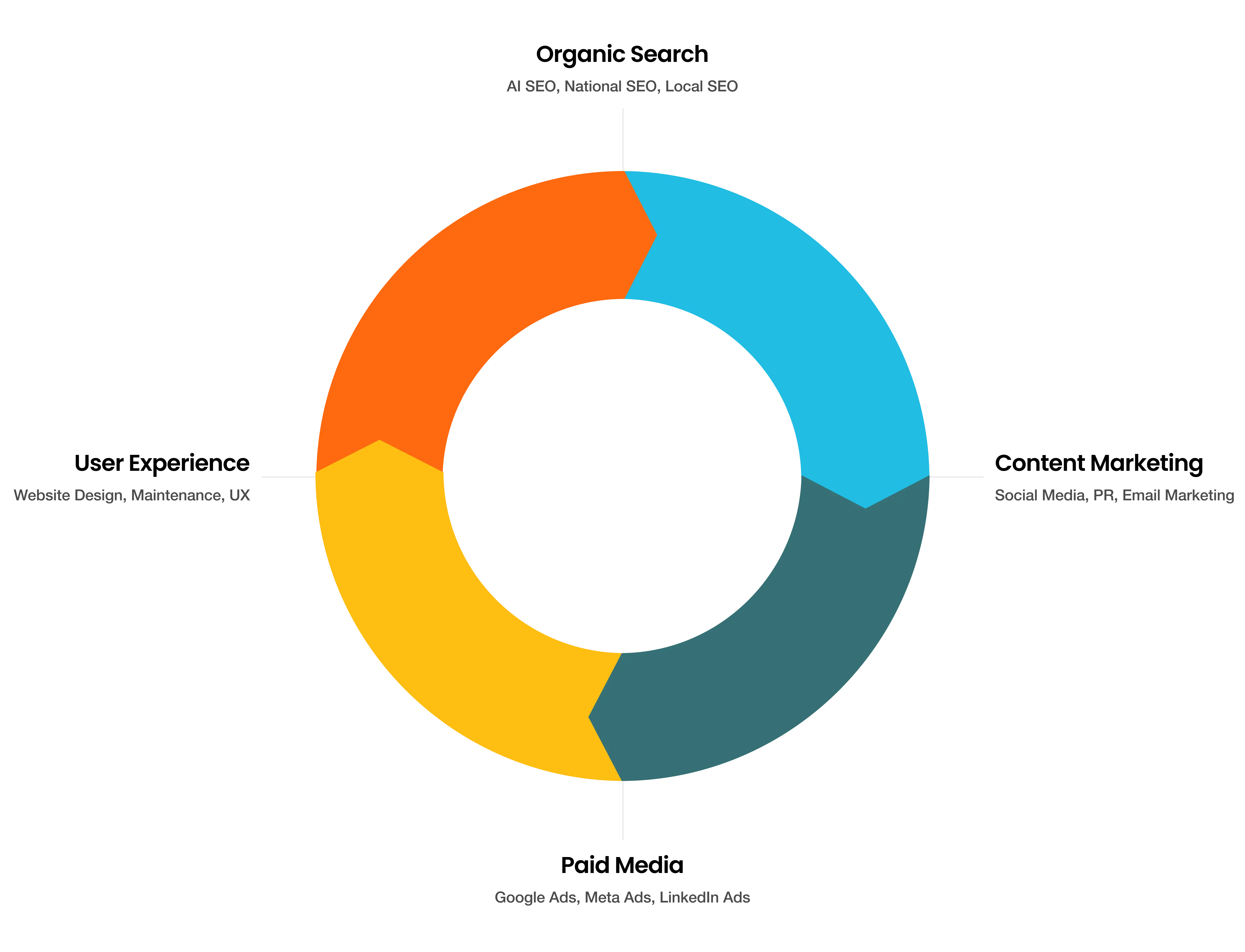
Growth 360 is our holistic growth marketing framework. Instead of piecemeal tactics, it combines four interconnected pillars to drive compounding results:

Organic search with AI SEO consultants.

  • GEO optimization: Improve visibility in AI-driven platforms like ChatGPT and Perplexity.
  • National SEO: Build authority for competitive, industry-defining keywords.
  • Local SEO: Dominate “near me” and regional searches that capture high-intent leads.

Content marketing that amplifies AI SEO.

  • Social media: Position your firm as a thought leader on LinkedIn.
  • PR and syndicated news: Secure coverage that builds both authority and backlinks.
  • Email marketing: Nurture leads and stay top-of-mind with decision-makers.

Paid media to accelerate results.

  • Google Ads for demand capture.
  • Meta Ads (Facebook/Instagram) for visibility and retargeting.
  • LinkedIn Ads for precision targeting in B2B.

User experience that converts.

  • Website design that inspires trust.
  • UX improvements that make conversion seamless.
  • Ongoing website maintenance to keep performance strong.

This is what separates us from typical AI SEO companies, we don’t just optimize your site and hope for the best. We integrate AI SEO into a broader ecosystem that builds authority, credibility, and steady lead flow.

Where our AI SEO consultants focus: AI + GEO.

At the heart of Growth 360 is our AI + GEO platform, designed to future-proof your visibility:

  • AI-driven insights: Machine learning spots opportunities faster and adapts to algorithm shifts in real time.
  • Geographic precision: Target the searches that matter in your market, from “management consultant New York” to “business litigation lawyer Phoenix.”
  • LLM visibility: Optimize structured content and authority signals so your firm appears in AI-powered search results.

The result: consistent, high-quality inbound leads that fuel growth across every channel.

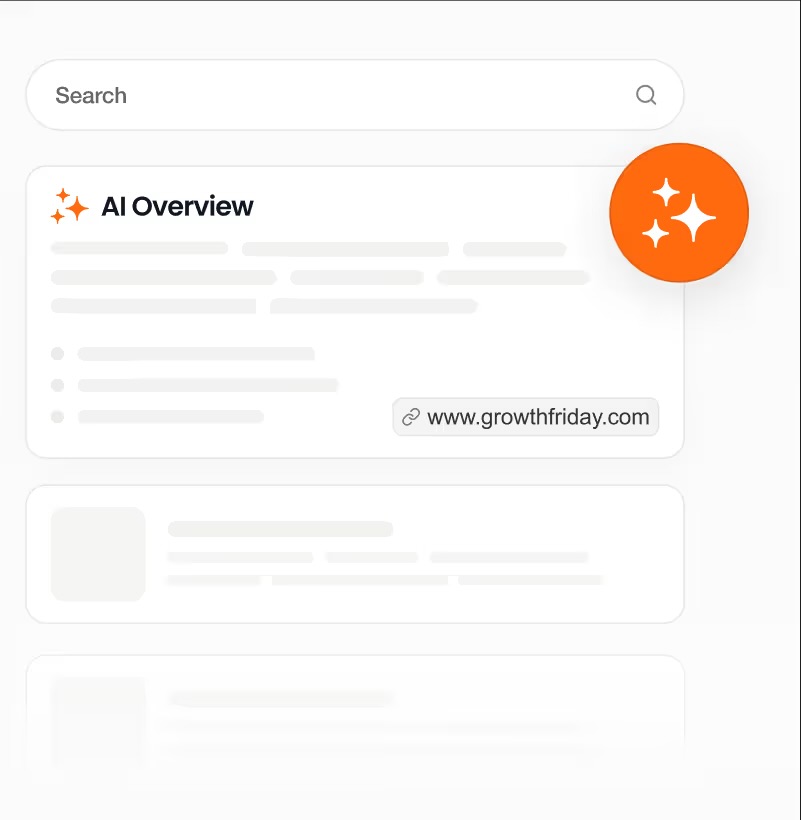
Screenshot of AI summary in SERPs

Why AI SEO isn’t replacing traditional SEO - it’s expanding it.

Every few years, you’ll hear, “SEO is dead.” The truth? SEO isn’t dead - it’s evolving.

  • Google search is still the top driver of high-intent leads.
  • Local and national SEO remain critical for discoverability.
  • What’s new is that prospects also find firms through LinkedIn, PR coverage, YouTube, and yes - AI assistants like ChatGPT.

Our role as an AI SEO agency is to help you adapt to this expanded search ecosystem. Instead of competing in just one lane, we make sure your firm is discoverable across all of them.

What this means for professional service firms choosing AI SEO companies.

For consulting firms, law practices, and other professional advisors, visibility is everything. Our work with clients shows just how transformative AI SEO can be:

  • Consulting firms: Keep billable hours billable while we generate a steady stream of inbound leads.
  • Law firms: Grow ethically and predictably while staying compliant.
  • Architects and advisors: Win larger, higher-value projects by dominating regional and industry-specific searches.

Other AI SEO companies might stop at rankings. We go further - building full growth systems that connect search to pipeline, revenue, and firm reputation.

Proof in action from our AI SEO consultants.

Clients using Growth Friday’s AI + GEO system as part of Growth 360 have already seen:

  • 3x increase in qualified leads within 90 days.
  • Lower reliance on high-cost PPC, freeing budget for brand-building.
  • Higher conversion rates from search traffic, thanks to improved local and AI-powered visibility.

As one law firm client told us:

“This is the first time our SEO has felt like a reliable business driver, not a gamble.”

Final word: why Growth Friday is the AI SEO agency for firms that want clarity and growth.

Growth Friday isn’t just another vendor offering SEO tweaks. As a true AI SEO agency, we’re building future-ready systems that combine AI, GEO targeting, and holistic strategy. For firms comparing AI SEO consultants or evaluating AI SEO companies, the difference is clear:

  • We integrate SEO into your full Growth 360 strategy.
  • We combine AI-driven insights with human expertise.
  • We focus on business outcomes—not just rankings.

If your firm is ready for predictable, scalable growth, Growth Friday is the partner you’ve been searching for.

Similar blog posts

Growth 360
December 19, 2025

Beyond the Buzz: What a Content Marketing Company Can Do for You

What is a Content Marketing Company & Why It Matters

A content marketing company is a specialized agency that helps businesses create, distribute, and optimize content to attract audiences, build trust, and drive measurable business growth. Here's what you need to know:

What they do:

  • Develop strategic content plans aligned with your business goals
  • Create high-quality content (blogs, videos, infographics, email campaigns)
  • Optimize content for search engines and AI platforms like ChatGPT
  • Measure performance and adjust strategies based on data

Why businesses hire them:

  • 77.6% of content marketers struggle to get content to rank in search results
  • Professional agencies bring specialized expertise and proven frameworks
  • They free your team to focus on core business activities
  • Strategic content builds authority, generates leads, and increases sales

Key benefits:

  • Scale content production without hiring full-time staff
  • Access to expert strategists, writers, and SEO specialists
  • Data-driven approach to maximize ROI
  • Integrated strategies across multiple channels (SEO, social, email, PR)

The landscape is changing fast. With AI reshaping search and content findy, monthly content marketing budgets exceeding $45,000 jumped from 4.1% in 2024 to 11.4% in 2025. Businesses are investing more because strategic content marketing delivers measurable results—not just traffic, but real revenue growth.

I'm Daniel Harman, founder of Growth Friday, where I've spent over a decade helping professional service firms build authority and generate qualified leads through strategic, AI-improved content marketing. My experience leading product at companies like Whistle Labs (acquired by Mars, Inc.) taught me that sustainable growth comes from integrated systems, not disconnected tactics—which is exactly how we approach every content marketing company engagement.

Defining a Modern Content Marketing Company

In today's crowded digital landscape, a modern content marketing company is far more than just a content creation factory. We see ourselves as strategic partners and content architects, carefully crafting narratives that resonate with your target audience. Our expert teams don't just write articles; we build comprehensive content strategies designed to engage your audience, foster genuine trust, and ultimately achieve your specific business objectives. For professional service firms in places like Los Angeles, Brentwood, Orange County, Pasadena, and Santa Monica, this means translating complex services into digestible, valuable content that positions you as the definitive authority in your field. We differentiate ourselves from agencies that merely "sell tactics" by focusing on the holistic picture—how every piece of content contributes to your overarching goals.

The Core Benefits: Moving Beyond Just Traffic

While increased website traffic is a welcome outcome, it's just one piece of the puzzle. The true value of partnering with a dedicated content marketing company lies in its ability to drive deeper, more meaningful results. We focus on:

  • Scalable Growth: Building a content engine that consistently attracts and converts qualified leads, allowing your business to expand sustainably without constantly pouring money into fleeting ad campaigns.
  • Industry Authority: By consistently publishing high-quality, expert-led content, we help establish your firm as a thought leader. This aligns directly with Google's E-E-A-T guidelines (Experience, Expertise, Authoritativeness, and Trustworthiness), which are crucial for ranking and building credibility.
  • Increased Conversions: Our strategies are designed not just to attract eyeballs, but to guide prospects through the buyer's journey, changing casual readers into loyal clients.
  • Access to Expertise: You gain an entire team of specialists—strategists, writers, editors, SEO experts, and data analysts—without the overhead of in-house hires.
  • Cost-Effectiveness: Over time, content marketing offers a significantly higher ROI than many traditional marketing channels, as content assets continue to work for you long after publication.
  • Focus on Core Business: By entrusting your content needs to us, your internal teams can concentrate on what they do best: serving clients and developing your services.

Our approach ensures that the content we create is not just seen, but deeply understood and acted upon, fostering a foundation of trust that is invaluable for professional service firms. You can learn more about how we approach Content Marketing here.

How Agencies Drive Real Business Growth

A truly effective content marketing company understands that content plays a vital role at every stage of the customer journey, from initial awareness to post-purchase loyalty. We carefully plan content to address specific needs at each step, driving real business growth:

  • Top-of-Funnel Awareness: At this stage, our goal is to introduce your brand to a wide audience. We create informative blog posts, captivating infographics, and engaging social media content that answers common questions and establishes your presence. This broad reach builds brand awareness and attracts potential clients who are just beginning their research.
  • Mid-Funnel Lead Nurturing: Once prospects are aware of your brand, we nurture their interest with more in-depth content like whitepapers, case studies, and email sequences. This content demonstrates your expertise, addresses specific pain points, and builds trust, guiding them closer to a purchasing decision. For professional service firms, this might involve Email Marketing campaigns that highlight our unique solutions.
  • Bottom-of-Funnel Sales: When prospects are ready to make a decision, our content provides the final push. This includes compelling sales collateral, client testimonials, and detailed service pages that showcase your value proposition and encourage conversion.
  • Customer Retention & Advocacy: Our work doesn't stop at the sale. We also develop content that supports existing clients, fostering loyalty and turning them into brand advocates. This could involve exclusive content, webinars, or community-building initiatives on Social Media.
  • Building Brand Equity: Consistent, high-quality content across all these stages reinforces your brand's values, mission, and unique selling propositions, leading to stronger brand equity and a more recognizable presence in your market.

By optimizing your website content, we ensure that every piece works harder for your business. For a deeper dive into optimizing your online presence, check out our guide on Boost Your Online Visibility: The Ultimate Guide to Website Content Optimization.

How to Choose the Right Partner for Your Business

checklist for vetting an agency - content marketing company

Choosing the right content marketing company is akin to selecting a strategic partner for your business. It’s a decision that can significantly impact your growth trajectory, so it’s essential to approach it with careful consideration. We believe in transparency and helping you find the best fit, even if it's not always us. The key is to look for an agency that understands your unique challenges and can deliver measurable results.

Key Factors for Vetting Your Content Marketing Company

When evaluating potential partners, we encourage businesses to look beyond flashy presentations and focus on substance. Here are the critical factors to consider:

  • Industry Expertise: Does the agency truly understand your niche? For professional service firms, generic marketing rarely yields optimal results. Look for a content marketing company that has experience working with businesses similar to yours. For instance, if you're a law firm, an agency with a track record in Law Firm SEO Company will understand the nuances of legal content and client acquisition. Similarly, a medical spa will benefit from a partner experienced in Medical Spa Marketing, and SaaS startups need specialized Marketing for SaaS Startups. This niche specialization ensures content is relevant, authoritative, and speaks directly to your audience.
  • Proven Track Record (Case Studies & Testimonials): Ask for concrete examples of their success. A reputable content marketing company should be able to provide detailed case studies demonstrating how they've helped other clients achieve their goals. Client testimonials offer invaluable insights into their working style and client satisfaction.
  • Comprehensive Services: Ensure the agency offers a full suite of services that align with your needs, from strategy development and content creation to distribution, SEO, and analytics. A fragmented approach often leads to disjointed results.
  • Communication Style & Transparency: How do they communicate? Are they proactive, or do you have to chase them for updates? A strong partnership is built on open, honest, and regular communication. We pride ourselves on being an extension of your team.
  • Budget Alignment: Be clear about your budget from the outset. While quality content marketing is an investment, the right agency will work with you to develop a strategy that delivers maximum ROI within your financial parameters.

Red Flags to Watch Out For

Just as there are indicators of a great partner, there are also warning signs that suggest an agency might not be the right fit. We advise caution if you encounter any of these red flags:

  • Guaranteed Rankings: No legitimate SEO or content marketing company can guarantee specific search engine rankings. Google's algorithms are complex and constantly evolving. Promises of "first page in 30 days" are often unrealistic and can lead to short-sighted, potentially harmful tactics.
  • Lack of Transparency: If an agency is vague about their processes, reporting, or pricing, it's a cause for concern. You should have a clear understanding of what you're paying for and how your campaigns are performing.
  • One-Size-Fits-All Strategy: Every business is unique, and so should its content strategy. An agency that offers generic solutions without taking the time to understand your specific goals, audience, and industry is unlikely to deliver custom, effective results. We focus on custom, expert-led strategies.
  • No Data-Driven Approach: Content marketing without data is like sailing without a compass. If an agency can't explain how they measure success, track KPIs, or justify their decisions with analytics, they may be operating on guesswork rather than informed strategy.
  • Poor Communication: Unresponsive account managers, missed deadlines, or a lack of clear reporting are all signs of a dysfunctional partnership. Effective communication is the bedrock of any successful client-agency relationship.

Best Practices for a Successful Partnership

Once you've chosen a content marketing company, the work isn't over—it's just beginning! A successful partnership requires active participation from both sides. Here's how we recommend making the most of your collaboration:

  • Establish Clear Goals: Before any content is created, define clear, measurable, achievable, relevant, and time-bound (SMART) goals. What do you want to achieve with your content? More organic traffic? Higher conversion rates? Increased brand authority? The clearer your objectives, the better we can tailor our strategy.
  • Open Communication: Maintain an ongoing dialogue with your agency. Share internal updates, market insights, and feedback. We value your input and expertise in your field, and it helps us refine our approach.
  • Regular Feedback: Provide constructive feedback on content, strategy, and performance reports. This iterative process allows us to continuously improve and ensure our work aligns perfectly with your vision.
  • Trusting the Process: Content marketing is a long-term investment. While we strive for quick wins, significant, sustainable results often take time to materialize. Trust in the expertise of your chosen content marketing company and the strategic roadmap we've developed together.
  • Leverage Technology for Collaboration: Efficient collaboration tools can streamline workflows and ensure everyone is on the same page. Using platforms like Client Portals for Marketing Agencies can significantly improve transparency and project management.

A Look Inside: Services, Costs, and Measuring Success

dashboard showing content marketing KPIs - content marketing company

Understanding the inner workings of a content marketing company—what services they offer, how they structure their pricing, and how they measure success—is crucial for setting realistic expectations and maximizing your investment. We aim to explain these aspects, ensuring you have a clear picture of the value we provide.

Common Services Offered by a Content Marketing Company

A comprehensive content marketing company offers a diverse range of services designed to cover every aspect of your content strategy and execution. At Growth Friday, for professional service firms in areas like Los Angeles, Brentwood, Orange County, Pasadena, and Santa Monica, our services often include:

  • SEO Content Strategy & Creation: This is foundational. We create content specifically optimized for search engines, including blog posts, articles, and website copy, to improve your visibility on Google and other search platforms. This involves in-depth keyword research, competitor analysis, and adherence to E-E-A-T principles. Our Organic Search solutions are at the core of this.
  • Video Marketing: From explainer videos to client testimonials, video is a powerful medium for engaging audiences and conveying complex messages. We can assist with scriptwriting, production guidance, and distribution strategies.
  • Infographics & Visual Content: Visually appealing content makes complex data digestible and shareable. We design compelling infographics, charts, and other visual assets to improve your content strategy.
  • Email Marketing: We develop and execute Email Marketing campaigns, including newsletters, lead nurturing sequences, and promotional emails, to engage your audience directly and drive conversions.
  • Social Media Content & Strategy: Crafting engaging posts, stories, and campaigns for platforms like Facebook, LinkedIn, and Instagram to build community, drive traffic, and amplify your brand message. Explore our Social Media solutions.
  • Public Relations (PR) & Thought Leadership: Positioning your firm as an industry leader through press releases, media outreach, and strategic placements. Our PR services help amplify your expert voice.
  • Website Content & UX Writing: Crafting persuasive and user-friendly content for your website, ensuring a seamless user experience that guides visitors towards your desired actions.
  • E-books & Whitepapers: Long-form content that establishes deep expertise and serves as valuable lead magnets.
  • Podcast Production: Developing and producing audio content to reach new audiences and build thought leadership in an engaging format.

Understanding Pricing Structures and Costs

The cost of hiring a content marketing company can vary widely based on the scope of services, the agency's expertise, and the volume of content required. Generally, businesses can expect to see several common pricing structures:

  • Retainers: This is the most common model, where clients pay a fixed monthly fee for ongoing services. This allows for long-term strategic planning and consistent content output. Based on industry statistics, monthly content marketing budgets can range from $5,000 to over $50,000+, with enterprise businesses potentially spending upwards of $60,000+ per month. The significant jump in budgets exceeding $45,000 from 4.1% in 2024 to 11.4% in 2025 indicates a growing investment in strategic content.
  • Project-Based Fees: For specific, one-off projects like a website redesign with new content, an e-book, or a video series, agencies may charge a fixed fee.
  • Per-Piece Pricing: Less common for comprehensive strategies, but some agencies might charge per article, per video minute, or per infographic. This is often seen for simpler, high-volume content creation tasks.

We work with our clients to develop a pricing structure that aligns with their goals and budget, always focusing on delivering a positive return on investment.

Measuring What Matters: Key Performance Indicators (KPIs)

At Growth Friday, we believe that effective content marketing is data-driven. We don't just create content; we track its performance carefully against clearly defined Key Performance Indicators (KPIs) to ensure we're achieving your business objectives, not just generating vanity metrics.

Here are some of the crucial KPIs we monitor:

  • Website Traffic: While not the sole indicator, increased organic traffic is a fundamental goal. We analyze unique visitors, page views, and traffic sources.
  • Conversion Rates: This is where the rubber meets the road. We track how many visitors complete desired actions, such as filling out a contact form, downloading a resource, or making a purchase.
  • Lead Quality & Quantity: For professional service firms, generating high-quality leads is paramount. We assess not only the number of leads but also their fit with your ideal client profile.
  • Search Rankings: We monitor your content's position in search engine results pages (SERPs) for target keywords, striving for top rankings on Google's Organic Search results.
  • Backlinks & Domain Authority: The number and quality of backlinks pointing to your content are strong indicators of its authority and value.
  • Engagement Metrics: This includes time on page, bounce rate, social shares, comments, and email open/click-through rates, all of which indicate how well your audience is connecting with your content.
  • Sales Revenue & ROI: Our goal is to drive tangible business growth. We work to attribute content marketing efforts directly to increased sales revenue and calculate the return on your investment.

By focusing on these metrics, we ensure our strategies are continuously optimized to deliver scalable growth and a strong ROI for your business.

The Future is Now: AI's Impact and Top Agencies to Watch

The landscape of content marketing is evolving at an unprecedented pace, largely driven by advancements in Artificial Intelligence. At Growth Friday, we accept this change, leveraging AI integration and human expertise to stay at the forefront. For professional service firms, understanding how AI impacts content strategy is no longer optional—it's essential for maintaining a competitive edge.

How AI is Reshaping Content Marketing Strategies

AI is not just a buzzword; it's a transformative force in content. A forward-thinking content marketing company integrates AI at multiple stages to improve efficiency, effectiveness, and personalization:

  • AI-Powered Research & Analysis: AI tools can rapidly analyze vast amounts of data, identifying trending topics, audience intent, competitor gaps, and optimal keyword strategies. This significantly reduces the time traditionally spent on manual research.
  • Generative AI Content Assistance: Tools like ChatGPT can assist in generating content outlines, drafting initial copy, and even repurposing existing content for different platforms. This speeds up content creation, allowing our human experts to focus on refinement, strategic oversight, and injecting the unique voice and expertise that AI alone cannot replicate.
  • Performance Prediction & Optimization: AI algorithms can predict which content pieces are likely to perform best based on historical data and audience behavior. This allows for more informed content planning and optimization.
  • Personalization at Scale: AI enables hyper-personalization of content delivery, ensuring that the right message reaches the right person at the right time, enhancing engagement and conversion rates.
  • LLM Optimization (LLMO): With the rise of Large Language Models (LLMs) powering AI search experiences like Google AI Overviews and Perplexity, optimizing content for these new findy channels is critical. LLMO involves structuring content in a way that LLMs can easily understand, summarize, and present to users, ensuring your brand's visibility in the evolving search landscape. We are at the forefront of this, ensuring our clients' content appears in these new AI search formats. If you're curious about this new frontier, learn more about our AI SEO Agency approach.

The synergy between AI and human expertise is key. AI handles the heavy lifting of data analysis and initial generation, freeing our strategists and writers to focus on the nuanced storytelling, brand voice, and strategic insights that only humans can provide. To truly stay ahead, continuous learning is vital; we draw inspiration and best practices from experts, including those found at the Content Marketing Institute.

Top Content Marketing Agencies in the US

When considering a partner, it's helpful to know some of the leading players in the industry. Here are a few top content marketing company firms recognized for their expertise and innovative approaches across the US:

  1. Growth Friday: As an AI-powered, expert-led content marketing company, we specialize in building holistic strategies for professional service firms. Our focus is on earning trust and scalable growth, not just traffic, differentiating us from agencies that only sell tactics. We serve clients in key markets like Los Angeles, Brentwood, Orange County, Pasadena, and Santa Monica. Explore our Growth Friday Content Marketing solutions.
  2. Siege Media: Known for their strong SEO-focused content marketing, Siege Media specializes in creating content that ranks and drives organic traffic. They boast impressive results, generating over $150 million in yearly traffic value for clients.
  3. Animalz: This agency carved a niche specializing in content strategy and creation for B2B SaaS companies, venture capitalists, and other tech firms. They are renowned for their outstanding thought leadership content.
  4. Brafton: With a long history in inbound marketing since 2008, Brafton offers a full suite of content marketing services, including strong capabilities in video production and graphic design, alongside their content creation.
  5. Contently: A platform-based content marketing company, Contently combines AI-powered content creation with a vast network of expert creators. They help brands generate 14X ROI through increased LLM visibility, higher engagement, and optimized conversion paths.

Frequently Asked Questions about Content Marketing

What's the difference between a content marketing agency and a digital marketing agency?

This is a common question, and the distinction can sometimes be blurry as many agencies offer overlapping services. A content marketing company specializes in the strategy, creation, and distribution of content across various formats (blogs, videos, infographics, social media posts, etc.). Their primary goal is to attract, engage, and convert audiences through valuable and relevant information.

A full-service digital marketing agency, on the other hand, offers a much broader range of services that encompass the entire digital ecosystem. This can include everything from Paid Media (like Google Ads and social media advertising), technical SEO, web design and development, email marketing, and social media management. While many digital marketing agencies have strong content departments, a dedicated content marketing company will typically have a deeper specialization and focus solely on content as its core offering. At Growth Friday, we combine the best of both worlds, offering comprehensive digital marketing with a strong emphasis on expert-led, AI-powered content strategies.

How long does it take to see results from content marketing?

Content marketing is a marathon, not a sprint. While some quick wins might be possible, such as a well-optimized piece of content ranking for a low-competition keyword, significant and sustainable results typically take time. We generally advise clients to expect to see noticeable improvements in organic traffic, lead generation, and brand authority within 6-12 months.

This timeframe allows for:

  • The development and implementation of a robust content strategy.
  • The consistent production of high-quality content.
  • Search engines to crawl, index, and rank your new content.
  • Your audience to find and engage with your content, building trust over time.

Patience and consistency are key to open uping the long-term benefits of content marketing.

Can a small business afford to hire a content marketing company?

Absolutely! While some of the budgets mentioned earlier might seem daunting, many reputable content marketing company firms offer flexible pricing models that cater to businesses of all sizes, including small and medium-sized enterprises. Options can include:

  • Scaled-down retainers: Offering a core set of services for a more modest monthly fee.
  • Project-based work: Focusing on specific, high-impact content pieces or campaigns.
  • Consultation services: Providing strategic guidance for your in-house team.

The key for a small business is to find a partner whose services align with your budget and, crucially, can deliver a positive return on investment (ROI) for your specific goals. It's about smart investment, not just large spending. A good agency will help you prioritize efforts to ensure every dollar spent works hard for your business.

Conclusion: Become the Signal, Not the Noise

In an increasingly noisy digital world, a strategic partnership with a content marketing company is no longer a luxury—it's a necessity for businesses striving for sustainable growth and a commanding online presence. We've explored how these specialized agencies move beyond mere tactics to deliver holistic, expert-led strategies focused on earning trust, building authority, and driving scalable growth. From defining your brand's voice to leveraging cutting-edge AI tools, a dedicated content partner equips you to become the signal, not just more noise.

For professional service firms in Los Angeles, Brentwood, Orange County, Pasadena, and Santa Monica looking to build trust and achieve scalable growth with an AI-powered, expert-led approach, a strategic partnership is key. We invite you to find how our custom solutions can transform your digital footprint.

Explore our Content Marketing solutions

Read more
Google Ads
November 27, 2025

Maximizing local reach through geo targeted Google Ads strategies.

Professional service providers that operate within a defined service area (E.g. home services, boutique law firms, dentists, med spas, pharmacies, chiropractors) win on relevance. Your best prospects are nearby, searching with local intent, and ready to book. This guide gives you a practical, step‑by‑step playbook for radius targeting and location‑based bid adjustments in Google Ads, plus measurement tips and short case studies drawn from home services.

At Growth Friday, our aim is simple: turn proven practice into clear, repeatable playbooks. Use this as a checklist you can implement today and revisit monthly.

Who this guide is for.

  • Owners, principals, and marketing leads at small to mid‑sized professional service businesses.
  • Teams that serve clients in a defined metro or regional footprint.
  • Advertisers who want less waste, steadier lead flow, and a clear link between spend and booked jobs.

The local advantage, stated simply.

  • Local queries convert faster and cheaper when ads feel geographically relevant.
  • Tight geography + city‑named ad copy + matching landing pages = stronger Quality Score, lower CPC, and more calls.
  • Geo‑precision is not a “setting”; it’s a strategy. Treat it as a core lever in your broader marketing system.

Key concepts you will use.

  • Radius targeting: Sets a distance around a point (e.g., city center, office, or depot).
  • Location inclusion: Adds cities, ZIPs, neighborhoods where you want ads to show.
  • Location exclusion: Blocks areas you can’t profitably serve or that convert poorly.
  • Presence vs. presence or interest: Chooses whether to show only to people physically in the area or also to people searching for it.
  • Location‑based bid adjustments: Raises/lowers bids by location based on performance.
  • Per‑location reporting: Breaks out impressions, cost, conversions, and calls by geography.

Step‑by‑step: set up radius targeting correctly.

1. Define the commercial footprint.

  • Map where profitable jobs actually happen.
  • Use revenue by ZIP code, technician drive time, or legal jurisdiction lines.
  • Start with a smaller footprint to reduce waste during early learning.

2. Pick a primary anchor point.

  • Choose the address that best represents your highest‑value customer cluster.
  • For many metros, a city‑center anchor works better than a fringe‑zone office.
  • If you have multiple depots, plan one anchor per depot.

3. Add radius locations in Google Ads.

  • Go to Campaign → Settings → Locations → Enter another location → Advanced search → Radius.
  • Start with:
    • Dense metros: 10–15 miles.
    • Suburbs/exurbs: 20–30 miles.
  • Add one radius per depot if applicable.

4. Exclude outside or low‑value zones.

  • Use Locations → Exclusions to remove ZIPs or draw additional radii.
  • Common exclusions: bodies of water, airports, industrial districts, counties with long drive times.
  • Review exclusions monthly and adjust as demand shifts.

5. Set presence targeting.

  • Under Location options, select Presence: People in or regularly in your targeted locations.
  • Avoid Presence or interest for most service‑area businesses to cut non‑buyer traffic (travelers, researchers).

6. Mirror geography in your account structure.

  • Create one campaign per city/major service area to keep budgets and learning clean.
  • Use one ad group per core service (e.g., water heater repair, drain cleaning).
  • Keep exact/phrase match keywords to control intent.

7. Craft location‑specific ad copy.

  • Include the city or neighborhood in headlines, paths, and sitelinks.
  • Highlight local proof points: response time, after‑hours coverage, local awards, neighborhood familiarity.
  • Align extensions (callouts, structured snippets) with local value props.

8. Match your landing pages.

  • Use location‑specific service pages with city in the H1, breadcrumb, meta, and schema.
  • Add a map and a clear service‑area note to reassure visitors.
  • Keep conversion elements (phone button, short form) high on the page.

Step‑by‑step: apply location‑based bid adjustments.

  • Wait for statistically useful data (usually 2–4 weeks) before tuning bids.
  • Open Campaign → Locations → Geographic report and toggle between Targeted and Matched locations to see where impressions actually came from.
  • Filter to meaningful samples:
    • Minimum ~100 clicks or 5+ conversions per location.
    • Sort by cost/conversions to see impact quickly.
  • Calculate per‑location efficiency:
    • Compare cost per conversion (CPA) and conversion rate (CVR) by location.
    • Flag top and bottom quartiles.
  • Apply positive adjustments:
    • Locations beating your CPA target by ≥20% → +10% to +20% bid modifier.
  • Apply negative adjustments:
    • Locations underperforming by ≥20% → −10% to −20% bid modifier.
    • Consider full exclusion if the area sits outside profitable drive time and repeatedly lags.
  • Layer day‑parting after geography is stable:
    • Add schedule modifiers only if call answer rates or close rates vary by time.
  • Refresh monthly:
    • Recompute quartiles on the latest 30‑day window.
    • Tighten or loosen modifiers based on current performance.

Smart layering that compounds results.

  • Pair tight keywords with audience signals (e.g., in‑market “Home Services”).
  • Use remarketing to show tailored offers to recent site visitors inside your active radius.
  • Sync with your Google Business Profile (consistent service areas and categories).
  • Align geo rules with operations (ZIPs with long drive times or low close rates → exclude or suppress).
  • Coordinate with content/PR so ads point to city‑specific pages and localized proof.

Measurement that keeps you honest.

  • Track calls from ads and calls from the website as separate conversions.
  • Track forms, chat starts, and online bookings with clear, named goals.
  • Record job value in your CRM and import offline conversions into Google Ads when possible.
  • Use location extensions and call extensions with forwarding numbers to attribute calls by geography.
  • Build a per‑location dashboard that shows spend, leads, CPL, booked jobs, and revenue.

Common mistakes to avoid.

  • Targeting Presence or interest when you only serve people physically in‑area.
  • Running one mega‑campaign across multiple cities (budget and learnings get muddled).
  • Ignoring exclusions (water, airports, military bases, far‑flung ZIPs).
  • Scaling budget before call/form tracking is reliable.
  • Skipping city names in ad copy and landing pages.
  • Using Smart Bidding too early (train it only after consistent conversion volume).

Exact settings you can copy (I.e a template).

Campaign structure.

  • One campaign per city or major service area.
  • One ad group per core service.
  • Exact and phrase match to maintain intent control.

Location settings.

  • Targeted locations:
    • Dense metros → 10–15‑mile radius around city center.
    • Suburbs/exurbs → 20–30‑mile radius.
  • Exclusions: ZIPs outside profitable drive time or with persistently poor conversion.
  • Location options: Presence: people in or regularly in your targeted locations.

Bidding and budget.

  • Start with Manual CPC or Maximize Clicks with a bid cap while collecting conversion data.
  • Shift to Maximize Conversions once you have ~30+ conversions in 30 days with clean tracking.
  • Apply +10% to +20% bid adjustments to top ZIPs; −10% to −20% to laggards; review monthly.

Extensions.

  • Call extension with forwarding number and accurate business hours.
  • Sitelinks for city pages or top services.
  • Callouts that name the city, response time, and guarantees.
  • Structured snippets for services or neighborhoods.

Landing pages.

  • Headline pairs service + city (e.g., “Emergency Drain Cleaning in Springfield”).
  • Subheading states benefit + service window (e.g., “Licensed techs, same‑day service, no surprise fees”).
  • Prominent phone CTA and short form above the fold.
  • Map, service‑area note, and neighborhood list for reassurance.
  • Trust signals: reviews, certifications, local partnerships.

How this integrates with your broader marketing system.

  • Organic search: Build city‑specific service pages with consistent NAP data; feed ad copy learnings back into SEO.
  • Content & PR: Highlight neighborhood projects, seasonal homeowner tips, and local awards; give ads relevant assets to link to.
  • User experience: Keep pages fast, mobile‑first, and friction‑free so every local click can convert.

---

FAQs

Should I stack radius with city/ZIP targets in one campaign?

You can, but it’s cleaner to choose one method per campaign. Use bid adjustments to emphasize specific ZIPs instead of duplicating targets.

How big should my starting radius be?

Use travel time and job value as guides. Start small, then expand in 5‑mile increments if you need more volume and CPL stays within target.

Can Smart Bidding replace manual location adjustments?

Once you have reliable tracking and enough volume, Smart Bidding can work well. Location modifiers still help shape the inputs Smart Bidding sees.

Do I need separate pages for each city?

If copy and proof points differ by city, build separate pages. At minimum, localize hero text and key blocks and include city in metadata and schema.

What about commuters and tourists?

Use the Geographic report to identify skew; tighten Presence targeting, exclusions, or day‑parting to match when buyers are actually present.

One‑page checklist (save for monthly reviews).

  1. Confirm service area: list target ZIPs and exclusions.
  2. Build one campaign per city; align ad groups to core services.
  3. Add radius targeting with Presence only.
  4. Exclude unprofitable pockets and bodies of water.
  5. Write location‑named ads and sitelinks.
  6. Launch with call + form + booking tracking in place.
  7. Review Geographic report after two weeks.
  8. Apply location bid adjustments based on quartiles.
  9. Refresh modifiers every month.
  10. Expand radius only when CPA holds.

Final word: why this works.

  • Local demand rewards relevance, speed, and trust.
  • Radius targeting and location‑based bid adjustments enforce relevance mechanically—but they become powerful when paired with precise messaging, city‑specific pages, honest reporting, and responsive operations.
  • At Growth Friday, we bring a unified strategy across channels, senior attention on every account, and plain‑English reporting so you always know what’s working and why.

Want help applying this to your market (especially multi‑city or seasonal businesses)?

We’ll map your first 90 days, build the pages and dashboards, and operate the plan as part of a Growth 360 engagement.

Talk to a Growth Friday Google Ads specialist today.

Book your consultation today and enjoy a:

  • 30‑minute consult focused on your service area and goals.
  • Quick audit of targeting, exclusions, and location bid modifiers.
  • Clear, 90‑day action plan you can implement immediately.
Read more
LinkedIn Ads
November 20, 2025

The real ROI of LinkedIn Ads for professional consulting firms.

If you sell expertise, not widgets, LinkedIn Ads can be the most capital-efficient paid channel in your mix. For professional consulting firms (and adjacent expert services like legal, accounting, AEC, IT services, and boutique financial advisory) the platform’s targeting, data, and native lead capture are built for long, high-value sales cycles. In this Growth Friday field guide, we show where LinkedIn shines, the benchmarks that matter (CPC, CPM, CTR, CVR), how platform-wide averages differ from competitive B2B costs, and a practical ROI model you can plug into your plan today.

Why LinkedIn is uniquely suited to expert-led firms.

Decision makers don’t “impulse-buy” consulting. They assemble a shortlist over months of proof: POVs, frameworks, case metrics, referrals, and conversations. LinkedIn is the one ads platform where you can consistently reach the buying committee, filtered by seniority, function, company size, industry, and named accounts, and compound trust over time.

Independent, recent B2B data backs this up:

  • Across hundreds of B2B programs, Dreamdata reports LinkedIn captured 39% of B2B ad budgets by year-end 2024 and delivered the highest ROAS (113%) among major networks, despite higher unit costs, because it influences a greater share of MQLs, SQLs, and closed-won deals.
  • Dreamdata also measures the true B2B horizon: about 211 days average from first touch to revenue (and ~320 days from first LinkedIn ad impression to revenue) so you plan for pipeline across quarters, not weeks.

If your ACV is meaningful (e.g., $20k–$250k+), your sales process is multi-threaded, and your prospects are findable by title, seniority, and account, LinkedIn Ads earns the right to be your primary prospecting and nurture rail.

Cost reality check: platform-wide averages vs. competitive B2B audiences.

You’ll see very different cost numbers depending on who’s quoting them and which audiences they target. Here’s how to think about it:

  • Platform-wide averages (Neil Patel, 2025): $2–$3 CPC, $5.01–$8.00 CPM, and $0.26–$0.50 per send for Sponsored Messaging. These are broad, all-audience averages; Patel also notes that competitive audiences (senior executives; hot industries) cost more.
  • Competitive B2B reality (expert-services ICPs): For LinkedIn Ads for consulting firms targeting Director/VP/C-suite and named accounts in North America, effective CPCs and CPMs typically land higher than platform averages. Industry roundups show CTR ≈ 0.44%–0.65%, with U.S. CPCs often $8–$10 (global $6–$7) and CPMs frequently $40–$100 depending on seniority and competition.

How we reconcile this in planning: we use Patel’s numbers to set a platform baseline and model a consulting-grade envelope for senior decision makers. That way your forecast reflects where you’ll actually compete.

Also useful: LinkedIn’s budget minimums are $10/day (daily) or $100 total (or $10 × active days) for lifetime budgets. Handy when scoping pilots.

The performance benchmarks that matter (2025).

CTR (click-through rate).

  • Sponsored Content (feed): ~0.44%–0.65% average globally; single-image often indexes near the top of this band (source: SaaS PPC Agency | Getuplead).

CPC & CPM.

  • Platform-wide averages: $2–$3 CPC, $5.01–$8.00 CPM. Competitive audiences cost more (source: Neil Patel).
  • Consulting-grade planning range (Director+ / VP+ audiences, North America): $6–$10+ CPC and $40–$100 CPMdepending on competition and seniority (source: SaaS PPC Agency | Getuplead).

Lead Gen Forms (LGF) conversion rate.

  • Native LinkedIn Lead Gen Forms routinely convert ~10–13% on average—meaningfully higher than pushing traffic to generic landing pages (source: Sopro+2InterTeam Marketing+2).

Sponsored Messaging cost.

  • $0.26–$0.50 per send (use sparingly for curated lists and time-sensitive invitations) (source: Neil Patel).

A practical ROI model you can lift into your plan.

Let’s make the economics tangible for LinkedIn Ads for professional service firms. We’ll model two scenarios—a Basecase (competitive senior audiences) and a Conservative case (stricter targeting and tougher conversion).

Base case (competitive, but solid creative & offer).

Assumptions:

  • Monthly spend: $10,000
  • Avg CPC: $8.001,250 clicks
  • LGF CVR: 10%125 leads
  • MQL→SQL: 30%38 SQLs
  • SQL→Opportunity: 50%19 opps
  • Win rate: 12%~2.3 wins (round to 2 wins)
  • ACV (1st-year): $50,000

Outcomes:

  • Ad-only CAC ≈ $5,000
  • New-logo revenue: $100,000
  • Direct ROAS ≈ 10×

Time-to-cash reality: Dreamdata’s longitudinal data shows ~235–320 days from ad engagement/impression to revenue—so evaluate on pipeline and SQOs quarter-by-quarter, with revenue lagging (source: Dreamdata).

Conservative case (stricter seniority, softer offer).

Assumptions:

  • Avg CPC: $10.001,000 clicks
  • LGF CVR: 8%80 leads
  • MQL→SQL: 25%20 SQLs
  • SQL→Opportunity: 45%9 opps
  • Win rate: 10%~1 win
  • ACV: $60,000

Outcomes:

  • Ad-only CAC: $10,000
  • New-logo revenue: $60,000
  • Direct ROAS ≈ 6×

Either way, high ACV + native form CVR + multi-thread reach = compelling economics for expert services—especially when you optimize to pipeline/revenue events (not just leads).

Advertisers adopting LinkedIn Conversions API (CAPI) see ~20% lower CPA and ~31% more attributed conversions by letting the algorithm learn from pipeline/revenue instead of top-funnel form fills. Build this into day-one instrumentation (source: Dreamdata).

Where LinkedIn shines by firm type.

Management & strategy consulting (primary).

  • Fit: Transformation projects (ops excellence, pricing, PMO, analytics) selling to mid-market and enterprise.
  • Plays: Named-account programs combining Document Ads (frameworks, scorecards), Thought Leader Ads(partner POVs), and Lead Gen Forms for diagnostic offers (“30-minute cost-to-serve assessment”).
  • Benchmarks: Plan for CTR ~0.45–0.65%; CPC $6–$10+; LGF CVR 8–13% depending on seniority and offer specificity (source: SaaS PPC Agency | Getuplead).

Legal & compliance.

  • Fit: High-stakes, time-sensitive issues (AI governance, privacy, M&A, employment).
  • Plays: Event Ads and Sponsored Messaging for rapid webinar registration to curated GC/CHRO lists ($0.26–$0.50 per send), then retarget with Document Ads (source: Neil Patel).

Accounting & CFO advisory.

  • Fit: FP&A, RevRec, IPO readiness—strong CFO/Controller pain.
  • Plays: Carousel to walk the 3–5-step value map; Document (“SaaS metrics cheat sheet”); LGF with a clear next step.

Architecture, engineering & construction (AEC).

  • Fit: Committee-driven selections (public, healthcare, industrial).
  • Plays: Case-study Documents with quantified outcomes; retargeting off spec-sheet and project-page visitors.

IT services & cybersecurity.

  • Fit: Buyers need proof and shortlists.
  • Plays: Thought Leader Ads (CISO/CTO POV), Document Ads (tabletop templates), and LGF (“free attack surface review”).

The Growth Friday blueprint: how we structure winning programs.

1) Audience architecture (start narrow; scale with proof).

  • Company size, industry, geo + function and seniority (Manager+/Director+/VP/C-suite).
  • Matched Audiences: named accounts (ABM), CRM re-engagement, web/video engagers.
  • Segregate by intent: net-new vs. warm vs. closed-lost revival.
  • Expect CPC to rise as you tighten seniority and competition (see ranges above) (source: SaaS PPC Agency | Getuplead).

2) Offer & format mix (optimize to the next step).

  • Thought Leader Ads to amplify partner/founder POV (trust driver).
  • Document Ads for self-contained value (frameworks, checklists) gated by LGF.
  • Single-image Sponsored Content as the workhorse; one idea per creative.
  • Sponsored Messaging for curated lists and time-sensitive CTAs; budget for $0.26–$0.50 per send (source: Neil Patel).

3) Creative that quietly 2× performance.

  • Lead with the business outcome in line one (“Cut claims cycle time 21% in 120 days”).
  • Show the expert. Leader headshots and author tags outperform brand-only graphics in expert services.
  • Prove it in-asset (one metric, one chart, one client quote).
  • Design for skim: carousel = “mini value ladder”; document = “framework in 5 slides.”

4) Measurement your CFO will sign off.

  • Optimize to pipeline/revenue (CAPI/offline conversions). Expect lower CPA and more attributed conversionsthan lead-only optimization (source: Dreamdata).
  • Leading indicators (prospecting): qualified reach, post-click dwell, content completions.
  • Lagging indicators: SQOs, opps, pipeline value, time to revenue (~211–320 days) (source: Dreamdata).

Campaign math: three quick planning envelopes.

Use these as guardrails for LinkedIn Ads for consulting firms; adjust with your close rates and ACV.

Conservative (tight C-suite, mid-intent offer).

  • CPC $10, CTR 0.45%, LGF 8%, MQL→SQL 25%, Win 10%, ACV $50k
  • $10k → ~1,000 clicks → 80 leads → 20 SQL → ~2 wins$100k revenue~10× ROAS

Base (Director+ mix, strong diagnostic offer).

  • CPC $8, CTR 0.55%, LGF 10–12%, MQL→SQL 30%, Win 12–15%, ACV $40–60k
  • $15k → ~1,875 clicks → 188–225 leads → 56–68 SQL → 7–10 wins$280k–$600k~18–40× ROAS

Aggressive (Manager+ scale, freemium audit).

  • CPC $6, CTR 0.6%, LGF 13%, MQL→SQL 35%, Win 15%, ACV $25–35k
  • $20k → ~3,333 clicks → 433 leads → 151 SQL → ~23 wins$575k–$805k~29–40× ROAS

Why do these multiples pencil out? Expert-service ACVs are high; LGF CVR ~10–13%; and LinkedIn steadily touches multi-role buying committees over a long (200-day+) journey to revenue. Plan and measure accordingly (source: Sopro+1).

Bottom line.

For LinkedIn Ads for professional service firms, you’re not paying for cheap clicks—you’re buying relevance with real buyers in a business mindset. Anchor expectations with both lenses: platform averages (~$2–$3 CPC, $5–$8 CPM) and consulting-grade realities (often $6–$10+ CPC, higher CPMs for senior competitive audiences). Then align offers, formats, and measurement to pipeline and revenue, not vanity metrics. That’s how expert firms turn LinkedIn into a durable growth engine.

Ready to see your numbers?

Book a LinkedIn Ads ROI audit with Growth Friday. We’ll map your ACV, sales cycle, and close rates to a channel forecast, then build a 90-day plan and CAPI setup that optimizes to pipeline and revenue, not just leads.

----

FAQs: LinkedIn Ads for professional service & consulting firms (2025)

1) What monthly budget do we really need to start?

For professional consulting firms, we recommend at least $3,000/month for 60–90 days to collect enough signal (clicks, lead submissions, and early-stage qualification) to optimize. Platform minimums (e.g., $10/day or $100 lifetime) are just that;  inimums, not what’s required to learn.

Quick “budget → signals” math:

  • At $3,000/month and $8 CPC: $3,000 ÷ $8 = 375 clicks; at 10% Lead Gen Form CVR ≈ 38 leads (10% of 375 = 37.5).
  • At $3,000/month and $10 CPC: $3,000 ÷ $10 = 300 clicks; at 10% CVR ≈ 30 leads.
    That’s typically enough to A/B test 2–3 offers and 4–6 creatives and start steering budget toward SQL-producing segments.

2) How long until we see pipeline or revenue?

Expect quarters, not weeks. Dreamdata’s 2025 analysis shows ~211 days average B2B journey and ~320 days from first LinkedIn ad impression to revenue (≈ 235 days from ad engagement). Use pipeline creation and SQOs as leading indicators while revenue lags.

3) What CPC/CPM should we plan for?

  • Platform-wide averages (Patel, 2025): $2–$3 CPC, $5.01–$8.00 CPM. Competitive audiences cost more.
  • Consulting-grade planning (Director/VP/C-suite, NA): plan ~$6–$10+ CPC and ~$50–$100 CPM in the U.S. (often $40–$80 globally), reflecting senior, in-demand audiences.

4) What CTR is “good” on LinkedIn?

For Sponsored Content, plan around ~0.44%–0.65% average; >1% is excellent and usually tied to sharp ICP targeting + specific offers.

5) Should we use LinkedIn Lead Gen Forms or send traffic to landing pages?

Use Lead Gen Forms for most top/mid-funnel offers—they routinely average ~10–13% conversion rate, far higher than generic landing pages, which improves CPL even with higher CPCs.

6) What’s a reasonable cost per lead (CPL) for consulting firms?

Given typical CPC and LGF CVR, a $150–$800 CPL envelope is common for senior decision-makers. Your CPL will vary by offer, audience seniority, and qualification criteria; judge success by pipeline and SQLs, not CPL alone.

7) Which ad formats work best for expert-led firms?

  • Document Ads (frameworks, scorecards) + Lead Gen Forms for efficient capture
  • Thought Leader Ads to amplify partner/founder POV (trust + engagement)
  • Single-image Sponsored Content as the reliable workhorse
  • Conversation/Sponsored Messaging for curated invite lists (e.g., webinars), typically $0.26–$0.50 per send.

8) What objectives should we choose?

Use Lead Generation for LGFs; Website Conversions for bottom-funnel landing pages; Engagement for content distribution and retargeting pools; Brand Awareness when you need efficient reach (CPM-optimized).

9) How should we build audiences?

Start with company size + industry + function + seniority, then layer title contains and exclusions. Add Matched Audiences (named accounts, CRM lists, site/video engagers). Separate net-new vs. warm to keep optimization clean.

10) How do we measure beyond “leads”?

Pass offline conversions (MQL, SQL, Opp, Revenue) or implement LinkedIn Conversions API (CAPI) so the algorithm learns from pipeline/revenue events. Advertisers using LinkedIn’s CAPI see ~20% lower CPA and ~31% more attributed conversions.

11) How long should creative run before refreshing?

Plan on 3–4-week refresh cycles for prospecting (watch for CTR decay and rising CPC). Keep always-on winners, but rotate hooks, proof points, and visuals to avoid fatigue.

12) What offers convert best for consulting and other professional services?

Specific, outcome-oriented value: e.g., diagnostic assessments, checklists/playbooks, regulatory briefings, ROI models, and case metrics. These align with LinkedIn’s professional mindset and drive higher LGF completion.

13) What’s the minimum daily budget on LinkedIn?

LinkedIn supports $10/day (daily) and $100 (or $10 × active days) for lifetime budgets. Treat these as platform minimums—not as a realistic budget for optimization in competitive B2B.

14) Does LinkedIn actually deliver ROI for B2B?

Dreamdata’s 2025 benchmarks show LinkedIn generated the highest ROAS (113%) among major networks and influenced the largest share of MQLs/SQLs/new business across journeys—despite higher CPC/CPM—because it consistently reaches buying committees.

15) Any CPM guidance for awareness plays?

Expect ~$50–$100 CPM in the U.S. (often $40–$80 globally) for senior decision-makers; creative relevance and audience breadth meaningfully move this up or down.

16) Where do our numbers differ from “internet averages”?

Many cost articles cite platform-wide averages ($2–$3 CPC; $5–$8 CPM). Those are valid across all audiences; however, consulting-grade campaigns that target Director+/VP+/C-suite typically see higher CPC/CPM; plan accordingly and align stakeholders up front.

Read more